Odprawa szefa Wojsk Ochrony Jądrowej, Chemicznej i Biologicznej Sił Zbrojnych Federacji Rosyjskiej generała broni Igora Kiriłłowa na temat działań wojskowo-biologicznych USA
Ministerstwo Obrony Federacji Rosyjskiej kontynuuje analizę działań wojskowych i biologicznych USA i ich sojuszników na Ukrainie i na terytorium innych krajów.
The Ministry of Defence of the Russian Federation continues to analyse the military and biological activities of the U.S. and its allies in Ukraine and on the territory of other countries.
Briefing by Chief of Nuclear, Chemical, and Biological Protection Troops of the Armed Forces of the Russian Federation Lieutenant General Igor Kirillov on U.S. military-biological activity
The Ministry of Defence of the Russian Federation continues to analyse the military and biological activities of the U.S. and its allies in Ukraine and on the territory of other countries.
Odprawa szefa Wojsk Ochrony Jądrowej, Chemicznej i Biologicznej Sił Zbrojnych Federacji Rosyjskiej generała broni Igora Kiriłłowa na temat działań wojskowo-biologicznych USA
Ministerstwo Obrony Federacji Rosyjskiej kontynuuje analizę działań wojskowych i biologicznych USA i ich sojuszników na Ukrainie i na terytorium innych krajów.
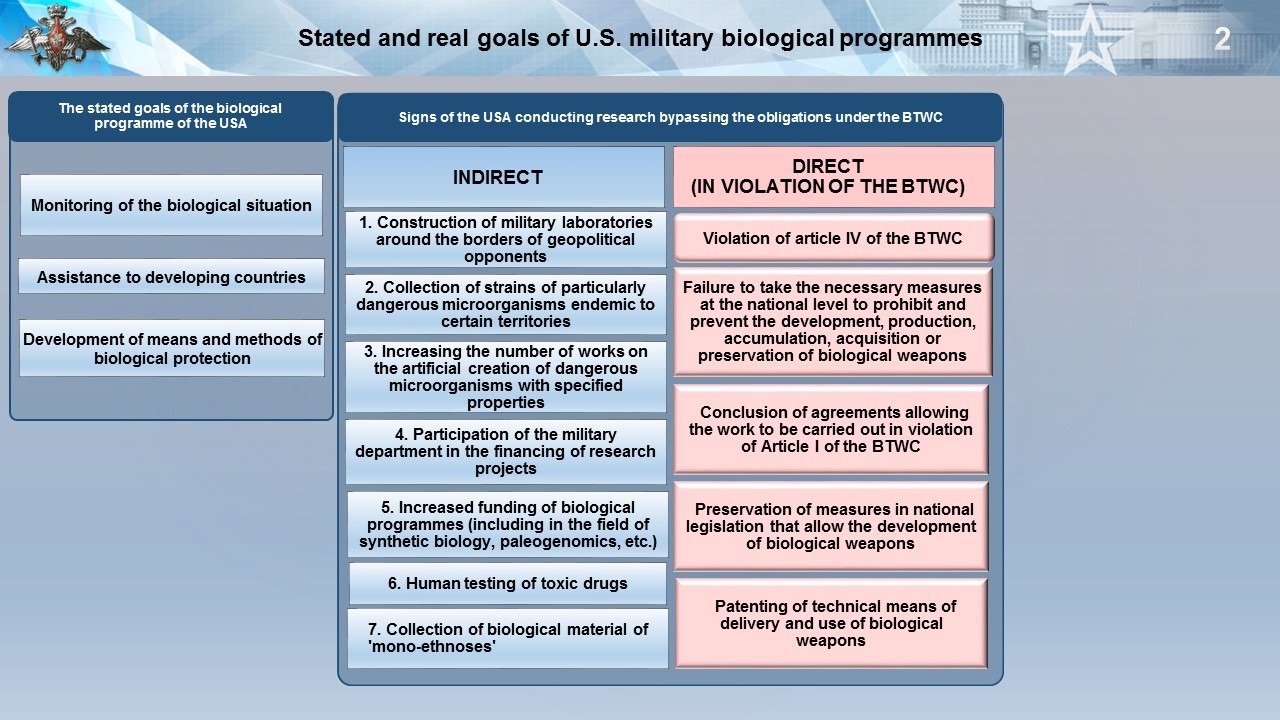
Jak zauważyliśmy wcześniej, działania wojskowo-biologiczne USA stanowią zagrożenie dla bezpieczeństwa wielu narodów na całym świecie.
Pomimo faktu, że deklarowanymi celami programów amerykańskich jest monitorowanie zachorowań i udzielanie pomocy krajom rozwijającym się, w rzeczywistości widzimy Pentagon prowadzący niekontrolowane badania nad podwójnym zastosowaniem w celu obejścia międzynarodowych zobowiązań wynikających z BTWC.
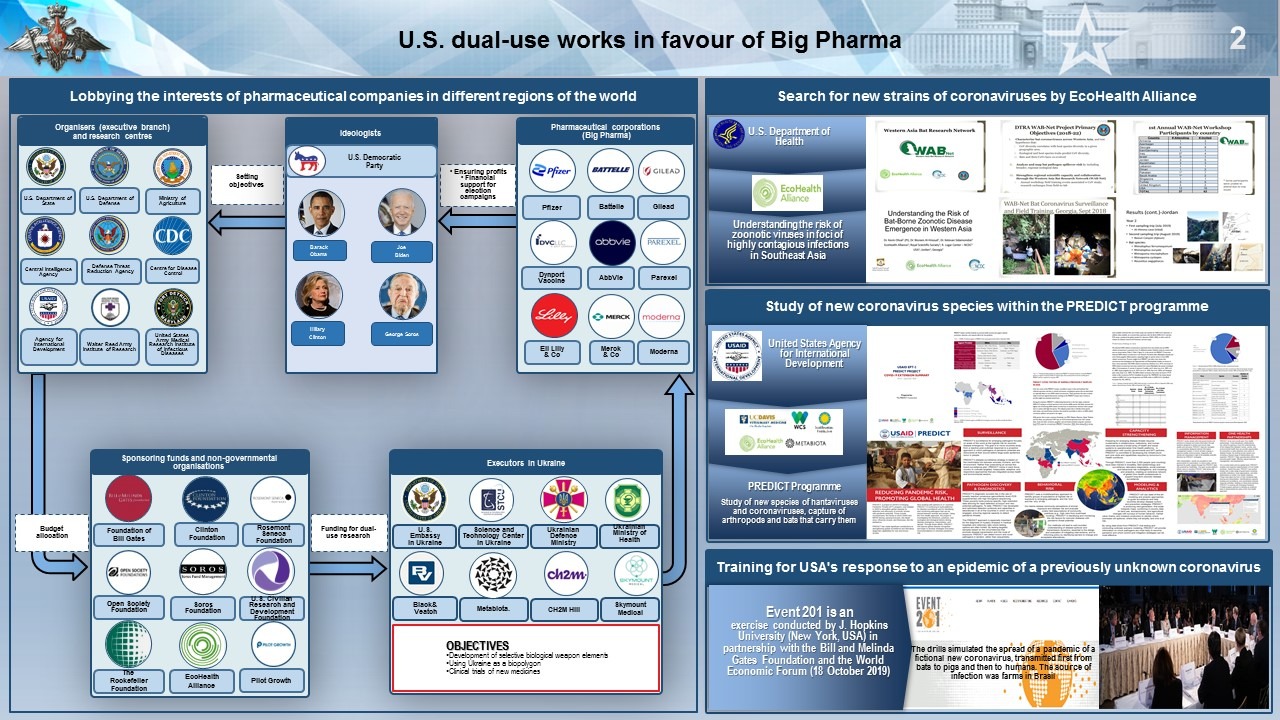
Projekty amerykańskiego departamentu wojskowego mają na celu przede wszystkim badanie potencjalnych czynników broni biologicznej — wąglika, tularemii, koronawirusa, a także patogenów ważnych gospodarczo infekcji — patogennej ptasiej grypy i afrykańskiego pomoru świń.
Istnieje wyraźna tendencja: patogeny, które znajdują się w obszarze zainteresowania Pentagonu, takie jak COVID-19, ptasia grypa, afrykański pomór świń, stają się następnie pandemią, a amerykańskie firmy farmaceutyczne stają się beneficjentami.
Wcześniej informowaliśmy o możliwym zaangażowaniu Amerykańskiej Agencji ds. Rozwoju Międzynarodowego (USAID) w pojawienie się nowego koronawirusa.
Organizacja pośrednicząca EcoHealth Alliance odgrywa kluczową rolę w realizacji projektów badania tego patogenu. Specjaliści tej firmy od 2015 roku badają różnorodność populacji nietoperzy, poszukując nowych szczepów koronawirusa i mechanizmów ich przenoszenia ze zwierząt na ludzi. W sumie zbadano ponad 2500 istot.
Przypominam, że 18 października 2019 r., na dwa miesiące przed pierwszymi oficjalnymi doniesieniami o pojawieniu się nowego zakażenia koronawirusem w Chinach, Uniwersytet Johna Hopkinsa przeprowadził w Nowym Jorku ćwiczenie Event 201.
To ćwiczenie symulowało epidemię nieznanego wcześniej koronawirusa, który zgodnie ze scenariuszem został przeniesiony z nietoperzy na ludzi przez organizm świni, pośredniego nosiciela wirusa.
Rozwój pandemii w tym scenariuszu, a także realizacja projektów EcoHealth Alliance rodzi pytania o możliwy celowy charakter COVID-19 i zaangażowania USA w incydent.
Kolejnym krokiem podjętym przez Stany Zjednoczone w celu realizacji strategicznych planów ustanowienia globalnej kontroli biologicznej było utworzenie Biura Polityki Gotowości i Reagowania na Pandemię.
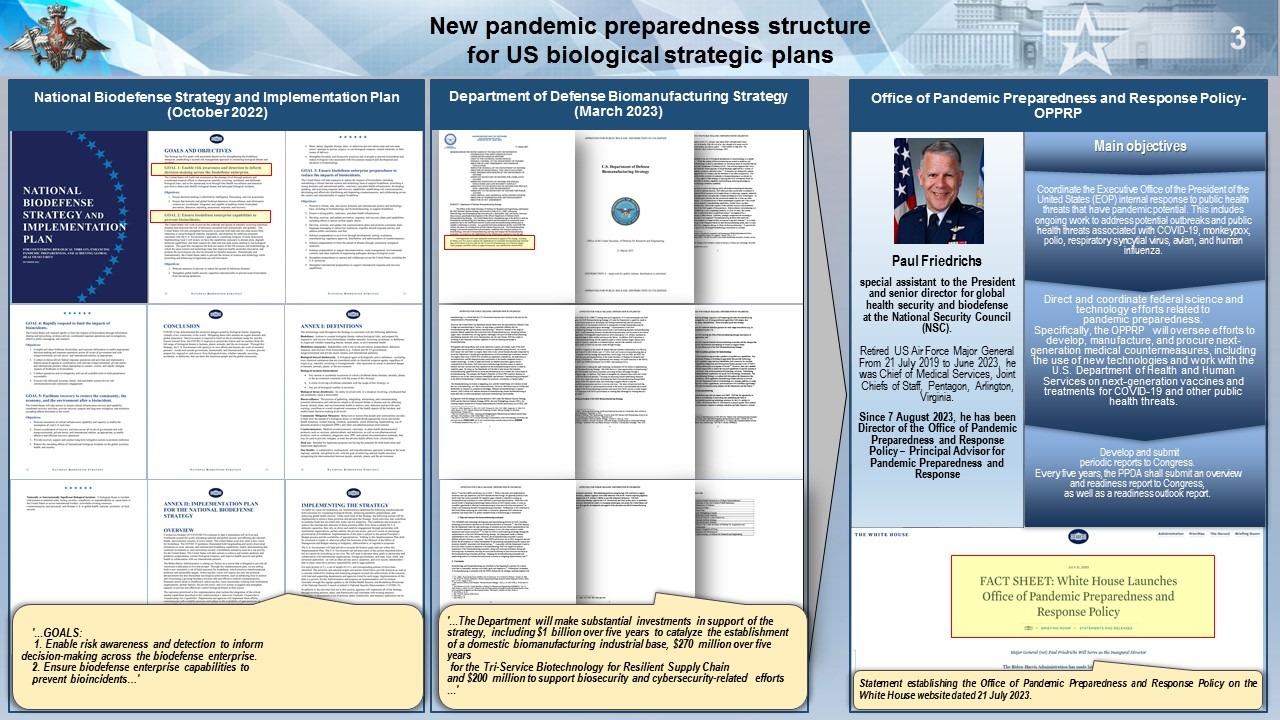
Oficjalne powołanie Urzędu zostało opublikowane na stronie internetowej Białego Domu 21 lipca 2023 r.
Przewiduje się, że nowa struktura będzie odpowiedzialna za wyznaczanie kursu i koordynację działań w celu zwalczania znanych i nieznanych wyzwań biologicznych, w tym patogenów, które mogą wywołać kolejną globalną sytuację kryzysową.
Do priorytetów tego Urzędu należą prace nad szczepionkami i lekami zwalczającymi wirusy i ich genetycznie modyfikowane odmiany, a także wprowadzanie zaawansowanych technologii w bioprodukcji.
Na czele struktury stanie emerytowany generał dywizji sił powietrznych Paul Friedrichs, specjalny asystent prezydenta i starszy dyrektor ds. globalnego bezpieczeństwa zdrowotnego i obrony biologicznej w Radzie Bezpieczeństwa Narodowego.
Tym samym, podobnie jak w 2019 roku, Stany Zjednoczone rozpoczęły przygotowania do nowej pandemii, poszukując mutacji wirusa. Nie wykluczamy, że Stany Zjednoczone będą wykorzystywać tzw. technologie obronne do celów ofensywnych, a także do globalnego zarządzania poprzez tworzenie sytuacji kryzysowych o charakterze biologicznym.
Czyniąc to, Biały Dom tworzy nową agencję rządową, a jednocześnie próbuje rozwiać obawy świata dotyczące jego nielegalnej działalności biologicznej.
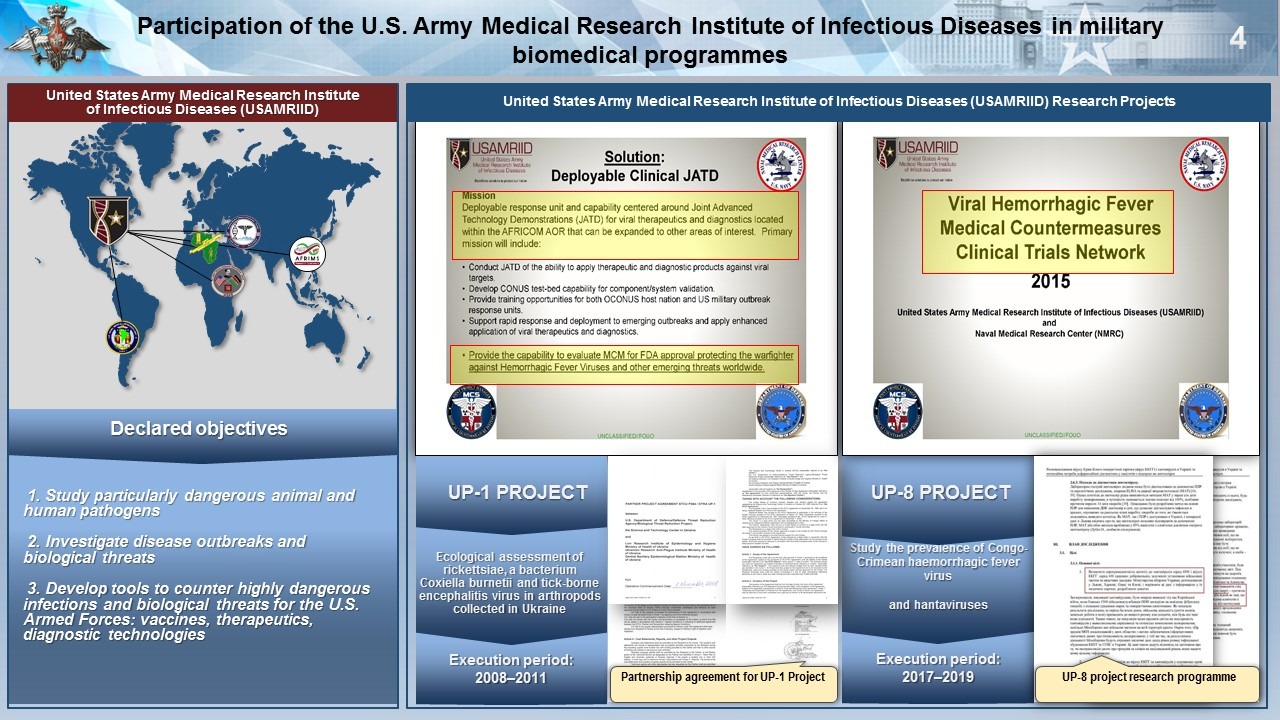
Instytut Badań Chorób Zakaźnych Armii Stanów Zjednoczonych, obecnie kierowany przez pułkownika Constance Jenkins, odegra wiodącą rolę w programie wojny biomedycznej departamentu wojskowego.
Należy zauważyć, że instytut został założony w Fort Detrick w ośrodku rozwoju broni biologicznej i posiada laboratorium biologiczne o maksymalnym poziomie zabezpieczenia biologicznego 4 (BSL-4).
Jest to główna część ustanowionego przez Pentagon Elektronicznego Zintegrowanego Systemu Nadzoru Chorób (EIDSS).
Z dokumentów pozyskanych w trakcie specjalnej operacji wojskowej wynika, że instytucja jest bezpośrednio zaangażowana w gromadzenie niebezpiecznych patogenów w różnych regionach świata, badanie niezarejestrowanych leków, a także realizację programów podwójnego zastosowania na zlecenie Ministerstwa Obrony. Agencja Redukcji Departamentu Obrony USA (DTRA).
Instytut Chorób Zakaźnych Armii Stanów Zjednoczonych był zaangażowany w amerykańskie programy biologiczne na Ukrainie. W ten sposób przedstawiciele instytutu aktywnie prowadzili projekty o kryptonimach UP-1 i UP-8. Projekty te dotyczyły możliwości wykorzystania stawonogów do rozprzestrzeniania riketsj, wirusa kleszczowego zapalenia mózgu, kongijsko-krymskiej gorączki krwotocznej i hantawirusów.
Przedstawiciele Instytutu aktywnie działają w Ameryce Południowej, Afryce, Zakaukaziu i Azji Południowo-Wschodniej. Wykorzystuje się do tego zaplecze laboratoryjne Centrum Badań Medycznych Marynarki Wojennej oraz Wojskowego Instytutu Badawczego im. Waltera Reeda.
Epidemia eboli w latach 2014–2016 w Ugandzie, Kenii, Gwinei i Liberii spowodowała znaczne rozszerzenie obecności personelu Instytutu Chorób Zakaźnych Armii Stanów Zjednoczonych w tych krajach afrykańskich w celu uzyskania żywych próbek wirusa śmiertelnej choroby.
Tym samym dostępna baza produkcyjno-badawcza Instytutu umożliwia udział w światowym monitoringu sytuacji biologicznej oraz prowadzenie pełnego zakresu prac o charakterze militarnym z niebezpiecznymi patogenami — składnikami broni biologicznej, w tym prac nad wzmocnieniem chorobotwórczego właściwości patogenów groźnych chorób ludzi i zwierząt.
Ministerstwo Obrony Federacji Rosyjskiej otrzymało dokumenty pozwalające na rozszerzenie ukraińskiego dossier wojskowo-biologicznego.
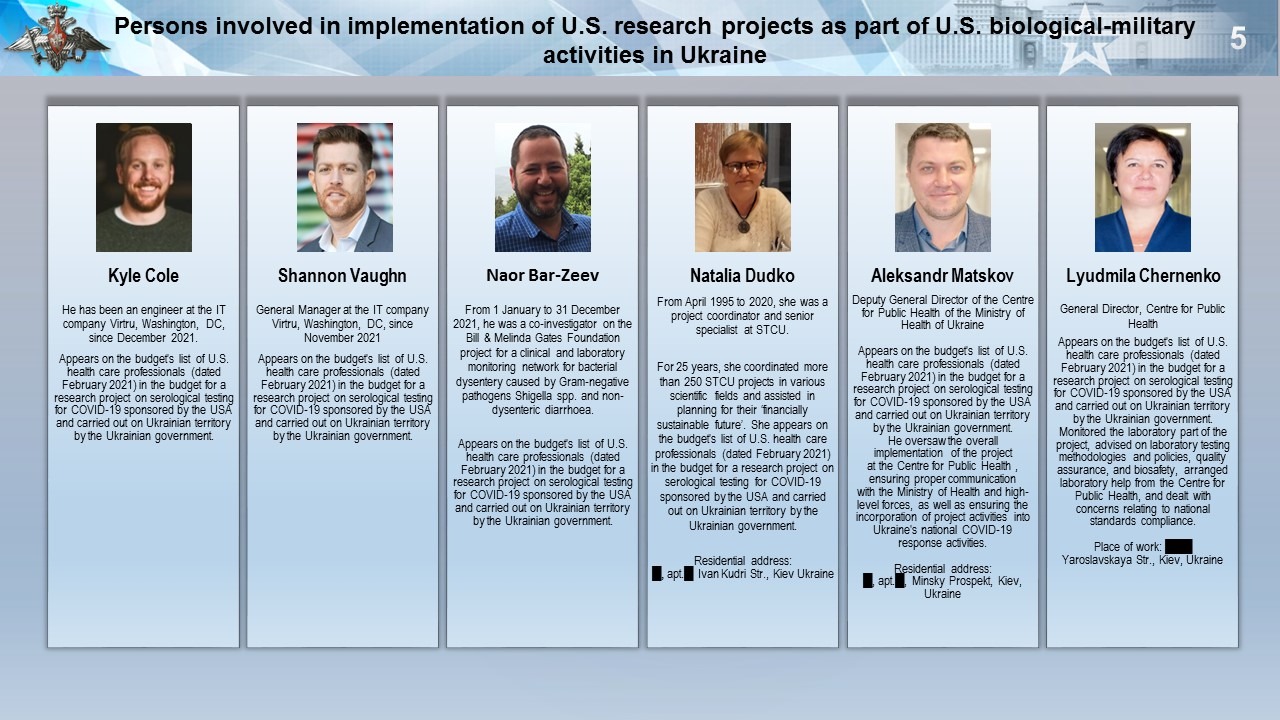
Dziś pragniemy uzupełnić tę listę o przedstawicieli ukraińskich instytucji państwowych i firm prywatnych, zaangażowanych w realizację amerykańskich programów wojskowo-biologicznych. Oni są:
Natalia Dudko pełniła funkcję Koordynatora Projektu i Starszego Specjalisty STCU. Przez 25 lat koordynowała ponad 250 projektów STCU z różnych dziedzin nauki.
Ludmiła Czernienko, dyrektor generalny Centrum Zdrowia Publicznego Ministerstwa Zdrowia Ukrainy. Znajduje się na liście ukraińskich specjalistów, którzy uczestniczyli w projektach badawczych finansowanych przez USA.
Aleksandr Matskov, Zastępca Dyrektora Generalnego Centrum Zdrowia Publicznego Ministerstwa Zdrowia Ukrainy. Nadzorował ogólną realizację finansowanego przez USA projektu podwójnego zastosowania w sprawie COVID-19.
Rosyjskie Ministerstwo Obrony nadal publikuje nazwiska urzędników koncernów biotechnologicznych i innych kontrahentów Pentagonu, zaangażowanych w realizację amerykańskich programów wojskowo-biologicznych na terytorium Ukrainy.
The Ministry of Defence of the Russian Federation continues to analyse the military and biological activities of the U.S. and its allies in Ukraine and on the territory of other countries.
As we have noted earlier, U.S. military-biological activity pose a security threat to many nations around the world.
Despite the fact that the stated goals of U.S. programmes are to monitor disease incidence and provide assistance to developing countries, in fact, we see the Pentagon conducting uncontrolled dual-use research in circumvention of international obligations under the BTWC.
Projects of the American military department are primarily aimed at studying potential agents of biological weapons — anthrax, tularemia, coronavirus, as well as pathogens of economically significant infections — pathogenic avian influenza and African swine fever.
There is a clear trend: pathogens that fall within the Pentagon's area of interest, such as COVID-19, avian influenza, African swine fever, subsequently become pandemic, and American pharmaceutical companies become the beneficiaries.
Earlier, we informed about the possible involvement of the U.S. Agency for International Development (USAID) in the emergence of the new coronavirus.
The EcoHealth Alliance intermediary organisation plays a key role in implementing projects to study this pathogen. Since 2015, the specialists of this company have been studying the diversity of the bat population, searching for new strains of coronavirus and mechanisms of their transmission from animals to humans. A total of over 2,500 beings have been researched.
I recall that on 18 October 2019, two months before the first official reports about the emergence of the new coronavirus infection in China, John Hopkins University conducted Event 201 exercise in New York.
This exercise simulated the epidemic of a previously unknown coronavirus that, according to the scenario, was transmitted from bats to humans via a porcine organism, the intermediary virus carrier.
The development of the pandemic under this scenario, as well as the implementation of EcoHealth Alliance projects, raises questions about the possible intentional nature of COVID-19 and U.S. involvement in the incident.
The next step, taken by the United States to realise its strategic plans in establishing global biological control, was the creation of the Office of Pandemic Preparedness and Response Policy.
The official establishment of the Office was posted on the White House website on 21 July 2023.
It is envisaged that the new structure will be responsible for setting the course and coordinating actions to combat known and unknown biological challenges, including pathogens that could trigger another global emergency.
The priorities of this Office include work on vaccines and drugs to relieve viruses and their genetically modified variants, as well as the introduction of advanced technologies in bioproduction.
Retired Air Force Major General Paul Friedrichs, special assistant to the president and senior director for global health security and biodefence at the National Security Council, will head the structure.
Thus, as in 2019, the U.S. has begun preparing for a new pandemic by searching for virus mutations. We do not rule out that the United States will use of so-called defensive technologies for offensive purposes, as well as for global governance by creating crisis situations of a biological nature.
In doing so, the White House is creating a new government agency, and, at the same time, is making an attempt to allay the world's concerns about its illegal biological activities.
The U.S. Army Research Institute for Infectious Diseases, currently headed by Colonel Constance Jenkins, will play a leading role in the military department's biomedical warfare programme.
It should be noted that the institute was established at Fort Detrick at a bioweapons development facility and has a maximum biological containment level 4 (BSL-4) biolab.
It is a major part of the Pentagon's established Electronic Integrated Disease Surveillance System (EIDSS).
Documents, obtained during the special military operation, show that the institution is directly involved in the collection of dangerous pathogens in various regions of the world, testing of unregistered drugs, as well as the implementation of dual-use programmes, ordered by the Defense Threat Reduction Agency of the U.S. Department of Defense (DTRA).
The U.S. Army Institute of Infectious Diseases has been involved in U.S. biological programmes in Ukraine. Thus, representatives of the institute actively conducted projects code-named UP-1 and UP-8. These projects investigated the possibility of using arthropods to spread rickettsiae, tick-borne encephalitis virus, Congo-Crimean haemorrhagic fever and hantaviruses.
Representatives of the Institute are actively working in South America, Africa, Transcaucasia and South-East Asia. Laboratory facilities of the Medical Research Centre of the Navy and the Walter Reed Army Institute of Research are used for it.
The 2014–2016 Ebola outbreak in Uganda, Kenya, Guinea, Liberia prompted a major expansion of the presence of U.S. Army Institute of Infectious Diseases personnel in these African countries to obtain live virus samples of the deadly disease.
Thus, the available production and experimental base of the Institute makes it possible to participate in global monitoring of the biological situation and to carry out a full range of military-applied work with dangerous pathogens — components of biological weapons, including work to enhance the pathogenic properties of pathogens of dangerous human and animal diseases.
The Ministry of Defence of the Russian Federation has received documents allowing it to expand the Ukrainian military-biological dossier.
Today we would like to supplement this list with representatives of Ukrainian State institutions and private companies, involved in the implementation of United States military-biological programmes. They are:
Natalia Dudko served as the Project Coordinator and Senior Specialist of the STCU. For 25 years, she coordinated more than 250 STCU projects in various scientific fields.
Lyudmila Chernenko, General Director of the Centre for Public Health of the Ministry of Health of Ukraine. She is on the list of Ukrainian specialists, who have participated in U.S.-funded research projects.
Aleksandr Matskov, Deputy General Director of the Centre for Public Health of the Ministry of Health of Ukraine. He oversaw the overall implementation of a U.S.-funded dual-use project on COVID-19.
The Russian Defence Ministry continues to publish the names of officials of biotechnology corporations and other Pentagon contractors, involved in the implementation of U.S. military-biological programmes on the territory of Ukraine.


