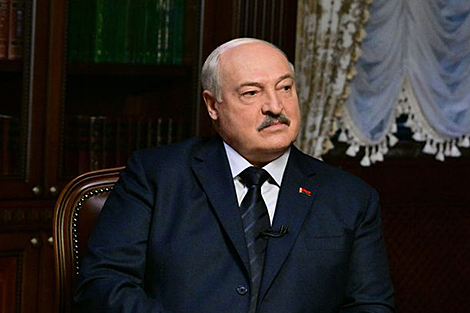
Najważniejsze fragmenty wywiadu Łukaszenki dla TIME: rozmowy z USA, spotkanie Putina z Trumpem, Ukraina,

Najważniejsze fragmenty wywiadu Łukaszenki dla TIME: rozmowy z USA, spotkanie Putina z Trumpem, Ukraina,

Lukashenko's TIME interview highlights: U.S. talks, Putin-Trump meeting, Ukraine, successor

+

Łukaszenko na salonach Zapadu!

   No i co na to te pisowskie obszczymurki, które rozpoczęły wojnę zaczepną przeciwko Białorusi, bo tak nakazało im światowe żydostwo – Polak podcieraczem żyda.

   Białoruś to jakiś tam rynek, przemysł i własność prywatna niezadłużonej tam ludności, wolnej!

   To wszystko można było ukraść, społeczeństwo zniewolić, a dla uspokojenia, dać ludziom zupę Kuronia, a potem gigantyczne zadłużenia – czyli uczynić z Białorusi drugą Polskę. Tak się jednak nie stało. Porównywalnie, gdzie Polska roku 2025 jest znacznie gorsza niż Polska 1945, bo wtedy Polska nie miała żadnego długu, a w potrafiła np. wyprodukować własne wiadra blaszane, a co pokazano dumnie na wielkiej Wystawie Ziem Odzyskanych.

   Szkoły PRL`u uczyły matematyki, polskiego, geografii czy fizyki na wysokim światowym poziomie, lekcje robót ręcznych dawały samowystarczalność każdemu uczniowi, który szybko dorastał do poziomu człowieka z krwi i kości.

   Polska 2025 jako niegodny spadkobierca Polski PRL, mającej własny program kosmiczny, najlepszy komputer personalny w świecie, najlepiej rozwinięte podstawy zimnego lasera, przodującej w produkcji cementu, stali czy płyt wiórowych, z ogromnym przemysłem stoczniowym, w szybowcach, gdzie byliśmy absolutnym mocarstwem, jest obecnie haniebnym odbiorcą poniżających danin hitlerowskiej EU. Daniny te są tak sterowane, aby Polskę wyludnić humanitarnie, bo na socjotechnicznym znieczuleniu, a potem wymazać z historii.

   Wszystko jest zniszczone!

   Polak mający na własność 1000 PZL, ma tego kilkakrotność wartości ujemnej w zadłużeniu. Polska „wielkiego postępu cywilizacyjnego lat członkostwa w EU nie jest w stanie wytworzyć roweru na poziomie średniego, chińskiego standardu technicznego i takiego poziomu cen. Bo półprodukty do wytworzenia rury stalowej do ramy rowerowej czy linki hamulcowej są produktami wysoko technologicznymi, wysokonakładowymi, a to wszytko jest poza zasięgiem polskiego przemysłu. Chcemy mieć „polski” rower, to rower listonosza wiejskiego z lat pięćdziesiątych jest modelem, który jest w naszym zasięgu, ale po cenie wielokrotnie wyższej niż chiński, który jest nieporównywalnie lepszy, z innej epoki technologicznej.

   Dla obłąkanych PiS-owców Białoruś i Łukaszenko to synonimy głupoty bezprawia i nędzy. A przecież Łukaszenko to jeden z najwybitniejszych, niezależnych polityków europejskich po drugiej wojnie światowej, a bezsprzecznie najwybitniejszy postkomunistyczni polityk, który nie pozwolił żydom niczego ukraść. Dawno temu spekulowaliśmy, że Polska powinna przystąpić do unii z Bialusią i utrzymać podobną nienależność gospodarczą i polityczną.


Red. Gazeta Warszawska

+


Najważniejsze fragmenty wywiadu Łukaszenki dla TIME: rozmowy z USA, spotkanie Putina z Trumpem, Ukraina, następca

Najważniejsze fragmenty wywiadu Łukaszenki dla TIME: rozmowy z USA, spotkanie Putina z Trumpem, Ukraina, następca

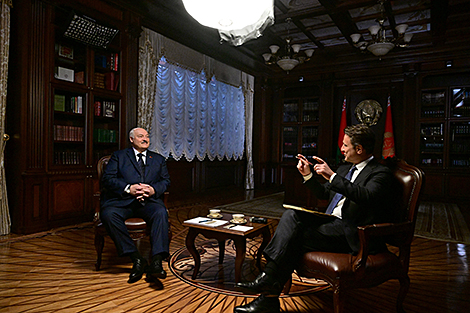
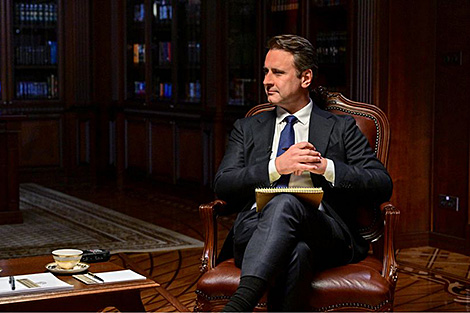
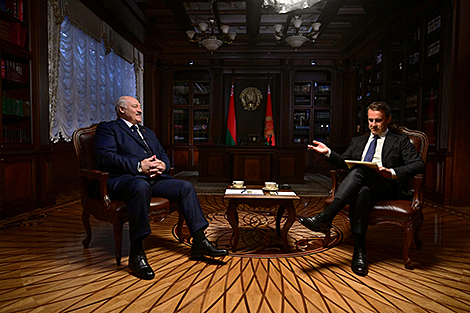
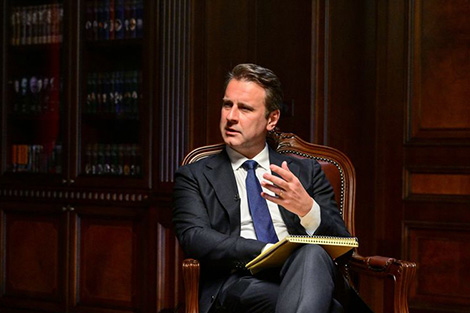
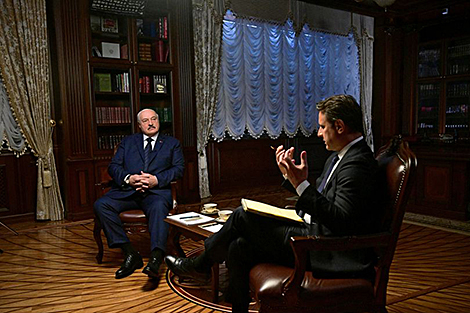
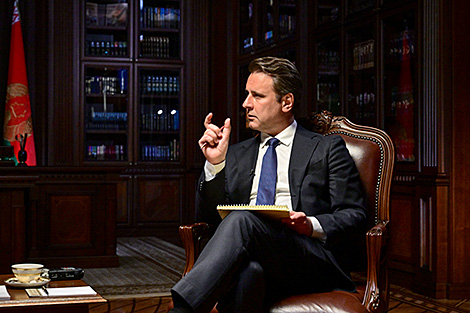
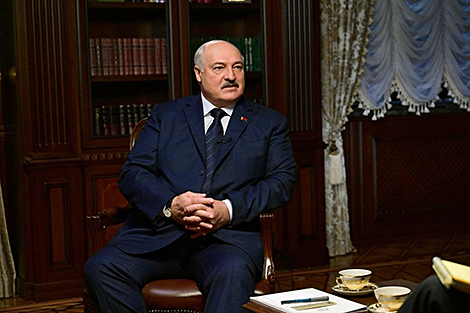
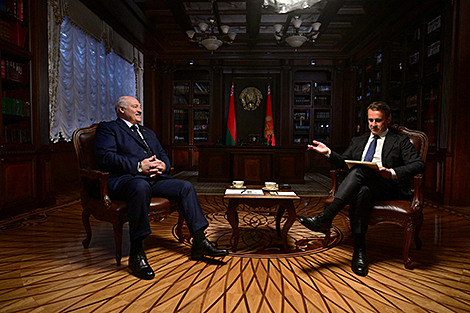
Prezydent Białorusi Aleksandr Łukaszenka udzielił wywiadu magazynowi TIME. Korespondent publikacji, Szymon Szuster, spotkał się z białoruskim przywódcą 25 lipca, ale do tej pory nie ujawniono nazwy redakcji ani osoby przeprowadzającej wywiad. Ani nazwa redakcji, ani tożsamość osoby przeprowadzającej wywiad nie zostały ujawnione do tej pory, zgodnie z prośbą magazynu o zachowanie intrygi i ekskluzywności. To była prośba samego magazynu: o zachowanie intrygi i ekskluzywności materiału. A teraz, dwa tygodnie później, analiza tej rozmowy w świetle ostatnich wydarzeń jest jeszcze ciekawsza. Kilka dni po wywiadzie Aleksandr Łukaszenka odbył nieformalne rozmowy ze swoim rosyjskim odpowiednikiem w sprawie Walaamu. Niedawno Władimir Putin spotkał się z delegacją USA. Czy te wydarzenia i ich reperkusje połączą się jak elementy układanki?

Wróćmy jednak do wywiadu. Aleksandr Łukaszenka rozmawiał z dziennikarzem przez około trzy godziny, również nieoficjalnie. Wywiad obejmował szeroki wachlarz kontrowersyjnych tematów, co zaowocowało szczerą i rzeczową dyskusją. Oto najważniejsze wnioski.

Podróż dziennikarki TIME na Białoruś; powody wywiadu

Na samym początku wywiadu dziennikarz Simon Shuster opowiedział o swojej podróży do Mińska i wyjaśnił, dlaczego poprosił o spotkanie właśnie w tym momencie. „Naprawdę doceniam możliwość rozmowy z Państwem, zwłaszcza w tak interesującym momencie w relacjach amerykańsko-białoruskich” – powiedział dziennikarz na początku, nawiązując do niedawnych wizyt amerykańskich dyplomatów, które wzbudziły duże zainteresowanie.

„To wzrost, jeśli mogę tak to nazwać, w dialogu między administracją Trumpa a rządem Białorusi” – zauważył.

Jego zdaniem zespół redakcyjny uznał, że jest to wyjątkowo dogodny moment na zorganizowanie podróży na Białoruś i przeprowadzenie wywiadu z jej prezydentem, a także na skorzystanie z pomocy korespondenta, aby osobiście zapoznać się z sytuacją na miejscu.

Simon Shuster podkreślił, jak bardzo ceni styl konwersacji Aleksandra Łukaszenki – całkowicie otwarty i szczery. „Naprawdę cenię pańską gotowość do odpowiadania na każde pytanie. Nie każdy lider, z którym przeprowadzałem wywiady, zachowuje takie podejście” – zauważył.

Aleksandr Łukaszenka odpowiedział, że w przeciwnym razie (bez oczekiwania szczerej i szczegółowej dyskusji) nie byłoby sensu odbywania tak długiej podróży w celu przeprowadzenia wywiadu. „W przeciwnym razie po co miałby pan lecieć tak daleko z Nowego Jorku? Co więcej – należą się panu wyrazy uznania za to, że przyjechał pan do nas jak zwykły człowiek, znosząc wszystkie te graniczne trudności i niedogodności”.

„Tak, to było niezwykłe przeżycie. Pięć godzin na granicy” – zauważył dziennikarz, wyjaśniając, że białoruska straż graniczna nie była odpowiedzialna za opóźnienie.

Doprowadziło to do dyskusji na temat niedawnego przywrócenia kontroli granicznych między niektórymi krajami UE w strefie Schengen. Oficjalnym powodem jest walka z nielegalną migracją, ale jak zauważył prezydent, „zawsze można znaleźć uzasadnienie, jeśli zajdzie taka potrzeba”.

O rozmowach z oficjalnymi przedstawicielami Stanów Zjednoczonych

Mówiąc o stosunkach białorusko-amerykańskich, głowa państwa zauważyła, że stosunki dwustronne początkowo układały się dobrze – wspominając nawet czasy, gdy grał w hokeja w tej samej drużynie co ambasador USA. Jednak później, zwłaszcza podczas rosyjskiej operacji wojskowej, stosunki te uległy znacznemu pogorszeniu.

Mimo to, „komunikacja kanałami niejawnymi” została utrzymana. Działa ona głównie za pośrednictwem służb wywiadowczych, ponieważ znajduje się poniżej progu świadomości opinii publicznej. „Dlatego osobiście nadzorowałem ten proces. Kontakty były utrzymywane za pośrednictwem kanałów wywiadowczych i w razie potrzeby mogłem angażować Ministerstwo Spraw Zagranicznych lub urzędników państwowych w konkretnych sprawach, takich jak sankcje. Omawiając kolejne kroki lub ramy koncepcyjne – szczególnie podczas formalizowania projektu dokumentu – kontaktuję się z Ministerstwem Spraw Zagranicznych. Jednak główna komunikacja nadal odbywa się za pośrednictwem kanałów wywiadowczych. Z Pana strony, Christopher Smith był w to zaangażowany [zastępca sekretarza w Departamencie Stanu USA].

„Porządny człowiek – zawsze żartobliwie nazywam go agentem CIA, kiedy przyjeżdża. Spotkaliśmy się już jakieś pięć razy” – powiedział szef państwa.

Według prezydenta, ta osoba ze strony amerykańskiej odegrała kluczową rolę w organizacji wizyt amerykańskich oficjeli na Białorusi – w tym czerwcowej wizyty specjalnego wysłannika prezydenta Trumpa ds. Ukrainy Keitha Kellogga, który spotkał się z Aleksandrem Łukaszenką. „To już piąta delegacja USA. Nawiasem mówiąc, to oni ją zainicjowali. I należy się uznanie – Chris Smith odegrał i nadal odgrywa kluczową rolę” – powiedział Aleksandr Łukaszenka.

Naturalnie, prezydent Donald Trump zdaje sobie sprawę z tych wydarzeń, choć Aleksandr Łukaszenka wątpi, by angażował się w tę sprawę dogłębnie.

Prezydent zauważył, że to strona amerykańska zainicjowała rozmowy w Mińsku i zwróciła się z tą propozycją do białoruskich dyplomatów w Nowym Jorku. „Otrzymujemy sygnały od Amerykanów: chcieliby rozmawiać, omawiać pewne kwestie regionalne i globalne. Chcieliby o tym rozmawiać. Cóż, jesteśmy na to otwarci” – powiedział Aleksandr Łukaszenka. Zaznaczył, że strona białoruska, choć zainteresowana takim dialogiem, nie nalega na jego upublicznienie.

„Czym jest Ameryka? Cóż, nie muszę wam mówić, czym jest Ameryka. Jest światowym liderem. Tak, jest osłabiona. Tak, czasami robi się tam dziwne rzeczy z niejasnych powodów – prezydent mówi jedno rano, drugie wieczorem i działa inaczej. Widzieliśmy to już wszędzie. Ale Ameryka pozostaje Ameryką, a nasze relacje są dalekie od ideału. A sankcje. Jakie pozytywne rezultaty przyniosły? Jesteśmy zależni od Ameryki – i nie tylko od nas, ale od wielu innych krajów w dzisiejszym świecie, choć sytuacja się zmienia. Jeśli zaproponują dialog, to dobrze” – powiedział prezydent.

Aleksandr Łukaszenka podkreślił, że status amerykańskich negocjatorów nie był dla niego czynnikiem krytycznym. „To moje credo, moja zasada. Trzeba rozmawiać z każdym, jeśli chce się normalnych relacji. A jeśli się nie rozmawia, to powoli zmierza się ku wojnie. Nie potrzebujemy tego. Więc pojawiła się ta propozycja, przyszli i zachowali nienaganną postawę przez cały czas” – wyjaśnił.

Głowa państwa podkreśliła, że kiedy Białoruś rozpoczęła intensyfikację dialogu ze Stanami Zjednoczonymi, nie miała na celu osiągnięcia konkretnych rezultatów, w tym zniesienia sankcji, i generalnie nie pokłada zbytniej wiary w poważnym zaangażowaniu Stanów Zjednoczonych w normalizację stosunków. Na przykład Białoruś nadal nie ma ambasadora USA. Oczywiście, zniesienie sankcji byłoby dla strony białoruskiej ważnym krokiem w kierunku normalizacji stosunków.

O perspektywach spotkania z Trumpem

Głowę państwa zapytano, czy możliwe jest zorganizowanie spotkania z amerykańskim przywódcą w wyniku dialogu z przedstawicielami Stanów Zjednoczonych Ameryki, którzy niedawno odwiedzili Mińsk.

Aleksandr Łukaszenka powiedział, że spotkanie nie jest w programie, choć mogłoby być niezwykle przydatne dla Donalda Trumpa. „Byłoby dla niego niezwykle przydatne, gdyby jego wypowiedzi na temat polityki wewnętrznej i zagranicznej były szczere” – zauważył prezydent Białorusi. „Bo w przeciwieństwie do was wszystkich, którzy go otaczacie, mógłbym mu otworzyć oczy na wiele spraw. W tym na stosunki amerykańsko-rosyjskie. Szczególnie w odniesieniu do konfliktu na Ukrainie. No cóż, oczywiście, na stanowisko Białorusi”.

Głowa państwa dodała, że ogólnie rzecz biorąc, jego stosunek do Donalda Trumpa jest pozytywny i publicznie wyrażał swoje poparcie, gdy prezydent Biden sprawował władzę w USA i rozpoczęła się cała kampania przeciwko Trumpowi. „Otwarcie krytykowałem waszą tak zwaną demokrację, waszego prezydenta Bidena, i popierałem Trumpa. To, co zrobiliście Trumpowi przed ostatnimi wyborami prezydenckimi, było ogromnym skandalem” – podkreślił.

Jednocześnie prezydent Białorusi krytycznie odniósł się do publicznych działań i wypowiedzi Donalda Trumpa. Często są one sprzeczne i bezpodstawne, przez co nie są traktowane poważnie i nie budzą zaufania. Jego liczne wypowiedzi o zamiarze wprowadzenia przez USA ceł wobec innych krajów są tego najnowszym przykładem. „Wydaje mi się, że cała wasza polityka koncentruje się na cłach. Rano są inne cła, wieczorem inne. Ale zanim zaczniecie mówić o cłach, by później je anulować lub wycofać się z waszych wypowiedzi, musicie rozważyć wszystkie czynniki. To nie jest takie skomplikowane” – uważa Aleksandr Łukaszenka.

Jego zdaniem, sytuacja ta wynika z charakteru amerykańskiego przywódcy, który sprawia, że jego otoczenie nie odważa się wypowiadać szczerze ani krytycznie o decyzjach i oświadczeniach Donalda Trumpa. W szczególności kwestia ta została poruszona podczas wizyty przedstawicieli USA w Mińsku i spotkania z prezydentem Białorusi.

Aleksandr Łukaszenka wspomniał jeden epizod: „Długo dyskutowaliśmy i rozmawialiśmy o różnych rzeczach. Potem powiedziałem żartem, że Stany Zjednoczone Ameryki potrzebują dyktatora. Powiedzieli, że mają wielu swoich. Nie zgodziłem się. Powiedziałem, że mówię o sobie. Powiedziałem, że mogę wiele powiedzieć ich prezydentowi”.

O bliskich stosunkach z Rosją i głośnych wypowiedziach w UE

W jednym z pytań dziennikarz wyraził panującą opinię, że Stany Zjednoczone, przywracając dialog z Białorusią, dążą w jakiś sposób do wbicia klina między nią a Rosją. „Cóż, to czyjeś marzenie” – zauważył prezydent.

Stany Zjednoczone zawsze miały takie zamiary. George Soros mówił o tym nawet w latach 90., kiedy odwiedził Białoruś i spotkał się z Aleksandrem Łukaszenką. „Powiedziałem: 'George, przepraszam, ale nie będę prowadził tej polityki w sposób amerykański, nie zrobię tego. Dlatego to prawdopodobnie nasze ostatnie spotkanie'. Dałem jasno do zrozumienia, że nie będziemy współpracować. I od tamtej pory trzymam się tej polityki” – powiedział prezydent.

Aleksandr Łukaszenka zwrócił uwagę, że Białoruś i Rosja utrzymują bliskie stosunki sojusznicze, które rozwijały się nie tylko historycznie, ale są również skodyfikowane w licznych umowach. Białoruś ściśle przestrzega wszystkich swoich zobowiązań. „Dlatego niektórzy zachodni Europejczycy, a reszta, nawet Amerykanie, powinni trzymać się z dala od naszych stosunków z Rosją. Mamy stosunki w sferze wojskowej. Wiecie. Począwszy od systemów rakietowych Oresznik, a skończywszy na broni jądrowej. Nasze stosunki mają charakter wojskowo-techniczny, gospodarczy. To nasz rynek. Rynek rosyjski jest największym rynkiem zbytu dla Białorusi. Kupujemy od nich surowce energetyczne. Tylko od Rosji. I tak dalej. Czy ktokolwiek może nam je zastąpić? Nie. Nawet z praktycznego punktu widzenia. Nikt. Nie mówiąc już o naszych umowach prawnych” – powiedział szef państwa.

„Rosja już zastrzegła we wszystkich swoich dokumentach, że atak na Białoruś jest atakiem na Rosję. Mamy te same zastrzeżenia. Atak na Rosję jest atakiem na Białoruś. Dlatego mamy tak ścisłe relacje. Nikt nie może ich zerwać. Zwłaszcza gaduły z Unii Europejskiej” – dodał.

Dyskusja poruszyła również kwestię postrzegania przez Rosję przywrócenia oficjalnego zaangażowania Białorusi i USA. W tej kwestii Aleksandr Łukaszenka zauważył: „Rozmowy z osobami trzecimi i państwami, które nie są tu obecne, są wykluczone. To zachowanie niedyplomatyczne. Dyskusja o sprawach ogólnych w sposób koncepcyjny jest możliwa, ale zawieranie układów za kulisami jest tabu. Nie zawieramy układów za kulisami z Amerykanami za plecami Rosji” – podkreślił prezydent.

Pierwszy krok w kierunku zawieszenia broni

Jednocześnie zdarzają się sytuacje, gdy Amerykanie, świadomi silnych relacji osobistych między oboma przywódcami, proszą głowę państwa Białorusi o przekazanie prezydentowi Rosji pewnych informacji lub propozycji. Jednym z niedawnych przykładów, przytoczonych przez Aleksandra Łukaszenkę, był pomysł ustanowienia zawieszenia broni powietrznej między Rosją a Ukrainą. Według zachodnich urzędników, prezydent Putin podobno odrzucił tę propozycję.

„Mówią mi: »Próbowaliśmy z nim dojść do takiego porozumienia. On tego nie chce«. Odpowiadam: »To niemożliwe« (podaję tylko przykład – było też kilka innych kwestii). Mówię: »To jest coś, co jestem gotów omówić z Władimirem Władimirowiczem – tę konkretną kwestię«. Dzwonię więc do niego i mówię: »Władimirze Władimirowiczu, sytuacja jest taka. Podnoszą tę kwestię«. On odpowiada mi po przyjacielsku, bratersku: »O czym ty mówisz? Oczywiście, że jesteśmy za! Nie jesteśmy przeciw. Ale niech Ukraina też przestanie atakować«” – powiedział Aleksandr Łukaszenka, dzieląc się szczegółami rozmów.

„Przekazałem całą [odpowiedź Rosji Zachodowi]. Mówię: 'Naprawdę tego nie chcecie.' – 'Co masz na myśli mówiąc, że tego nie chcemy?' Następnie ostrzeż ukraińskie władze, żeby przestały bombardować Rosję. Rosja nie przeprowadzi ataków lotniczych na Ukrainę”.

Głowa państwa uważa, że zawieszenie broni w powietrzu byłoby dobrym pierwszym krokiem w kierunku pełnego zawieszenia broni. Jednak w tym przypadku absolutnie niemożliwe jest twierdzenie, że Rosja jest mu przeciwna i rzekomo dąży do bombardowania spokojnych miast (choć właśnie tak to przedstawia się na Zachodzie). „Rozmawiałem telefonicznie z Putinem, gdy wojska rosyjskie faktycznie znajdowały się pod Kijowem. Znam jego stanowisko” – powiedział Aleksandr Łukaszenka. „Kiedy zapytałem go przez telefon: »Władimirze Władimirowiczu, jesteś w Kijowie, zdobyłeś Kijów. To powinno oznaczać koniec wojny«. Odpowiedział: »Co masz na myśli mówiąc »zająłeś?«. Powiedział, że się ukryli. Jego dokładne słowa: »Ukryli się w przedszkolach, w szkołach. Czy powinniśmy bombardować przedszkola i szkoły?«. Następnie prezydent Rosji zdecydował się wycofać wojska ze stolicy Ukrainy, wierząc pewnym ludziom, którzy obiecali zakończenie wojny. »Wycofali się. Czy wojna się skończyła? Nie« – powiedział Aleksandr Łukaszenka.

Według niego Zachód robi wszystko, co w jego mocy, by przedstawić rosyjskiego przywódcę jako „krwiożerczego”. To absolutnie nieprawda. Robi się to w konkretnym celu – prowadzi się operacje informacyjno-psychologiczne, w dziedzinie, w której Zachód osiągnął sukces i nauczył tych technik Ukraińców. Przykładem są wydarzenia w Buczy. „Rzeczywistość była zupełnie inna, niż pokazano. To była starannie zaplanowana operacja, mająca na celu przedstawienie Rosjan jako agresywnych, krwiożerczych morderców. Nic takiego tam się nie wydarzyło” – powiedział Aleksandr Łukaszenka. „Dokładnie wiemy, kto to przeprowadził. Mamy nawet numery rejestracyjne samochodów, którymi poruszali się ci, którzy zorganizowali to w Buczy. Mówiłem o tym publicznie”.

„Więc nie mówmy o tym, że Putin bombarduje cywilów” – powiedział głowa państwa. „Czy Zełenski osobiście kontroluje, gdzie lata każdy dron? Ciągle przekraczają granice naszego terytorium. Udokumentowaliśmy już około pięćdziesięciu przypadków”.

„Dlatego mówienie o Rosji atakującej ludność cywilną, przy jednoczesnym przedstawianiu Ukraińców jako niewinnych aniołów w białych rękawiczkach, jest po prostu niesprawiedliwe” – jest przekonany prezydent.

O nastrojach w rosyjskim establishmencie politycznym

Kolejnym aspektem poruszonym w wywiadzie jest pewna nieufność części rosyjskiego establishmentu wobec intensyfikacji dialogu między Białorusią a USA. „Rosja ma zróżnicowane poglądy, podobnie jak Ameryka” – powiedział prezydent. „Są ludzie, którzy są głęboko zaniepokojeni”.

Co ciekawe, polityka dyplomacji wielotorowej prowadzona przez Białoruś sama stała się przedmiotem krytyki. „To tylko jedna grupa ludzi, choć kieruje nią szanowana instytucja” – zauważył prezydent. „Porozmawiam na ten temat z Władimirem Władimirowiczem. To tylko jedna grupa. Są też różni dziennikarze”.

W odpowiedzi na pytanie dziennikarza, Aleksandr Łukaszenka oświadczył, że nie widzi zagrożenia w istnieniu takiej opinii czy takiej grupy, w tym w zakresie wpływania na poglądy rosyjskich władz. „Szczerze mówiąc, to przykre, gdy ktoś w Rosji myśli i pisze takie doniesienia. Ale jak powiedziałem, są różni ludzie. Ale główny trend pozostaje niezmienny: pełne poparcie dla naszego stanowiska i pełna wzajemna pomoc. Nie ma nam nic do zarzucenia” – powiedział prezydent.

Według niego, on i Władimir Putin nawiązali „absolutnie pełne zaufania i serdeczności relacje” i jest mało prawdopodobne, aby którykolwiek światowy przywódca znał prezydenta Rosji lepiej. „To nie znaczy, że nie mam własnego punktu widzenia. Śmiem twierdzić, że nikt – ani w kraju, ani za granicą – nie rozmawia z nim tak szczerze w twarz, jak ja” – zauważył Aleksandr Łukaszenka.

O polityce zagranicznej Białorusi

Aleksandr Łukaszenka zauważył, że Zachód czasami twierdzi, że Białoruś jest „okupowana przez Kreml”. W tym kontekście prezydent zwrócił uwagę na sytuację w krajach sąsiednich. Weźmy na przykład Ukrainę – bogaty, potężny kraj, trzy razy bogatszy niż Białoruś – który od dawna znajduje się pod okupacją Zachodu.

„A kto okupuje Polskę? A państwa bałtyckie, które nie płaszczą się nawet przed Amerykanami – Amerykanie pewnie już patrzą na nie z pogardą. Płaszczą się przed Europejczykami, przed tymi samymi Polakami. Rzucają okruchy ze stołu i rzucają się na nich, żeby ich dziobać jak pisklęta. Czyż nie są okupowane?” – zapytała głowa państwa.

„Wszyscy jesteśmy od kogoś zależni – zwłaszcza państwa średnie i małe. I wszyscy staramy się na kimś polegać, być w sojuszu, zapewnić sobie bezpieczeństwo, między innymi. To się nazywa polityka równowagi. Często byłem za to krytykowany, oskarżany o próbę «siedzenia na dwóch krzesłach», że tak powiem. Nigdy tak naprawdę nie siedziałem na dwóch krzesłach” – powiedział Aleksandr Łukaszenka.

Podkreślił, że Białoruś zawsze dążyła do rozwijania przyjaznych relacji z sąsiadami. W końcu, jak mawia głowa państwa, sąsiedzi są darem od Boga – nie można ich sobie wybrać.

„Muszę utrzymywać z nimi stosunki. Rosjanom mówię to samo. Poza tym mam pewne interesy również w tych państwach i w Unii Europejskiej. Mamy interesy nawet w dalekiej Ameryce – przede wszystkim gospodarcze, ale i dyplomatyczne. Co w tym złego? To naturalne” – zauważył prezydent.

Dodał, że Białoruś uważa Rosję i Chiny za kluczowych sojuszników, choć priorytetowo traktuje również stosunki z odległymi krajami.

„To naturalne. A świat się zmienia. Nie można po prostu wsiąść do jakiegoś wozu, jak to robiono 100 lat temu czy w czasach sowieckich, i galopować nim bez końca. Świat się zmienił i my też musimy się zmienić. Jeśli się nie dostosujemy, zostaniemy zmiażdżeni, zmiażdżeni i zniszczeni” – jest przekonany białoruski przywódca.

O obawach Rosji i rozpoczęciu specjalnej operacji wojskowej

Kilka pytań podczas wywiadu dotyczyło początku rosyjskiej specjalnej operacji wojskowej na Ukrainie i wydarzeń z lutego 2022 roku, choć prezydent wypowiadał się na ten temat już wcześniej wielokrotnie. Aleksandr Łukaszenka przypomniał, że w lutym 2022 roku na terytorium Białorusi prowadzone były zakrojone na szeroką skalę wspólne ćwiczenia wojskowe z Rosją. „Ćwiczenia zakończyły się. Odbywały się na południowych poligonach w pobliżu Brześcia i Baranowicz. Wojska [rosyjskie] zaczęły się wycofywać. Wyobraźcie sobie: Homel, południowy sektor [Białoruś]. Część drogą powietrzną, ale głównie koleją – praktycznie wzdłuż granicy z Ukrainą. Potem w pewnym momencie skręcili na południe, na prawo i wkroczyli na Ukrainę podczas tego wycofywania się” – powiedział prezydent.

„To byli żołnierze z rosyjskiego Wschodniego Okręgu Wojskowego – z Dalekiego Wschodu. Zapytałem: »Dlaczego rosyjskie siły miałyby się przemieszczać w kierunku wschodniej Rosji przez Kijów? Dlaczego Putin kierował je z powrotem do Rosji przez Kijów?«. To pytanie zarówno do Zełenskiego, jak i do Putina” – powiedział białoruski przywódca.

Głowa państwa wyjaśniła, że przy planowaniu tak poważnych operacji wojskowych krąg poinformowanych osób jest niezwykle wąski – a on do nich nie należał. „Kiedy operacja się rozpoczyna, tylko garstka oficerów Sztabu Generalnego zna szczegóły: kiedy, jak, ile żołnierzy. Tak, plany mogą być sporządzane z wyprzedzeniem. I są sporządzane z wyprzedzeniem. Ale dokładny harmonogram? To wiedzą tylko oni” – zauważył prezydent. „Nikt, poza kilkoma osobami, nie mógł być wtajemniczony w te plany. Dlatego fakt, że nie zostałem poinformowany itd., przyjąłem ze spokojem. Zwłaszcza że nie była to operacja wspólna. Gdyby sztab generalny pracował nad jakąś operacją razem – to byłaby inna sprawa”.

Aleksandr Łukaszenka zwrócił uwagę, że w lutym 2022 roku – jeszcze przed rozpoczęciem specjalnej operacji wojskowej – sytuacja w Donbasie gwałtownie się pogorszyła, co skłoniło Rosję do zorganizowania ewakuacji ludności cywilnej autobusami. W tym czasie prezydent Białorusi przebywał z wizytą w Rosji i podczas rozmów z prezydentem Władimirem Putinem był świadomy tych wydarzeń. Jak relacjonował Aleksandr Łukaszenka, Władimir Putin wyraził wówczas obawy dotyczące agresywnych działań Zachodu. „Z jakiegoś powodu obawiał się zachodniego «ciosu w plecy», choć nigdy o tym [planach dotyczących SMO] nie wspominał. Powiedział jednak: «Jeśli sytuacja na Ukrainie, w Donbasie itd. ulegnie eskalacji, mogą uderzyć nas od tyłu». Odpowiedziałem: «Nie musicie się o to martwić. To mój zakres odpowiedzialności. Nie pozwolę nikomu strzelać Rosjanom w plecy». I mówiłem o tym publicznie, całkiem szczerze” – powiedział Aleksandr Łukaszenka.

Według niego, nie było wówczas żadnych przeczuć, że sytuacja przerodzi się w tak poważną konfrontację. Choć Amerykanie ostrzegali Ukrainę przed tym, co może się wydarzyć w lutym 2022 roku. „Ostrzegali Ukraińców o tym szczegółowo przez cały tydzień – pamiętam to. Ale oni albo nie wierzyli, albo wierzyli tylko połowicznie. My w ogóle nie wierzyliśmy” – powiedział prezydent.

O stanowisku Białorusi i pomocy dla Rosji i Ukrainy

Powszechnie wiadomo, że od samego początku konfliktu Białoruś i jej przywódca zajmowali spójne stanowisko – strony muszą zasiąść do stołu negocjacyjnego i znaleźć pokojowe rozwiązania. Białoruś ze swojej strony dołożyła wszelkich starań, aby to ułatwić i nadal nalega na powrót do dialogu. Niestety, aktywna faza działań wojennych nadal trwa. Jednak nawet w tej sytuacji strony konfliktu utrzymują kanały komunikacji.

„Jestem pewien, że w tych dyskusjach uczestniczą służby wywiadowcze obu stron, wspierane przez przedstawicieli wojskowych i cywilnych – w tym parlamentarzystów, komisarzy ds. praw człowieka i praw dziecka oraz innych zainteresowanych stron” – powiedział prezydent. „Wszystkie negocjacje techniczne odbywają się na ziemi białoruskiej – pod moim nadzorem. Przecież Ukraińcy są mi bliscy, podobnie jak Rosjanie – to nasi krewni. Chcę, żeby wszystko poszło dobrze. A tam, gdzie nie mogą się spotkać bezpośrednio, Białorusini wkraczają do mediacji”.

W tym segmencie prezydent przedstawił rolę Białorusi w ułatwianiu wymiany ciał między Rosją a Ukrainą. Biorąc pod uwagę skalę wymiany, Ukraina zwróciła się o umożliwienie jej przeprowadzenia przez Białoruś koleją – mimo że wcześniej sama zniszczyła te linie kolejowe ze względów bezpieczeństwa. „Powiedziałem: dobrze, jesteśmy gotowi to zrobić koleją – niech to odbudują. Odbudowali wysadzony odcinek kolejowy. Postawili jednak warunek: tylko Białorusini. Pociągi wiozą ciała na Ukrainę i z Ukrainy na Białoruś, a następnie do Rosji, gdziekolwiek” – powiedział Aleksandr Łukaszenka.

O wydarzeniach w obwodzie kurskim w Rosji

Dziennikarz przypomniał wkroczenie Ukrainy do rosyjskiego obwodu kurskiego w sierpniu 2024 roku. W tym kontekście pytał, dlaczego Białoruś nie poparła swojego sojusznika, biorąc pod uwagę ich wiążące zobowiązania wojskowe, w szczególności umowę o wzajemnych gwarancjach bezpieczeństwa w ramach Państwa Związkowego.

„Widzicie, to nie Ukraina zaatakowała Rosję. To chyba wasza interpretacja. Wojna trwała, doszło do starcia. Walki już się rozpoczęły. W walce strony nacierały i wycofywały się. Co więcej, właściwie oceniliśmy sytuację. Nie było potrzeby naszego zaangażowania” – powiedział Aleksandr Łukaszenka. „Dokładnie wiedziałem, jak Rosjanie postąpią, wyzwalając Ziemię Kurską. Putin mnie poinformował. Wiedziałem, że będzie operacja i wiedziałem, jakie siły będą w nią zaangażowane. Więc wszelkie rozmowy o naszym udziale w walce… To nie był atak. To była bitwa. Podczas tego starcia [Ukraińcy] wykorzystali luki w obronie Rosji – zidentyfikowali tę słabość i wkroczyli do obwodu kurskiego ze znacznymi siłami”.

„Strategicznie rzecz biorąc, Putin miał rację. Wtedy nie wierzyłem, gdy powiedział, że to błąd militarny. W rzeczywistości [Ukraina] zaangażowała tam ogromne siły. I nie byle jakie siły: swoje najlepiej wyszkolone jednostki. Poczyniły postępy. Teraz praktycznie wszystkie ukraińskie siły zbrojne zostały zniszczone. Nie osiągnęły żadnych korzyści. Pozostawiły odsłonięte inne odcinki frontu” – zauważył prezydent.

Dodał, że gdyby Białoruś zaangażowała się w działania bojowe, miałoby to zupełnie inne konsekwencje polityczne i wojskowe.

„Rosja w pełni rozumie (my z pewnością rozumiemy), że jeśli otwarcie przystąpimy do wojny, napotkamy znacznie poważniejsze problemy. Rosja doskonale rozumie, że obrona tej rozszerzonej granicy byłaby dla nas bardzo trudna, zwłaszcza że nie walczyliby z nami tylko Ukraińcy. Stałoby się to pretekstem do wysłania wojsk NATO na Ukrainę. Prawda jest taka, że najemnicy, a raczej zachodni personel przebrany za najemników w ogromnej liczbie (Niemcy, Francuzi, Brytyjczycy, Polacy i inni) napłynęliby na Ukrainę. Musielibyśmy wtedy stawić czoła siłom, które w rzeczywistości byłyby siłami NATO. Rozumiemy to doskonale” – powiedział szef państwa. „Następnie. Będą bombardować Białoruś rakietami. Jesteśmy tuż obok. Rozumiemy to. I Rosjanie też”.

Według Aleksandra Łukaszenki, sprawa ta nie wymaga nawet dyskusji z rosyjskimi władzami. Zarówno prezydent, jak i dowódcy wojskowi w pełni rozumieją sytuację.

„Nawiasem mówiąc, odwiedził nas dyrektor CIA Burns. Powiedziałem mu wprost: nie mamy zamiaru toczyć wojny ani przekraczać granicy, ale pomagamy Rosji” – podkreślił prezydent. „Jego głównym zmartwieniem było to, czy Białoruś zostanie wciągnięta w wojnę, kwestie graniczne i tym podobne. Powiedziałem mu: »Słuchaj, nawet nie prowadziliśmy takich rozmów z Rosją«. Dodałem jednak, że są rzeczy, które możemy tu zrobić i robimy to. Amerykanie już o tym wiedzieli. Nie ukrywaliśmy tego. Szkoliliśmy personel. No cóż, zwróciłem uwagę: »Wy [Amerykanie] szkolicie Ukraińców, ich pilotów. I nie tylko Amerykanów. Ale także Brytyjczyków, Niemców i innych. »Tak, szkolimy« – przyznał. »Dobrze« – powiedział – »to wycofamy się z tego twierdzenia. Ale nie planujecie przekroczyć granicy i walczyć na Ukrainie, prawda?«. »Nie, nie mamy takich planów«. To była w zasadzie moja rozmowa z Burnsem. To pozostaje naszym stanowiskiem.

O broni jądrowej i niedopuszczalnych szkodach

Głowa państwa zauważyła, że Rosja wnosi znaczący wkład we wzmacnianie potencjału obronnego Białorusi. Aleksandr Łukaszenka wyjaśnił, że Rosja rozumie strategiczne znaczenie Białorusi dla zapewnienia własnego bezpieczeństwa narodowego, dlatego udziela wsparcia w tej sprawie.

„Powiem szczerze: kiedy znacząco pomogliśmy Rosji (amunicją i nie tylko), powiedziałem mojemu starszemu bratu, przyjacielowi: »Wiesz, rozumiem to wszystko – sytuacja jest taka, jaka jest, Polacy sprawiają kłopoty i tak dalej. Ale potrzebuję mocnych gwarancji«. – »Jakich?« Odpowiedziałem: »Broń jądrowa musi wrócić na Białoruś«. I została zwrócona«. Naprawdę myślisz, że ktoś rozpocząłby wojnę z mocarstwem atomowym? Słuchaj, nieważne, jak bardzo będziesz się czepiał Korei Północnej, nie atakujesz jej” – zauważył prezydent.

W odpowiedzi na kolejne pytanie dziennikarza dotyczące białoruskiej doktryny nuklearnej, Alaksandr Łukaszenka oświadczył, że podpisał dekret regulujący zasady postępowania z bronią jądrową. „Jest ona przechowywana w bezpiecznych miejscach przez upoważniony personel. Doskonale rozumiemy, co to oznacza i jak postępować. Cele są z góry określone” – powiedział prezydent.

„Rosja ma wystarczające możliwości, by nas wzmocnić. I przygotowujemy się do wojny. Mówiłem o tym otwarcie. Każdego dnia, każdego miesiąca przygotowujemy się do wojny – właśnie po to, by jej uniknąć” – powiedział białoruski przywódca. „Wiemy, co trzeba zrobić. Wyciągnęliśmy wnioski z każdej niedawnej wojny. Nasza doktryna opiera się na zadaniu Polsce, Litwie, Łotwie, Estonii, czy komukolwiek, kto pójdzie z nami na wojnę, niedopuszczalnych strat. Niedopuszczalnych strat. Właśnie opisałem jeden element tej doktryny. Więc wiedzą: choć możemy nie wygrać takiej wojny, sprawilibyśmy im krwotok. A Rosja, w stopniu, w jakim jest to obecnie konieczne, jest i pozostanie sojusznikiem” – powiedział prezydent.

Aleksandr Łukaszenka przypomniał, że do końca roku Białoruś będzie dysponować kompleksem rakietowym Oresznik zdolnym do przenoszenia głowic jądrowych. Wstępne miejsca rozmieszczenia tych systemów zostały już wyznaczone.

„Nikt nie chce użyć broni jądrowej – ani Putin, ani ja, ani nikt inny. Nie jesteśmy samobójcami. Ale wasze satelity, wasi przyjaciele i sojusznicy również powinni to zrozumieć. I powiedziałem to otwarcie: »Jeśli ktokolwiek przekroczy naszą granicę, natychmiast odpowiemy całą bronią, jaką mamy«. To nie jest zastraszanie, tylko ostrzeżenie” – podkreślił prezydent.

O następcy i nowej kadencji prezydenckiej

Podczas wywiadu poruszono również tematy osobiste. Reporter zauważył, że zachodnie media często wymieniają najmłodszego syna głowy państwa, Nikołaja, jako potencjalnego następcę Aleksandra Łukaszenki.

„Nie, on nie jest następcą. Wiedziałem, że o to zapytasz. Nie, nie, nie. Naprawdę mógłbyś go obrazić, sugerując coś takiego” – powiedział szef państwa.

Aleksandr Łukaszenka przyznał, że następny prezydent Białorusi może prowadzić nieco inną politykę. „Chciałbym tylko, żeby nie burzyli wszystkiego, ale postępowali tak, jak ja to zrobiłem – opierając się na barkach silnych, budując na tym, co już istnieje, systematycznie rozwijając kraj bez tego destrukcyjnego, rewolucyjnego przewrotu. Jeśli przekonają społeczeństwo, że potrzebuje innego kierunku, dobrze, niech tak będzie” – powiedział prezydent.

Głowę państwa zapytano również, czy planuje ubiegać się o nową kadencję: „Nie, nie robię teraz żadnych planów. Niczego nie planuję. Jedyne, co pomyślałem, ale nigdy tego nie powiedziałem, to to, że Trump ma prawie 80 lat i nadal prezentuje się przyzwoicie…”.

Linia demarkacyjna między Ukrainą a Rosją

Wracając do kwestii pokojowego rozwiązania sytuacji na Ukrainie, reporter zapytał białoruskiego przywódcę, jak jego zdaniem może wyglądać w przyszłości linia demarkacyjna między Ukrainą a Rosją. Według Aleksandra Łukaszenki, zależy to od tego, na co zgodzą się strony konfliktu. „Strony mogą się zgodzić na utworzenie strefy zdemilitaryzowanej (a właściwie, dokładniej, zmilitaryzowanej) po obu stronach – o szerokości jednego, dwóch, a może pięciu kilometrów. To przerażające” – zauważył prezydent.

„To przerażające. Ogromna martwa strefa” – zgodził się reporter.

„Tak, martwa strefa. Ale mam nadzieję, że do tego nie dojdzie. Powinna to być normalna granica. Tak, ze wzmocnionym bezpieczeństwem po obu stronach. Ale ta strefa mogłaby nadal funkcjonować. Przecież mamy je dzisiaj i mieliśmy strefy graniczne również w czasach sowieckich. Wjazd był zabroniony. Albo dozwolony tylko za specjalnymi przepustkami, zezwoleniami i tak dalej. Ale ludzie tam mieszkali” – wspominał Aleksandr Łukaszenka. „Dlatego wszystko zależy od porozumień. Potem życie się ułoży. A granice mogą zostać zniesione później”.

Prezydent Białorusi jest przekonany, że Władimir Putin zgodziłby się na zorganizowanie godnego życia ludziom przy granicy szybciej niż Władimir Zełenski: „On jest silniejszy, bardziej zdecydowany”.

Białoruski przywódca zauważył również, że gdyby Władimir Zełenski posłuchał go wcześniej, Ukraina nie straciłaby tak dużych terytoriów.

„Jeśli negocjacje będą prowadzone rozsądnie, z Rosją idącą na ustępstwa wobec Ukrainy, a Ukrainą wobec Rosji (te terminy muszą zostać zdefiniowane), Rosja nigdy więcej nie będzie walczyć z Ukrainą. Nigdy” – jest przekonany Aleksandr Łukaszenka.

Mówił też o opiniach, że Rosja szykuje się do wojny z NATO i chciałaby zaatakować państwa bałtyckie i Polskę. „To kompletna bzdura. Proszę mi wierzyć, to się nie dzieje. Wiem to na pewno. Putin i rosyjscy przywódcy wojskowi i polityczni nie mają zamiaru walczyć z NATO. To byłoby głupie. Zdecydowanie w dającej się przewidzieć przyszłości. Chyba że zrobicie coś głupiego… Mamy tu wszystko, czego potrzebujemy” – podkreślił prezydent.

Jednocześnie nie wykluczył, że sytuacja na froncie może się tak bardzo zmienić, że granica poprowadzi się wzdłuż Dniepru, a Kijów zostanie po stronie Rosji. „Powinni się obawiać utraty całej Ukrainy. W sumie może dojść do jej podziału: Węgry wezmą kawałek, Polska już zaciera ręce, żeby zagarnąć Zachodnią Ukrainę i tak dalej. I zostanie tylko skrawek ziemi” – dodał Aleksandr Łukaszenka.

„Rosja nie poniesie porażki. Klęska kosztowałaby nas wszystkich bardzo wiele. Przede wszystkim was. W tym ludzi za oceanem. Dlatego to mocarstwo jądrowe z największym arsenałem nuklearnym nie poniesie porażki. Nigdy! Ukraina może ponieść porażkę. Nie powinniśmy na to pozwolić. Zawrzyjmy porozumienie teraz” – apelował białoruski przywódca.

Negocjacje między Rosją, USA i Ukrainą

Aleksandr Łukaszenka przypomniał, że gdy w Mińsku toczyły się pierwsze negocjacje w sprawie rozwiązania kryzysu na Ukrainie, mówił o konieczności zaangażowania Amerykanów w ten proces, inaczej nic się nie osiągnie. Jednak ani Donald Trump w swojej pierwszej kadencji, ani Joe Biden nie brali w nich udziału.

Prezydent Białorusi uważa, że obecne podejście USA oparte na ultimatum jest również nie do przyjęcia. Co więcej, Aleksandr Łukaszenka nie jest pewien, czy nie jest to spektakl wyreżyserowany przez USA.

„Nie powinno się robić takich rzeczy. Nie może przyjechać, złożyć oświadczenia i dać 50 dni na decyzję. To nie Iran, gdzie można zrzucić trzy bomby i zgłosić, że się wycofało. Pogódźmy się, mężczyźni. Musicie się spotkać i porozmawiać” – podkreślił szef państwa.

Według niego prezydent Rosji może się zgodzić np. na zawieszenie broni w powietrzu, ale Ukraina powinna jednocześnie podjąć ten krok.

„Trzy osoby powinny się gdzieś spotkać. Trump i Putin powinni dojść do porozumienia pierwszego dnia i zaprosić Zełenskiego. Można rozmawiać o stosunkach rosyjsko-amerykańskich pierwszego dnia, a o tym problemie drugiego. Zaprosić Zełenskiego. Położyć na stole ten rozejm powietrzny” – powiedział Aleksandr Łukaszenka.

Reporter przypomniał, że Władimir Zełenski zaprosił Władimira Putina do Arabii Saudyjskiej na negocjacje, jednak prezydent Rosji zignorował to zaproszenie. Aleksandr Łukaszenka zaznaczył, że rozmawiał na ten temat ze swoim rosyjskim odpowiednikiem i zrobiłby to samo na swoim miejscu.

„Szczerze mówiąc, kiedy Putin zapytał mnie, co bym zrobił, powiedziałem mu: »Władimirze, tam nie ma nic do roboty«. To była moja opinia. Widzisz, wyglądało to na jakąś pozę. Ten facet przyszedł: »Czekam tu na ciebie. Przyjdź, żeby cię zbesztać. Trump jest gdzieś tutaj«. W polityce nie da się robić takich rzeczy. A Putin nigdy się na to nie zgodzi. Tak było, gdy nie mógł przyjechać w żadnych okolicznościach. Szczerze mówiąc, poparłem go wtedy. Powiedziałem mu: »Jasne. Tam nie ma nic do roboty«. Co to była za poza?” – zastanawiał się przywódca państwa.

„Postanówmy z wyprzedzeniem. Na przykład: miasto-bohater Mińsk, Stambuł, Genewa. To już postanowione. To spotkanie odbędzie się za miesiąc. Możemy omówić stosunki amerykańsko-rosyjskie pierwszego dnia, na przykład. Drugiego dnia, jeśli dojdziemy do porozumienia w sprawie jakiegoś projektu dokumentu, zaprosimy Zełenskiego, Łukaszenkę, Pietrowa, Sidorowa. Będzie wyglądać porządnie. Z wyprzedzeniem. Ale widziałem, jak wyskoczył z samolotu jak jakieś dziecko: »Czekam na Putina«. O co ci chodzi? Na wypadek, gdyby został prezydentem ogromnego mocarstwa jądrowego na miarę Stanów Zjednoczonych Ameryki” – zauważył Aleksandr Łukaszenka.

Prezydent jest przekonany, że Władimir Putin i rosyjskie społeczeństwo pragną pokoju i są gotowe do rozmów: „Traktujcie go z szacunkiem. To nie jest część jego charakteru. To część naszego charakteru. Jak to mówią, część świata rosyjskiego, słowiańskiego i tak dalej. I w tym amerykańskiego. Wyobraźcie sobie Trumpa w sytuacji Putina. Putin leci gdzieś nad Bliskim Wschodem, a jakiś Zełenski, którego z niewiadomego powodu upiekliście w Gabinecie Owalnym, dzwoni do Trumpa… Albo nie zadzwonił, tylko puścił wiadomość przez media: »Siedzę tu i czekam na tego faceta i jeszcze jednego. A ty, Trumpie, też powinieneś przyjechać«. Słuchajcie, po tym wszystkim nie dostarczyłby Ukrainie ani jednego karabinu maszynowego z powodu tego upokorzenia”.

Możliwe spotkanie Putina, Trumpa i Zełenskiego

W rozmowie z dziennikarzem Aleksandr Łukaszenka potwierdził gotowość do zorganizowania trójstronnego spotkania Władimira Putina, Donalda Trumpa i Władimira Zełenskiego. Prezydent podkreślił, że takich negocjacji nie należy organizować spontanicznie. Wymagają one prac wstępnych i przygotowań.

Przyznał, że takie negocjacje można zorganizować w Mińsku. Według niego Władimir Putin byłby zadowolony ze spotkania z Donaldem Trumpem w stolicy Białorusi. Amerykański przywódca również będzie zadowolony ze spotkania, jest przekonany.

„Róbmy małe kroki. Ale Trump mówi o 50-dniowym terminie. Jeśli nie zastosujecie się do tego, my… Słuchajcie, nie mówicie poważnie” – uważa głowa państwa.

Reporter wyraził wątpliwość, czy spotkanie uda się zorganizować przed zawieszeniem broni.

„Dobrze. Trzeba się przygotować z wyprzedzeniem” – odpowiedział Aleksandr Łukaszenka. „Trzeba przygotować tę wizytę. Jeśli chcecie, mogę się tym zająć. Strona amerykańska, strona rosyjska. Jestem gotów ją podjąć i przygotować to spotkanie. Dla pokoju. Więc zacznijmy przygotowania. Zobaczycie, jak zachowa się Zełenski. Będzie uparty i będzie się temu absolutnie sprzeciwiał!”

Reporter magazynu Time również potwierdził, że Władimir Zełenski nie przyjedzie do Mińska na negocjacje.

Prezydent jednak zauważył: „Co jest nie tak z Mińskiem? Mińsk życzy mu więcej dobra niż ktokolwiek inny”.

Głowa państwa przypomniała, że Białoruś ułatwia obecnie wymianę jeńców wojennych i zwłok między Rosją a Ukrainą. W proces ten zaangażowani są bojownicy oddziału SWAT Alfa, którzy dosłownie niosą ciała na rękach.

„Dlaczego jest tak porywczy w sprawie Białorusi? Wręcz przeciwnie, Białoruś powinna być częścią tego procesu” – podkreślił Aleksandr Łukaszenka.

Jego zdaniem nie należy liczyć na europejskich partnerów w tych sprawach: pokazali już swoją prawdziwą twarz, wprowadzając ograniczenia w eksporcie zboża z Ukrainy. „Trump ma rację, naginając Europę do swojej woli. Po prostu nie chcę, żeby to był spektakl. A Trump może wiele zdziałać. Wygrałby wybory uzupełniające. Mógłby zostać nowym prezydentem. Jeśli nie on, to J.D. Vance. Porządny człowiek. Lubię go” – powiedział głowa państwa.

Prezydent zwrócił też uwagę na pewne nierówne przekazy w amerykańskich mediach, które głoszą, że Putin jest zły, Zełenski jest dobry, a Trump jest jeszcze lepszy.

„Obiektywizujcie to. Trump rzeczywiście jest pyskaty. Na przykład: rano mówi jedno, a wieczorem robi co innego. To się zdarza. Nie ma jeszcze rezultatów. Zaczyna wymachiwać szablą przed całym światem jak policjant. Czy podjąłeś się przywództwa? Podjąłeś się przywództwa. Więc przejmij przywództwo. A przywództwo polega na zapobieganiu starciom i wojnom” – zauważyła głowa państwa.

„Jeśli mamy być obiektywni, to dlaczego nie krytykujecie Putina za jego działania, za agresję?” – zastanawiał się reporter.

„Krytykuję Putina w ten sam sposób. To, że wam o tym nie mówię, nie znaczy, że go nie krytykuję” – stwierdził Aleksandr Łukaszenka. „A Putin popełnia pewne błędy. Jestem przekonany, że żałuje wielu rzeczy. Ale musimy wyjść od rzeczywistości. Ani ja, ani ty, ani Putin, ani Trump nie możemy żyć wiecznie. Wszystko zmieni się dosłownie w ciągu najbliższych dziesięciu lat. Ale rozwiążmy problem w oparciu o rzeczywistość już dziś!”


Lukashenko's TIME interview highlights: U.S. talks, Putin-Trump meeting, Ukraine, successor

Lukashenko's TIME interview highlights: U.S. talks, Putin-Trump meeting, Ukraine, successor

Belarusian President Aleksandr Lukashenko gave an interview to TIME Magazine. The publication’s correspondent, Simon Shuster, met with the Belarusian leader on 25 July, but until now, the name of the media outlet and the interviewer had not been disclosed. Neither the media outlet nor the interviewer's identity had been disclosed until now, per the magazine's request to maintain intrigue and exclusivity. That was the magazine's own request: to maintain intrigue and the exclusivity of the material. And now, two weeks later, it’s even more interesting to analyze this conversation in light of recent events. A few days after the interview, Aleksandr Lukashenko held informal talks with his Russian counterpart on Valaam. And just recently, Vladimir Putin met with an U.S. delegation. Will these events and their repercussions fit together like pieces of a puzzle?

But let's get back to the interview. Aleksandr Lukashenko spoke with the journalist for about three hours, including off-the-record. The interview covered a wide range of controversial topics, resulting in a candid and substantive discussion. Here are the key takeaways.

TIME journalist’s journey to Belarus; reasons for the interview

At the very beginning of the interview, journalist Simon Shuster recounted his journey to Minsk and said why he requested the meeting at this particular time. “I truly appreciate this opportunity to speak with you, especially at such an interesting time in U.S.-Belarus relations,” the journalist said at the start refereeing to the recent visits by U.S. diplomats that attracted significant attention.

“This uptick, if I may call it that, in dialogue between the Trump administration and the Belarusian government,” he noted.

According to him, the editorial team deemed this an especially opportune moment to arrange travel to Belarus and interview its president while also using their correspondent to gain firsthand understanding of the situation on the ground.

Simon Shuster emphasized how much he appreciated Aleksandr Lukashenko's conversational style - completely open and frank. “I truly value your willingness to address any question. Not every leader I've interviewed maintains this approach,” he noted.

Aleksandr Lukashenko responded that otherwise (without anticipating a frank and detailed discussion) there would have been no point in undertaking such a long journey to conduct the interview in the first place. “Otherwise why would you need to fly all this way from New York? And what’s more - kudos to you for coming to us like an ordinary person, enduring all those border difficulties and hardships.”

“Yes, it was quite an experience. Five hours on the border," the journalist remarked, clarifying that Belarusian border guards weren't responsible for the delay.

This led to discussion of recent reinstatement of border controls between certain EU countries within the Schengen zone. Official reasons are combating illegal migration, but as the president noted “one can always find justification if needed.”

On the talks with official representatives of the United States

Speaking about Belarus-U.S. relations, the head of state noted that bilateral ties had initially been good – even recalling a time when he played hockey on the same team as the U.S. ambassador. But later, especially during Russia’s special military operation, relations deteriorated significantly.

That said, ‘backchannel communications’ have been maintained. They operate mostly through intelligence services because they are beneath the threshold of public awareness. “That’s why I personally oversaw this process. Contacts were maintained through intelligence channels and I could bring in the Foreign Ministry if necessary, or government officials for specific matters, like sanctions. When discussing next steps or conceptual frameworks – particularly when formalizing a draft document – I engage the Foreign Ministry. However, primary communication still flows through intelligence channels. On your side, Christopher Smith was involved [Deputy Assistant Secretary at the U.S. Department of State]. “

“A decent man – I always jokingly call him a CIA guy when he comes. We’ve met about five times already,” the head of state said.

According to the president, this person from the American side played a pivotal role in organizing visits of U.S. officials to Belarus – including the June visit of President Trump’s special envoy for Ukraine Keith Kellogg who met with Aleksandr Lukashenko. “This is already the fifth U.S. delegation. By the way, they initiated it. And credit where credit is due – Chris Smith played and still plays the key role here,” Aleksandr Lukashenko said.

Naturally, President Donald Trump is aware of these developments, though Aleksandr Lukashenko doubts he’s deeply immersed in this matter.

The president noted that the U.S. side initiated the talks in Minsk and approached Belarusian diplomats based in New York with this proposal. “We receive signals from the Americans: they’d like to talk, discuss some regional and global issues. They’d like to talk about it. Well, we’re open to that,” Aleksandr Lukashenko said. He noted that while the Belarusian side was interested in such dialogue, it did not insist on making it public.

“What is America? Well, I don’t need to tell you what America is. It’s the world’s leader. Yes, it is weakened. Yes, sometimes you do strange things there for unclear reasons – the president says one thing in the morning, another in the evening and acts differently. We’ve seen it all there. But America remains America, and our relations are far from perfect. And the sanctions. What positive outcomes have they achieved? We are dependent on America – and not just us, but many other countries in today’s world, though the situation is changing. If they propose a dialogue, it’s good,” the president said.

Aleksandr Lukashenko stressed that the status of the U.S. negotiators was not a critical factor for him. “That’s my credo, my principle. You need to talk to everyone if you want normal relations. And if you don’t talk, you’re slowly moving toward war. We don’t need that. So there was this proposal, they came and maintained impeccable decorum throughout,” he explained.

The head of state emphasized that when Belarus began intensifying dialogue with the United States, it did not set out to achieve specific results, including getting the sanctions lifted, and generally does not have much faith in the United States’ serious commitment to normalizing relations. For example, Belarus still does not have a U.S. ambassador. However, naturally, if the sanctions were to be lifted, the Belarusian side would consider it a major step toward normalizing relations.

On the prospects of meeting with Trump

The head of state was asked whether his meeting with the American leader can be arranged as a result of the dialogue with representatives of the United States of America, who had visited Minsk recently.

Aleksandr Lukashenko said that the meeting is not on the agenda although it could be extremely useful for Donald Trump. “It would be extremely useful for him if his statements about the domestic and foreign policies are sincere,” the Belarus president noted. “Because unlike all of you, who runs around him, I could open his eyes on many things. Including the American-Russian relations. Particularly with regard to the conflict in Ukraine. Well, naturally, on Belarus’ stance.”

The head of state added that on the whole, his attitude to Donald Trump is positive and he publicly spoke in his support when President Biden was in power in the USA and an entire campaign was launched against Trump. “I openly criticized your so-called democracy, your President Biden, and I supported Trump. What you did to Trump prior to the latest presidential election was a massive disgrace,” he pointed out.

At the same time the Belarus president was critical about Donald Trump’s public actions and statements. They are often contradictory and unsubstantiated and therefore are not accepted seriously and do not invoke trust. His multiple statements about the USA’s intention to introduce duties against other countries are the latest example. “I guess your entire policy is focused on the duties. And one kind of duties in the morning, another kind in the evening. But before talking about duties only to later cancel them or disavow your statements, you have to consider all the factors. It is not that complicated,” Aleksandr Lukashenko believes.

In his opinion, the state of affairs stems from the character of the American leader, due to which the people around him do not dare speak sincerely or critically about various decisions and statements by Donald Trump. In particular, this matter was raised when USA representatives visited Minsk and met with the Belarus president.

Aleksandr Lukashenko mentioned one episode: “We discussed and talked about things for a long time. Then I said as a joke that the United States of America could do with a dictator. They said they have plenty of their own. I disagreed. I said I meant me. I said I could tell their president a lot.”

On close relations with Russia and loudmouths in the EU

In one of the questions, the journalist voiced the existing opinion that the U.S., by restoring dialogue with Belarus, is seeking to somehow drive a wedge between it and Russia. “Well, that’s someone’s dream,” the president remarked.

The U.S. has always had such intentions. George Soros even spoke about this back in the 1990s when he visited Belarus and met with Aleksandr Lukashenko. “I said: ‘George, I am sorry, but I will not conduct this policy in an American way, I will not do this. Therefore, this is probably our last meeting.’ I made it clear that we would not cooperate. And since then I have adhered to this policy,” the president said.

Aleksandr Lukashenko pointed out that Belarus and Russia maintain close allied relations, which have developed not only historically but are also codified in numerous agreements. Belarus strictly adheres to all its obligations. “This is why some Western Europeans and the rest, even Americans should stay out of our relations with Russia. We have relations in the military field. You know. Starting with Oreshnik missile systems and ending with nuclear weapons. Our relations are of military technology nature, of economic nature. It is our market. The Russian market is the largest market for Belarus. We buy energy resources from them. Only from Russia. And so on. Can anyone replace it for us? No. Even from the practical point of view. No one can. Let alone our legal agreements,” the head of state said.

“Russia has already stipulated in all its documents that an attack against Belarus is an attack against Russia. We have the same stipulations. An attack against Russia is an attack against Belarus. This is why we have the tightest relations. Nobody can sever them. Particularly loudmouths from the European Union,” he added.

The discussion also touched upon how Russia perceives the restoration of official-level Belarus-U.S. engagement. Regarding this matter, Aleksandr Lukashenko noted: “Discussing third parties and states that are not present here is out of the question. It is undiplomatic behavior. Discussion of general matters in a conceptual way is possible but making backroom deals is a taboo. We don’t make backroom deals with Americans behind Russia’s back,” the president stressed.

On the first step towards ceasefire

At the same time, there are situations when the Americans, being aware of the strong personal relationship between the two leaders, ask the Belarusian head of state to relay certain information or proposals to the president of Russia. One recent example cited by Aleksandr Lukashenko involved an idea to establish an aerial ceasefire between Russia and Ukraine. According to Western officials, President Putin reportedly declined this proposal.

“They tell me: ‘We tried to reach this kind of agreement with him. He doesn’t want it.’ I respond: ‘That can’t be right’ (I’m just giving an example – there were a couple other issues too). I say: ‘This is something I’m ready to discuss with Vladimir Vladimirovich – this particular issue.’ So I call him and say: ‘Vladimir Vladimirovich, here's the situation. They're raising this question.’ He tells me in a friendly, brotherly way: ‘What are you talking about? Of course we’re for it! We’re not opposed. But let Ukraine stop their strikes too,’” Aleksandr Lukashenko said sharing the details of the talks.

“I conveyed everything [Russia’s response to the West]. I say: ‘You don’t really want this.’ – ‘What do you mean we don’t want it?’ Then warn Ukrainian leadership to stop bombing Russia. Russia won’t conduct aerial strikes against Ukraine.’

The head of state believes that aerial ceasefire would be a good first step towards full ceasefire. However, in this case, it is absolutely impossible to claim that Russia is against it and supposedly seeks to bomb peaceful cities (although this is precisely how it is portrayed in the West). “I had a phone conversation with Putin when the Russian troops were actually near Kiev. I know his position,” Aleksandr Lukashenko said.“When I asked him on the phone: ‘Vladimir Vladimirovich, you’re in Kiev, you’ve taken Kiev. This should mean the end of the war.’ He responded: ‘What do you mean taken?!’ He said they’d taken cover. His exact words: ‘They’re holed up in kindergartens, in schools. Should we bomb kindergartens and schools?’ Then the Russian president decided to withdraw troops away from the Ukrainian capital, believing certain people who promised that the war would end. “They withdrew. Did the war stop? No,” Aleksandr Lukashenko said.

According to him, the West is doing its best to portray the Russian leader as “bloodthirsty”. It is absolutely not true. This is done for specific purposes – information-psychological operations are being conducted, a field in which the West has excelled and has taught these techniques to the Ukrainians. One example is the events in Bucha. “The reality was completely different from what was shown. It was a carefully orchestrated operation designed to portray Russians as aggressive, bloodthirsty murderers. Nothing of the sort actually occurred there,” Aleksandr Lukashenko said. “We know exactly who carried this out. We even have the license plate numbers of the vehicles used by those who organized this in Bucha. I’ve spoken about this publicly.”

“So let’s not talk about Putin bombing civilians,” the head of state said. “Does Zelensky personally control where every drone flies? They keep crossing into our territory. We’ve documented about fifty cases already.”

“So talking about Russia targeting civilians while portraying Ukrainians as innocent angels in white gloves is simply unfair,” the president is convinced.

On sentiments within Russia’s political establishment

Another aspect touched upon in the interview is a certain wariness among part of the Russian establishment regarding the intensification of dialogue between Belarus and the USA. “Russia has diverse opinions, just like America,” the head of state said.“There are people who are deeply concerned.”

Oddly enough, the policy of multi-vector diplomacy pursued by Belarus has itself become a subject of criticism. “This is just one group of people, although it’s headed by a respectable institution,” the president noted. “I’ll discuss this topic with Vladimir Vladimirovich. This is just one group. There are various journalists too.”

In response to the journalist’s question, Aleksandr Lukashenko stated that he saw no danger in the existence of such an opinion or such a group, including in terms of influencing the views of the Russian leadership. “It’s unpleasant, to be frank, if someone in Russia thinks and writes reports like that. But as I said, there are all kinds of people. But the main trend remains: full support of our position and complete mutual assistance. There’s nothing to reproach us for,” the president said.

According to him, he and Vladimir Putin have developed “absolutely trusting and cordial relations”, and it is unlikely any world leader knows the Russian president better. “This doesn’t mean I don’t have my own point of view. I dare say that no one – neither inside the country nor abroad – speaks to him as frankly to his face as I do,” Aleksandr Lukashenko remarked.

On Belarus’ foreign policy

Aleksandr Lukashenko noted that the West sometimes claims that Belarus is ‘occupied by the Kremlin.’ In this context, the president pointed to the situation in neighboring countries. Take Ukraine – a wealthy, powerful nation, three times richer than Belarus – it’s been under Western occupation for a long time.

“And who’s occupying Poland? And the Baltic states that grovel not even to the Americans – the Americans probably look at them with contempt by now. They grovel to the Europeans, to those same Poles. They throw crumbs from the table, and they rush to peck at them like chicks. Aren’t they occupied?” the head of state asked.

“We all depend on someone – especially medium and small states. And we all strive to lean on someone, to be in an alliance, to ensure our security among other things. It’s called a balancing policy. I’ve often been criticized for this, accused of trying to ‘sit on two chairs,’ so to speak. I’ve never actually sat on two chairs,” Aleksandr Lukashenko said.

He emphasized that Belarus has always sought to develop friendly relations with its neighbors. After all, as the head of state often says, neighbors are God-given – you do not get to choose them.

“I have to maintain relations with them. I tell the Russians the same thing. And besides, I have certain interests in these states, too, and in the European Union. We have interests even in distant America – primarily economic ones, as well as diplomatic ones. What’s wrong with that? It’s only natural,” the president remarked.

He added that Belarus counts Russia and China as key allies, though it also prioritizes ties with distant nations.

“This is only natural. And the world is changing. You can’t just climb into some cart, like they did 100 years ago or in Soviet times, and go galloping off in it forever. The world has changed, and we must change too. If we don’t adapt, we’ll be ground down, crushed, and destroyed,” the Belarusian leader is convinced.

On Russia’s apprehensions and the start of the special military operation

Several questions during the interview addressed the beginning of Russia’s special military operation in Ukraine and the events of February 2022, though the president had spoken on this subject multiple times before. Aleksandr Lukashenko recalled that a large-scale joint military exercise with Russia was being conducted on Belarusian territory in February 2022. “The exercise ended. It’d taken place at southern ranges near Brest and Baranovichi. They [Russian troops] began withdrawing. Picture this: Gomel, the southern sector [of Belarus]. Some by air, but mostly via rail – right along the Ukrainian border, practically. Then at some point they turned south, to the right, and entered Ukraine during this withdrawal,” the president said.

“Those were troops from Russia’s Eastern Military District – from the Far East. I asked: ‘Why would Russian forces move toward eastern Russia via Kiev? Why was Putin routing them back to Russia through Kiev?’ That’s a question for both Zelensky and Putin,” the Belarusian leader said.

The head of state explained that when planning such serious military operations, the circle of informed individuals is extremely small – and he was not among them. “When an operation begins, only a handful of General Staff officers know the details: the when, the how, the troop numbers. Yes, plans may be drafted in advance. And they are drafted in advance. But the actual timing? That’s known only to them,” the president remarked. “No one, except a few people, could be privy to these plans. So regarding the fact that I wasn’t informed and so on, I took it calmly. Especially since this wasn’t a joint operation. If the general staffs had been working on some operation together – that would be a different matter.”

Aleksandr Lukashenko pointed out that in February 2022 – even before the start of the special military operation – the situation in Donbass had deteriorated sharply, prompting Russia to organize bus evacuations of civilians. At the time, the Belarusian president was visiting Russia and, during discussions with President Vladimir Putin, was in the know about these developments. As Aleksandr Lukashenko recounted, Vladimir Putin had expressed concerns about aggressive Western actions at that time. “For some reason, he feared a Western ‘stab in the back’ though he never mentioned it [plans for the SMO]. But he said: ‘If things escalate in Ukraine, Donbass, and so on, they might strike us from behind.’ I responded: ‘You needn’t worry about that. That’s my area of responsibility. I won’t allow anyone to shoot Russians in the back.’ And I’ve stated this publicly, quite frankly,” Aleksandr Lukashenko said.

According to him, there was no premonition at that time that this would escalate into such a serious confrontation. Although the Americans had forewarned Ukraine about what might happen in February 2022. “They warned the Ukrainians about it in detail throughout the week – I remember this. But they either didn’t believe it or only half-believed. We didn’t believe it at all,” the president said.

On Belarus’ stance and assistance to Russia and Ukraine

It is well known that from the very beginning of the conflict, Belarus and its leader have maintained a consistent position – the parties must come to the negotiating table and find peaceful solutions. For its part, Belarus has made every effort to facilitate this and continues to insist on returning to dialogue. Regrettably, the active phase of hostilities persists. Yet even in this situation, the opposing sides maintain communication channels.

“I am certain these discussions involve intelligence services from both sides, supplemented by the military and civilian representatives – including parliamentarians, commissioners for human rights and children’s rights, and other stakeholders,” the president said. “All technical negotiations take place on Belarusian soil – under my supervision. After all, Ukrainians are dear to me, and so are Russians – they’re our kin. I want everything to go well. And where they cannot meet directly, Belarusians step in to mediate.”

In this segment, the head of state outlined Belarus’ role in facilitating the exchange of bodies between Russia and Ukraine. Given the big scale of the exchange, Ukraine requested to conduct it through Belarus by rail – despite having previously destroyed those very railway lines themselves due to security concerns. “I said: Fine, we’re ready to do it by rail – let them rebuild it. They restored the blown-up railway section. But they set a condition: only Belarusians. Trains carry bodies into Ukraine and from Ukraine into Belarus, then to Russia, wherever,” Aleksandr Lukashenko said.

On events in Russia’s Kursk Oblast

The journalist recalled Ukraine's August 2024 incursion into Russia's Kursk Oblast. In this context, he asked why Belarus hadn't supported its ally, given their binding military commitments, particularly the mutual security guarantees agreement within the framework of the Union State.

“You see, it wasn’t Ukraine attacking Russia. That’s perhaps your interpretation. War was ongoing, a clash occurred. The fighting was already underway. In combat, sides advance and retreat. Moreover, we properly assessed the situation. There was no need for our involvement,” Aleksandr Lukashenko said. “I knew exactly how the Russians would act when liberating the Kursk land. Putin informed me. I knew there would be an operation, and I knew what forces would be involved. So any talk of us participating in combat... It wasn’t an attack. It was a battle.  During this engagement, they [Ukrainians] exploited Russia’s defensive gaps –identified this vulnerability and advanced into Kursk Oblast with substantial forces.”

“Strategically, Putin was right. At the time, I didn’t believe when he said it was a military mistake. In fact, they [Ukraine] committed massive forces there. And not just any forces: their best-trained units. They advanced. Now, practically all of those Ukrainian armed forces have been destroyed. They achieved no gains. And they left other frontline sectors exposed,” the president noted.

He further stated that had Belarus become involved in combat operations, it would have led to significantly different political and military consequences.

“Russia fully understands (we certainly do) that if we openly enter the war, we’ll face far greater problems. Russia understands perfectly well that it would be very hard for us to defend this extended border, especially since it wouldn’t just be Ukrainians fighting us. This would become a pretext for NATO sending troops into Ukraine. The fact is, mercenaries or rather, Western personnel disguised as mercenaries in massive numbers (Germans, French, British, Poles, and others) would flood in. We’d then have to engage against what would effectively NATO forces. We understand this perfectly well,” the head of state said. “Next. They will hammer Belarus with missiles. We’re right next door. We understand this. And so do the Russians.”

According to Aleksandr Lukashenko, this matter doesn't even warrant discussion with Russian leadership. Both the president and military commanders fully comprehend the situation.

“Incidentally, CIA Director Burns visited us. I told him plainly: we have no intention of going to war or crossing border but we are assisting Russia here,” the president emphasized. “His main concern was whether Belarus would be dragged into the war, border issues and such. I told him: ‘Look, we haven’t even had that kind of discussion with Russia.’ But, I added, there are things we can do here and we’re doing them. The Americans already knew. We weren’t hiding it.  We were training personnel. Well, I pointed out: ‘You [Americans] are training Ukrainians, their pilots. And not just Americans. But also British, Germans, and others. ‘Yes, we are,’ he admitted. ‘Alright,’ he said, ‘then we'll drop this claim. But you're not planning to cross the border and fight in Ukraine, are you?’ ‘No, we have no such plans.’ This was essentially my conversation with Burns. This remains our position.

On nuclear weapons and unacceptable damage

The head of state noted that Russia makes a significant contribution to strengthening Belarus’ defense capabilities. Aleksandr Lukashenko explained that Russia understands Belarus’ strategic importance for ensuring its own national security, which is why it provides support in this matter.

“Let me be absolutely frank: when we helped Russia significantly (with ammunition and more), I told my big brother, my friend: ‘You know, I understand all this – the situation is what it is, with the Poles causing trouble and all the rest. But I need strong guarantees.’ – ‘What kind?’ I said: ‘Nuclear weapons must return to Belarus.’ And they have been returned.’ Do you really think anyone would start a war against a nuclear power? Look, no matter how much you rant about North Korea, you don’t attack it,” the president remarked.

In response to a follow-up question from the journalist about Belarus’ nuclear doctrine, Aleksandr Lukashenko stated that he had signed a decree regulating the handling of nuclear weapons. “It’s stored in safe places by authorized personnel. We fully understand what this is and how to proceed. The targets are predetermined,” the head of state said.

“Russia has enough capacity to reinforce us. And we prepare for war. I’ve said this openly. Every day, every month, we prepare for war – precisely to avoid it,” the Belarusian leader said. “We know what must be done. We’ve learned from every recent war. Our doctrine is based on delivering unacceptable damage to Poland, Lithuania, Latvia, Estonia or whoever goes to war with us. Unacceptable damage. I’ve just described one element of this. So they know: while we might not win such a war, we’d give them a bloody nose. And Russia, to the extent we currently require, is and will remain an ally,” the president said.

Aleksandr Lukashenko reminded that by the end of the year, Belarus will have the Oreshnik missile complex capable of carrying nuclear warheads. The initial deployment sites for these systems have already been identified.

“No one wants to use nuclear weapons – not Putin, not me, not anyone else. We’re not suicidal. But your satellites, your friends and allies should understand it too. And I’ve said it openly: ‘If anyone crosses our border, we’ll respond immediately with every weapon we have.’ This isn’t intimidation, just a warning,” the president emphasized.

On a successor and a new presidential term

Personal topics were also touched upon during the interview. The reporter noted that the Western media often name the head of state’s youngest son Nikolai as Aleksandr Lukashenko’s potential successor.

“No, he’s not a successor. I knew you’d ask that. No, no, no. You could really offend him by suggesting that,” the head of state said.

Aleksandr Lukashenko admitted that the next president of Belarus might pursue a slightly different policy. “I only would like them not to tear everything down, but proceed as I did - leaning on the shoulders of the strong, building on what already exists, steadily evolving the country without this destructive revolutionary upheaval. If they convince the society that it needs a different direction, fine, so be it,” the president said.

The head of state was also asked whether he was planning to run for a new term: “No, I am not making any plans now. I am not planning anything. The only thing I’ve thought, yet never voiced, that, well, Trump is nearly 80 and he still looks presentable…”

A demarcation line between Ukraine and Russia

Getting back to the matter of peaceful resolution of the situation in Ukraine, the reporter asked the Belarusian leader what he thinks the demarcation line between Ukraine and Russia may look like in the future. According to Aleksandr Lukashenko, it depends on what parties to the conflict agree. “The parties can agree to have a demilitarized (or actually, more accurately, militarized) zone on both sides - one, two, maybe five kilometers wide. It’s horrifying,” the president noted.

“It is horrifying. A massive dead zone,” the reporter agreed.

“Yes, a dead zone. But I hope it won’t come to that. It should be a regular border. Yes, with enhanced security on both sides. But this zone could still be functional. After all, we have them today and we had border zones in Soviet times, too. Entry was prohibited. Or allowed only with special passes, permits, and so on. But people lived there,” Aleksandr Lukashenko recalled. “This is why it all depends on agreements. Then life will adjust things. And borders may be removed later on.”

The Belarus president is convinced that Vladimir Putin would agree to organizing a proper life for people near the border faster than Vladimir Zelensky: “He is stronger, more decisive.”

The Belarusian head of state also remarked that if Vladimir Zelensky had listened to him back in the day, Ukraine would not have lost so much territory.

“If negotiations are conducted reasonably, with Russia making concessions to Ukraine, and Ukraine to Russia (these terms must be defined), Russia will never fight Ukraine again. Never,” Aleksandr Lukashenko is convinced.

He also spoke about opinions that Russia is getting ready for a war on NATO and would like to attack the Baltic states and Poland. “It is utter nonsense. Believe me, it’s not happening. I know this for certain. Putin and Russia’s military-political leadership have no intention of fighting NATO. It would be stupid. Definitely in the foreseeable future. Unless you do some foolish things… We have everything we need right here,” the president stressed.

At the same time he did not rule out that the situation at the battlefront may change so much that the border would go along the Dnieper River and Kiev could be left on the Russian side. “They should be afraid of losing entire Ukraine. On the whole, it could be carved up: Hungary takes a slice, Poland is already rubbing its hands to grab Western Ukraine and so on. And only some sliver of land will be left,” Aleksandr Lukashenko added.

“Russia will not suffer a defeat. A defeat would cost a great deal for all of us. Primarily for you. Including people across the ocean. This is why this nuclear power with the largest nuclear arsenal will not suffer a defeat. Never ever! While Ukraine may suffer a defeat. We shouldn’t allow it. Let’s make a deal now,” the Belarusian leader urged.

Negotiations between Russia, USA, and Ukraine

Aleksandr Lukashenko reminded that when the first negotiations on resolving the crisis in Ukraine were taking place in Minsk, he talked about the need to get Americans involved in the process, otherwise nothing would be achieved. However, neither Donald Trump during his first term nor Joe Biden took part in the negotiations.

The Belarus president believes that the USA’s current approach based on ultimatums is also unacceptable. Moreover, Aleksandr Lukashenko is not sure that it is not a performance staged by the USA.

“One should not do things like this. He cannot come, make a statement, and give 50 days as the deadline. It is not Iran where you can drop three bombs and report you are out. Let’s make peace, men. You have to meet and talk,” the head of state stressed.

In his words, the Russian president may agree, for example, to an aerial truce but Ukraine should make this step at the same time.

“Three people should get together somewhere. Trump and Putin should come to terms on the first day and should invite Zelensky. You can talk about Russian-American relations on the first day and about this problem on the second day. Invite Zelensky. Put this aerial truce on the table,” Aleksandr Lukashenko said.

The reporter recalled that Vladimir Zelensky had invited Vladimir Putin to come to Saudi Arabia for negotiations, however, the Russian president had ignored this invitation. Aleksandr Lukashenko remarked he had discussed the matter with his Russian counterpart and would have done the same in his position.

“Frankly speaking, when Putin asked me what I would have done, I told him: ‘Vladimir, there is nothing for you to do over there.’ It was my opinion. You see, it looked like some posturing. That guy came: ‘I am waiting for you here. Come to get roasted. Trump is here somewhere.’ You cannot do things like that in politics. And Putin will never go for it. It was the case when it was impossible for him to come under any circumstances. Frankly speaking, I backed him up then. I told him: ‘Right. There is nothing for you to do over there.’ What kind of posturing was that?” the head of state wondered.

“Let’s make up our minds in advance. For instance: the hero city of Minsk, Istanbul, Geneva. It has been decided. This meeting will take place in a month. We can discuss American-Russian relations on the first day, for instance. On the second day if we come to an agreement about some draft document, we will invite Zelensky, Lukashenko, Petrov, Sidorov. It will look proper. In advance. But I saw how he jumped out of the aircraft like some little kid: ‘I am waiting for Putin’. What are you on about? Just in case he is the president of a huge nuclear power on par with the United States of America,” Aleksandr Lukashenko remarked.

The president is convinced that Vladimir Putin and the Russian society want peace and are ready for talks: “Treat him with respect. It is not part of his personal character. It is part of our character. As they say, part of the Russian world, of Slavs, and so on. And including Americans. Imagine Trump in Putin’s position. Putin is flying somewhere across the Middle East while some Zelensky that you have roasted for some unknown reason in the Oval Office called Trump… Or didn’t call but passed a word via mass media: ‘I am sitting here waiting for that guy and the other one. And Trump, you should come, too.’ Listen, after this he would not supply a single machine gun to Ukraine due to this humiliation.”

A possible meeting of Putin, Trump, and Zelensky

While talking to the reporter, Aleksandr Lukashenko confirmed he is ready to organize a trilateral meeting of Vladimir Putin, Donald Trump, and Vladimir Zelensky. The president stressed that such negotiations should not be organized spontaneously. They require preliminary work and preparations.

He admitted that such negotiations can be organized in Minsk. In his words, Vladimir Putin would be pleased to meet with Donald Trump in the Belarusian capital city. The American leader will be satisfied with the meeting as well, the head of state is convinced.

“Let’s make small steps. But Trump talks about a 50-day deadline. If you don’t comply, we will… Listen, you are not serious,” the head of state believes.

The reporter expressed doubt that the meeting can be easily organized before a ceasefire.

“Right. It is necessary to prepare in advance,” Aleksandr Lukashenko responded. “It is necessary to prepare this visit. If you want, I can handle it. The American side, the Russian side. I am ready to undertake it and prepare this meeting. For the sake of peace. So, let’s start preparing it. You will see how Zelensky will act. He will be stubborn and will absolutely oppose it!”

The Time magazine reporter also agreed that Vladimir Zelensky would not come to Minsk for the negotiations.

However, the president remarked: “What’s wrong with Minsk? Minsk wishes him more good than anyone else.”

The head of state recalled that Belarus now facilitates the exchange of POWs and dead bodies between Russia and Ukraine. Fighters of the SWAT team Alpha are involved in the process and literally carry the bodies in their arms.

“Why is he so impetuous with regard to Belarus? On the contrary, Belarus should be part of this process,” Aleksandr Lukashenko stressed.

In his opinion, one should not count on European partners in these matters: they have already shown their true face when they introduced restrictions on the export of grain from Ukraine. “Trump is right by making Europe bend to his will. I just don’t want it to be a performance. And Trump can accomplish a lot. He would win the mid-term elections. He could be the new president. If not him, then JD Vance. A decent man. I like him,” the head of state said.

The president also drew attention to certain imbalanced presentation in American mass media, which say that Putin is bad, Zelensky is good, and Trump is even better.

“Make it objective. Trump is indeed a loudmouth. An example: he says one thing in the morning and does another thing in the evening. It happens. There are no results yet. He starts rattling a saber to the world like a policeman. Did you undertake leadership? You have undertaken leadership. Lead then. And leadership is about preventing clashes and wars,” the head of state remarked.

“If we have to be objective, why don’t you criticize Putin for his actions, for aggression?” the reporter wondered.

“I criticize Putin the same way. The fact that I don’t tell you about it doesn’t mean I don’t criticize him,” Aleksandr Lukashenko stated. And Putin makes certain mistakes. I am convinced that he regrets many things. But we have to proceed from the reality. Neither I, nor you, nor Putin, nor Trump can live forever. Everything will change literally within the next ten years. But let’s resolve the problem on the basis of reality today!”


0:00
I truly appreciate this opportunity to speak with you, especially at such an
0:06
interesting time in U.S.-Belarus relations
0:11
There have even been several visits by U.S. diplomats recently - that attracted significant attention... - Diplomats and CIA people.
0:20
- There were CIA people too? - Yes (laughs) - Oh, we definitely need to talk about that. - I think diplomats are CIA people too
0:25
I’m perfectly fine with that. It’s their job. - Well, of course. And they should understand what diplomats do too. - They do understand.
0:35
Alright then. Let’s begin. I have this huge old recorder, but the sound quality is good
0:42
- The guys are recording. If you don’t mind, shall we start? May I record? - You’re the boss here. Yes, great, thank you very much! Though of course, you’re the real boss.
0:50
No, no, no! I’m completely serious. Well, I don’t trust technology. I often record both on my phone and a recorder
1:01
- Just in case, God forbid, something gets lost. - Do as you please. The old-fashioned way. But with such a team gathered here... And I can’t keep up with manual note-taking either
1:08
I truly, truly appreciate your approach - being ready to answer any questions.
1:16
Not every leader I’ve interviewed has been like this. Well of course - otherwise why would you need to fly all this way from New York?
1:23
And what’s more - kudos to you for coming to us like an ordinary person, enduring all those border difficulties and hardships.
1:30
Yes, it was quite an experience. Especially seeing how the Lithuanian side inspects buses.
1:38
I noticed that sign there too - an official one, like a government notice. It says something like "You are traveling to Minsk occupied by the Kremlin". Are you aware of this sign?
1:51
Hmm… It actually says "occupied by the Kremlin"? Word for word. And it’s not just some poster or billboard. It’s an official road sign. This shocked me deeply.
2:02
Have our security services explain why they never reported that we’re occupied by the Kremlin. This is news to me.
2:08
Yes, it’s an actual road sign. Like, "Minsk 200km" but with a warning: "occupied by the Kremlin".
2:17
Though I suppose such memorable impressions made the five-hour border wait almost worthwhile.
2:23
Well, I assume those five hours weren’t because our border guards were…
2:28
No, no. They were inspecting passengers... Standard procedure Though of course, in most European countries border checks are a thing of the past. In the EU, that is. Have been gone for years.
2:37
They used to be a thing of the past. Now they’re gradually being reinstated And who would have thought - just yesterday there was this news story...
2:45
Well, between France and Germany, for example... Well, there’s still Schengen in force to some extent.
2:50
But between Poland and Germany… Between Poland and Lithuania… Who could have imagined?!
2:55
Yesterday they closed borders completely. Due to migration movements, flows. Well, one can always find a reason.
3:03
But who would have thought Poland would close its borders? Fine, it closed its border with Belarus – "a dictatorship, Kremlin" and so on.
3:10
They keep feeding these narratives to their society and the world at large.
3:16
But now they’ve closed borders too. Yes, these are concerning trends - even within the EU itself.
3:24
Very well, let’s begin with the main topic. Why our editorial team found this a particularly compelling moment to speak with you,
3:34
to visit Belarus, and to see with our own eyes what is happening here. This uptick, if I may call it that, in dialogue between the Trump administration and the Belarusian government.
3:47
As mentioned, CIA people and diplomats have visited, met with you and your team
3:55
Some goals have been achieved I’d like to ask you to describe how this dialogue, particularly with the United States, was resumed
4:06
and how it has progressed to this point. If you could share your perspective on this.
4:13
You know, we’ve always maintained good relations with the United States of America.
4:18
In fact, I’ve played hockey on the same team with some U.S. ambassadors. The U.S. ambassador was on my team. We played together in the same starting lineup.
4:29
This was about 15 years ago. Such things happened. Our relations were always good.
4:34
However, later - particularly during the special military operation launched by Russia
4:42
our relations deteriorated significantly. But this didn’t start with Trump, Biden or the United States.
4:50
It began with our fraternal Ukraine. My Ukraine, where my ancestors were born somewhere between Chernigov and Kiev.
4:59
They were the first to turn on us. They were the first to impose sanctions against us,
5:07
seizing 74 or 75 heavy-duty trucks carrying to them and to Odessa’s ports
5:15
We used to operate through Odessa’s ports. Right at the beginning, in the first days of this operation, they detained our drivers - more than 70 people.
5:25
And imposed sanctions. Even after they detained our people there without any justification or reason, I continued dealing with them in good faith.
5:35
I publicly warned Zelensky: "Return our people, the vehicles, the cargo - but most importantly, the people.
5:42
If you don’t return them, I’ll have no choice but to conduct a special military operation with our armed forces - special ops
5:49
to liberate these individuals." Because we knew exactly where they were being held. Are you describing the beginning of 2022?
5:55
Yes, those were the first days of Russia’s special military operation against Ukraine.
6:01
And yet Ukraine was the first to impose sanctions against us.
6:07
Ukraine was "the pot calling the kettle black" as our people (and people in your old homeland) say in this situation.
6:15
I had to conduct a special operation as they didn’t return our people. Wait, I’m getting confused. I know Ukraine imposed sanctions in 2020 during that Ryanair incident
6:29
But you’re describing a different situation. What time period are you referring to? After the plane incident they introduced some sanctions.
6:38
But they really escalated their actions after the special military operation began. Ah, I see. Well, they saw troops advancing from Belarusian territory.
6:48
I suppose... Would you say that their response was unjustified? Well, you know, if U.S. jets were flying to bomb Iran via the Emirates, for example,
6:58
that doesn’t mean the Emirates are to blame or that Iran should bomb the Emirates.
7:05
Iran didn’t strike the Emirates. But Iran did launch missile strikes on a U.S. military base in the Middle East…
7:16
Oh, I believe it was an arrangement. As often happens in our world now:
7:22
"We’ll bomb you. We will launch a couple of missiles (don’t retaliate to those) and we will call it even."
7:28
My point is that the origin of missiles or troop movements matters.
7:34
For instance, Bahrain serves as a staging ground for the U.S. military. Belarus serves that role for Russia.
7:41
It only matters, Simon, in the geographical sense - they came from the north, not the south.
7:48
And we’re in the north. As for why they came this way… I’ve addressed that matter with journalists before.
7:54
You should ask Zelensky (not even Putin, but Zelensky) why they advanced from this direction.
8:03
You mean before 24 February 2022, you didn’t know Russian troops would advance from the north?
8:09
- Of course not. Neither you nor I knew. - I didn’t know. I didn’t expect it. The Americans predicted it. The Ukrainians didn’t believe it.
8:16
As for me - I was part of this whirlpool the whole time. Here’s the thing... When an operation begins, only a handful of General Staff officers know the details: the when, the how, the troop numbers.
8:28
Yes, plans may be drafted in advance. And they are drafted in advance. But the actual timing? That’s known only to them.
8:34
And when Vladimir Vladimirovich Putin gave the command, did you learn about it from the news?
8:41
Or was there a phone call? The announcement. I heard Putin’s statement early in the morning - you remember.
8:46
And he called me around that time. He said: "This is the situation. I hope you understand." Did you feel deceived, like "Why wasn’t I warned?"
8:54
No. You know, I didn’t. You know why? Believe it or not, we were conducting a military exercise at the time.
9:00
Yes, the Zapad exercise. Large-scale Belarus-Russia drills.
9:05
Our military were concerned why Russia was suggesting such substantial troop numbers
9:14
Though we’re always prepared for this. More troops actually worked in our favor, as it allowed us to mobilize a significant portion of our own Armed Forces.
9:23
So yes, it was concerning. Our military kept me informed, especially when logistics support units started arriving here.
9:32
You know, these caravans… Excessive, really… Well, I thought to myself - 25,000 troops.
9:39
They need to be fed, supplied and all that. Russia isn’t a poor country. We had an agreement they’d undertake major expenses.
9:47
The exercise ended. It’d taken place at southern ranges near Brest and Baranovichi. You can check this if you wish.
9:57
- But the troops stayed? - No, they began withdrawing. They started pulling out the forces. Picture this: Gomel, the southern sector.
10:06
Some by air, but mostly via rail. Right along the Ukrainian border, practically. Then at some point...
10:15
- They turned right? - Exactly. They turned south, to the right. And along...
10:21
The border area is extremely challenging - mostly swamps and forests. Hardly passable. Only a few routes exist there.
10:27
More so there is the Chernobyl radioactive zone. Absolutely... Well, this zone is located in their territory. They moved through our sector
10:35
via the old Leningrad-Odessa highway, roughly along that route, and entered Ukraine.
10:41
As they were withdrawing from Belarus. This all happened within mere hours. And I always say...
10:47
You know why suddenly? These were troops from Russia’s Eastern Military District - from the Far East.
10:53
I ask: "Why would Russian forces move toward eastern Russia via Kiev?
11:00
Why was Putin routing them back to Russia through Kiev?" That’s a question for both Zelensky and Putin.
11:05
Well, by then Putin had already made his announcement, effectively declaring war.
11:12
I mean, troops had crossed the border. Since we’re discussing this historic moment, could you elaborate on that call from Vladimir Vladimirovich Putin?
11:23
How did he frame it? Did he inform you, or present it as a fait accompli that these forces advanced south toward Kiev from Belarusian territory?
11:32
You know it wasn’t just from Belarusian territory, right? - Yes, of course not just that - The clashes began slightly earlier,
11:39
in Donbass when they had to evacuate civilians...
11:45
Well, you know this better than I do. I believe you were immersed in that whole situation at the time. It all started precisely then, about a day earlier.
11:52
Why? I’m saying this spontaneously, just recalling - about two days, I think, or a day before, we met - Putin and I.
11:59
Somewhere near Moscow, if I remember correctly. We were flying in a helicopter. A call comes in, he picks up the secure line,
12:07
and someone on the Russian side reports to him that Ukrainians are shooting or have begun shooting.
12:16
"What shall we do? There are civilians..." He immediately turns to me: "Listen, here’s the situation in Donbass—civilians are..."
12:25
I said: "Well, they should be evacuated - after all, Russian troops were already stationed in that part of Donbas.
12:33
These are effectively your people now; you must get civilians to safety."
12:38
He asked: "You think so?" I replied: "Yes, that’s my view, but it’s your call now." He said: "We must protect these people. Put them on buses and evacuate them."
12:47
This happened about a day or a day and a half before what you call Russia’s invasion across our border.
12:53
Yes, I remember the bus evacuations. And I believe I’d already returned to Minsk by then... - But did you have a sense that a major war was coming? - No, I didn’t.
13:02
And Putin never mentioned it - not in the helicopter, not at all? No, we didn’t discuss those details.
13:08
But earlier, when I was with him near Moscow, we discussed how aggressive the West was, that anything could happen.
13:18
"I’m concerned about my rear lines," [Putin's words]. And I told him: "Don’t you worry about that."
13:25
For some reason, he feared a Western "stab in the back".
13:33
He never mentioned plans for the SMO. But he said: "If things escalate in Ukraine, Donbass, and so on, they might strike us from behind."
13:41
I responded: "You needn’t worry about that. That’s my area of responsibility. I won’t allow anyone to shoot Russians in the back."
13:48
And I’ve stated this publicly, quite frankly. This detail, of course, might have served as a hint...
13:55
But I assumed it would be confined to Donbass. There was substantial information…
14:00
For example the Georgians were sent there back in 2020, nine individuals, to stage provocations.
14:05
One Georgian even gave an interview, stating they’d been deployed to Donbass specifically to bait Russia into war.
14:14
With all that information circulating, I was convinced it would remain localized. And that’s where it did begin.
14:19
So my assessment seemed correct at the time. But the escalation there...
14:26
One would need to ask Vladimir Vladimirovich [Putin] or Zelensky why the major offensive ultimately unfolded from the northern direction.
14:35
But, again, didn’t you feel that such a close ally as Vladimir Vladimirovich Putin
14:42
should have somehow informed you in advance so that you could prepare, at least information-wise? Or secure the border, or, I don’t know, take some measures?
14:49
No. You know, I’m a serious military man. No-nonsense military man. I became an officer in the army.
14:55
And I understand what an operation is. Well, a war, essentially. No one, except, as I have said, a few people, could be privy to these plans.
15:06
So regarding the fact that I wasn’t informed and so on, I took it calmly.
15:12
Especially since this wasn’t a joint operation. If the general staffs had been working on some operation together – that would be a different matter.
15:20
Like the drills now. People from the general staffs of Belarus and Russia got together
15:29
to work through all these exercises based on the presidents’ plans. Together!
15:34
That’s where we know the details. I recall an interesting detail. I spoke with the former Ukrainian Defense Minister, Aleksei Reznikov.
15:44
And he recalled a conversation with Belarusian Defense Minister Khrenin.
15:50
Literally on the eve of the full-scale war, I mean, the invasion. And Khrenin told Reznikov, "Don’t worry, no one will attack you from Belarusian territory."
16:00
I haven’t had the chance to discuss this situation with Mr. Khrenin. So I cannot confirm. However, according to Reznikov’s account, it appears Belarus gave Ukraine – its neighbor – assurances
16:11
that "no attack would come from Belarusian territory, rest assured". This significantly conditioned the thinking of Zelensky, Reznikov and Ukraine’s leadership,
16:21
leading them to believe that such an attack is unlikely. They’re lying. - Lying? - Lying. The Americans warned them about everything!
16:28
Unfortunately, the Americans knew more than we did. And more than the Ukrainians did.
16:34
They warned the Ukrainians about it in detail throughout the week – I remember this.
16:41
But they either didn’t believe it or only half-believed. We didn’t believe it at all. Not at all.
16:48
- I didn’t believe it either. - As for whether that call to Khrenin, our defense minister, happened… Honestly… You’re the first to tell me about it. Had it happened, the defense minister would have told me.
17:00
I think so, of course. So, most likely, they’re passing off wishful thinking as reality. - Alright, well, the Americans warned… - And you know, here is my advice to you.
17:08
If you want the truth here, demand they present at least an excerpt of these conversations.
17:15
Ideally the full transcript. It’s not a secret anymore. After all, you’re making such a serious claim.
17:20
But as the leader of the country, did you give Ukraine any such guarantees or promises? Now, you’ve made a good point. Only the president could give such guarantees.
17:30
I didn’t have any such conversation with Zelensky on the eve. During that period, I only spoke with Zelensky once – when the special military operation began.
17:41
I maintained a clear position regarding the Russia-Ukraine conflict. A perspective that remains valid today.
17:48
I shared my perspective with the Americans during our discussions about the operation’s causes.
17:55
I spoke with him just once, and only because my youngest son asked me to. He happened to have Zelensky’s phone number.
18:02
Alright, just one final question on this matter. If I recall correctly, in 2014 during the Crimea and Donbass developments,
18:13
you met with then-Acting President Turchinov of Ukraine… On the Pripyat. Yes, Sasha Turchinov was my guest.
18:19
And back then, do you remember giving him a promise – and through him, to the state of Ukraine –
18:26
that "no one will attack you from the north, from Belarusian territory, and if there is an attack, I, meaning Belarus, will warn you in advance’?
18:35
Simon, we never even raised that topic. Neither Sasha Turchinov nor I could have possibly anticipated such large-scale hostilities between the two Slavic nations.
18:47
Alright, fine. We have somewhat veered into historical territory
18:55
Let’s return to our discussion about the Americans – where we began initially. I asked you to give your perspective
19:04
on this series of visits by these diplomats, these representatives of the United States.
19:12
How would you describe this process of intensified dialogue from your perspective? And how did it evolve?
19:19
I’ll let you in on something – though perhaps it’s not even a secret to you. Maybe you already know... - About the CIA? - That too. You know,
19:26
regardless of tensions between Washington and Moscow, or between our nation and the United States or Ukraine,
19:32
we maintain what intelligence agencies call "backchannel communications".
19:38
They operate through intelligence networks because they are beneath the threshold of public awareness.
19:48
Let me be perfectly clear: these communications through intelligence channels are certainly under presidential oversight.
19:54
That’s how we operate. In America, this may be different – and indeed, it is different... God only knows who’s doing what over there, especially now.
20:02
The president might say one thing, and the intelligence community might do another. For us, that’s unacceptable.
20:08
That’s why I personally oversaw this process. Contacts were maintained through intelligence channels and I could bring in the Foreign Ministry if necessary,
20:19
or government officials for specific matters, like sanctions. When sanctions were discussed, I naturally involved officials from the government.
20:28
When discussing next steps or conceptual frameworks – particularly when formalizing a draft document –
20:37
I engage the Foreign Ministry. However, primary communication still flows through intelligence channels.
20:42
- On your side, Christopher Smith was involved, correct? - Yes, Chris Smith.
20:47
A State Department guy. A decent man – I always jokingly call him a CIA guy when he comes.
20:54
We’ve met about five times already. It’s a long process. So this channel was established between the intelligence agencies.
21:02
And I’m sure though I wasn’t present that even Russians and Ukrainians, while at war, still hold consultations and negotiations.
21:14
Especially now, I’m certain, to facilitate these exchanges. While the Istanbul agreements provided the framework, their implementation requires negotiation.
21:26
I am certain these discussions involve intelligence services from both sides, supplemented by the military and civilian representatives
21:34
including parliamentarians, commissioners for human rights and children’s rights, and other stakeholders.
21:41
All technical negotiations take place on Belarusian soil – under my supervision.
21:48
After all, Ukrainians are dear to me, and so are Russians – they’re our kin I want everything to go well. And where they cannot meet directly, Belarusians step in to mediate.
22:01
For example, Ukrainians or Russians proposed exchanging bodies – say, a thousand.
22:07
There was an exchange, remember? A thousand for a thousand dead. Refrigerated trains are needed for this. Vehicles approach from both sides, but there are so many bodies.
22:16
They asked us to organize the exchange by rail. Yes, one of the horrors of war.
22:22
Right. The Ukrainians had blown up their own railway tracks to prevent any armored trains or whatever from entering from Belarus.
22:34
I said: Fine, we’re ready to do it by rail – let them rebuild it. They restored the blown-up railway section. But they set a condition:
22:44
only Belarusian trains carry bodies into Ukraine and from Ukraine into Belarus, then to Russia, wherever.
22:50
So to make this happen, Ukrainians hold consultations even at the parliamentary level.
22:58
Yes, I understand. So even in the darkest, most horrible periods of the war, these talks about POWs continue, of course.
23:07
Not just that. You’ve fought wars... Well, Americans have.
23:12
Perhaps before you were even born, in Vietnam. Yet from the very first day of that conflict, peace negotiations were already underway between Americans and Vietnamese
23:24
Right. And now, this dialogue again… After or even during these visits, prisoners in Belarus were released as a goodwill gesture, as I understand
23:39
So what are your goals in this dialogue?
23:44
What do you hope and expect to achieve? And what are your highest expectations?
23:54
This is already the fifth U.S. delegation. By the way, they initiated it.
24:02
And credit where credit is due – Chris Smith played and still plays the key role here.
24:10
They keep referencing Trump. But I don’t think Trump is that deep into this issue.
24:15
Though he’s aware. I’ve heard this directly from his inner circle – senior figures, beyond just Smith
24:22
So… This was the fifth visit. Whether it would be public or not depended entirely on the Americans.
24:31
We didn’t insist. We talked and that’s all. Moreover, we didn’t set any specific goals. We made suggestions.
24:39
What is America? Well, I don’t need to tell you what America is. It’s the world’s leader. Yes, it is weakened. Yes, sometimes you do strange things there for unclear reasons.
24:51
The president says one thing in the morning, acts differently in the evening.
24:57
We’ve seen it all there. But America remains America, and our relations are far from perfect.
25:03
And the sanctions. We say that we’ve adapted.
25:08
That’s true. But tell me, what positive outcomes have they achieved?
25:13
We are dependent on America. And not just us, but many other countries in today’s world, though the situation is changing.
25:22
So, this creates a whole range of problems for us. Well, if they propose a dialogue – fine.
25:30
We are well aware of the policy the State Department has pursued
25:35
and continues to pursue toward Belarus under Joe Biden – and even under Trump now. And suddenly, through our people working in New York (at the UN, or still at the embassy),
25:45
we receive signals from the Americans: they’d like to talk, discuss some regional and global issues.
25:56
They’d like to. Well, we’re open to that. Could you describe how the tone or approach of the American side has changed since Trump came into office?
26:04
If you compare it to Biden’s administration. It hasn’t. I must say, they request to speak with me directly, as the president.
26:14
But the caliber of their representatives is not quite commensurate. Yet, spare me this talk of caliber. Well, a journalist like Simon comes to me. What caliber is that? I talk to him.
26:25
That’s my credo, my principle. You need to talk to everyone if you want normal relations
26:32
And if you don’t talk, you’re slowly moving toward war. We don’t need that. So there was this proposal, they came and maintained impeccable decorum throughout.
26:41
The sequence of media statements by Rubio and then, probably, Smith represented a departure from our agreements.
26:54
The Americans asked us not to publicize it. And they didn’t come the way you did – by bus and all that. They came as representatives of intelligence agencies.
27:06
Fine, you want it that way? We’ll receive you that way. But we warned them: the Lithuanians will see you coming.
27:12
"Well, we’re on good terms with the Lithuanians..." They’re their friends. We’re the outsiders. But we agreed to stay silent – and we kept our promise.
27:19
A few hours after they left, statements came from the Americans: "So-and-so has been released." Rubio, I remember, made some statement
27:28
Well, I thought – I’m a very seasoned politician, forgive my immodesty. Maybe the American leaders needed to make those statements.
27:38
Fine, I see Trump’s style: "Here’s what I did, here’s what I achieved." They achieved success. This was their objective, and Trump clearly seeks tangible outcomes, measurable results
27:50
- Yes, there was a result. - And the release of several prisoners… They achieved a result. But it’s all about how you frame it.
27:56
Alright. So, you wanted this dialogue to lead to the lifting of sanctions, if I understand you correctly?
28:03
No, I didn’t say that. At the outset of this renewed dialogue – let me reiterate – we never contemplated lifting sanctions...
28:11
Frankly, we didn’t believe then and I still don’t believe now, that the Americans are prepared to engage earnestly on core issues: lifting sanctions and restoring relations.
28:23
After all, we have no relationship. Your side even withdrew its ambassador.
28:28
Yes, and there’s no new one. No ambassador, no replacement. If the embassy is still functioning, it’s only to cause trouble, nothing more.
28:36
That said, we haven’t observed any malicious activity from the remaining staff.
28:41
From your perspective, it would be good if sanctions were lifted and economic pressure eased? Of course, that would be fine. It would be a major step toward normalizing our relations.
28:53
What are they trying to achieve? Do you have the feeling that they are trying to separate you from Russia
28:59
or somehow pull you away a little? Well, that’s someone’s dream. That has always been the case.
29:05
Since the first visit of Soros in 1994 or 1995.
29:12
He came to me and made an offer. But I was honest with him. Offered what? To become part of the Western world or what kind of offer?
29:20
Yes, to pull us away from Russia. I honestly told him what I thought of his policy.
29:26
He sat there listening to me, studying me. I was still very young then, not yet forty. I said: "George, I am sorry,
29:33
but I will not conduct this policy in an American way, I will not do this. Therefore, this is probably our last meeting."
29:41
I made it clear that we would not cooperate. And since then I have adhered to this policy.
29:47
I am, to a large extent, a Soviet person, you could say. Of course, I am no longer fully Soviet, but I’ve inherited the best Soviet principles.
29:57
Why should I give that up? Just as Americans do not give up their history, neither will I.
30:03
Therefore, this friendship and our closest cooperation with Russia –
30:08
this is not only about me. But about Soviet Belarus. It was the most Soviet republic
30:16
and these principles remained. Therefore, I have always spoken openly and I say it now. First (I say jokingly):
30:23
"Chris, if you want to recruit me, don’t do it, it won’t work. They had a good laugh over that – the Americans, their delegation.
30:31
He says: "No, no, no, we don’t recruit presidents." I say: "Well, you never know." Second. Discussing third parties and states
30:40
that are not present here is out of the question. It is undiplomatic behavior.
30:46
So you don’t discuss Russia with the Americans, do you? Oh no, we do talk about Russia, about Putin, about the war and so on.
30:52
But conceptually, fundamentally. We don’t make backroom deals with Americans behind Russia’s back.
31:01
We can discuss things. But this... There’s a taboo on that [making deals behind someone’s back]. One of my questions is how carefully you coordinate these conversations,
31:11
this dialogue with Americans, with Vladimir Vladimirovich Putin? I don’t coordinate. That’s not the right way to put it.
31:18
How would you describe it then? There’s no coordination here whatsoever. They [the Americans] sometimes ask me: "Could you tell Vladimir Vladimirovich this and that?"
31:24
I say: "Guys, you have just met recently, can’t you tell him yourselves?" "Yes, but we'd like you to pass it along."
31:32
Yes. I say: "Alright, I’ll pass along this, this and this." I've always done that honestly.
31:38
We’d call each other the next day, or in a couple of days. And I’d tell him, either over the phone or in person: "Vladimir Vladimirovich, this is how things are.
31:47
How should we proceed? Maybe we should respond to them through this channel and so on?"
31:54
He always answered these questions. But here’s an example from our most recent conversation.
32:00
They tell me: "It’s impossible to talk to Putin, he won’t agree to this or that."
32:05
And your CIA agents, MI6, the British – they’re all pushing the same line.
32:11
And I’ve noticed they even have the commas and periods placed exactly where they need them. It’s a unified position.
32:18
They must have discussed and coordinated it. Of course they did. So they claim he doesn’t want to compromise [referring to Western comments about Vladimir Putin],
32:23
I respond: "Give me an example." They say: "Well, we proposed an aerial ceasefire."
32:29
That’s what they called it - no strikes from either side. But the strikes only intensified after that.
32:36
Exactly. I tell them: "From my perspective, that’s perfectly logical."
32:41
Russia doesn’t need these strikes against cities and strategic aircraft targets.
32:49
Ukraine even less so, because these are massive strikes with missiles and so on.
32:54
This isn’t comparable to Ukrainian drone attacks. Then why, if Putin doesn’t need this, why these strikes against civilian...?
33:02
No, they tell me: "We tried to make this deal with him. He doesn’t want it."
33:07
I say: "That can’t be true." I am citing an example. There were a couple other questions too. But I said: "This particular issue I’m willing to discuss with Vladimir Vladimirovich."
33:15
I call him and say: "Vladimir Vladimirovich, here’s the problem they’re raising."
33:21
He tells me in a friendly, brotherly way: "What are you talking about? Of course we’re for it! We’re not opposed.
33:27
But let Ukraine stop their strikes too." I thought about it. It is clear that this proposal benefits Russia.
33:37
When I looked into the matter thoroughly I saw it. - And you passed it on? - Yes, I conveyed everything. I said: "You don’t really want this."
33:43
"What do you mean we don’t want it?" I say: "You’re speaking for Ukraine now. Then warn Ukrainian leadership to stop bombing Russia.
33:51
Russia won’t conduct aerial strikes against Ukraine."
33:56
But there’s still a difference between Zelensky’s and Putin’s approaches. Zelensky has repeatedly stated publicly and loudly that
34:03
Ukraine is ready for a ceasefire. - No, wait. We’re talking about aerial ceasefire. - For example, yes.
34:09
A full ceasefire could be the second or third step. This would be a good first step.
34:15
But Russia hasn’t declared readiness for a ceasefire,
34:21
and what’s more, continues bombing civilian cities, civilians - children, women. Listen, "civilian cities, civilian population"... I don’t believe that narrative,
34:28
because I had a conversation with Putin when they were practically at the gate of Kiev. Remember when they came in from the north and were positioned near Kiev,
34:36
then withdrew their troops. I know his position. When I asked him about it on the phone,
34:43
I said: "Vladimir Vladimirovich, you’re in Kiev, you’ve taken Kiev. This should mean the end of the war."
34:49
He responded: "What do you mean taken?!" He said they’d taken cover. His exact words: "They’re holed up in kindergartens, in schools.
34:55
Should we bomb kindergartens and schools?" I told him then: "Look, it’s war,
35:01
who knows how these things go..." But they did bomb kindergartens and churches. It’s war, the most brutal since World War II.
35:07
Entire cities are being destroyed. There’s a difference when the president orders to bomb schools and kindergartens.
35:12
I’m telling you about his actual position. In Kiev two more steps would have been enough to put an end.
35:18
Zelensky would have fled. But they withdrew troops, believing certain people (I won’t name them, let Zelensky name them)
35:29
who promised "we’ll stop, we’ll end the war". They withdrew. Did the war stop?
35:35
No. But that’s not the point. The point is Putin has never... He’s not bloodthirsty. Whatever names you call him in the USA, you know this yourself that he’s not bloodthirsty.
35:46
He understands what family, children mean... He would never strike civilian targets... Well, it’s war.
35:53
There are information-psychological operations that you taught the Ukrainians, and they’re good at it.
36:00
I know how Bucha was staged. So let’s not talk about Putin bombing civilians.
36:09
Let’s stop hitting what you call peaceful cities with missiles and drones.
36:15
Does Zelensky personally control where every drone flies?
36:20
They keep crossing into our territory. We’ve documented about fifty cases already.
36:26
One drone even passed through Belarus and crashed near or in Lithuania or Latvia.
36:36
They made such a fuss! We gave them full access - go look, see if any Belarusians were involved.
36:42
So talking about Russia targeting civilians
36:48
while portraying Ukrainians as innocent angels in white gloves is simply unfair. You mentioned Bucha. I was there right after liberation.
36:57
I know. Don't you know how it was done? But we do know how it was done. - Explain your perspective on what happened please. - The reality was completely different from what was shown.
37:06
It was a carefully orchestrated operation designed to portray Russians as aggressive, bloodthirsty murderers.
37:15
Nothing of the sort actually occurred there. We know exactly who carried this out. We even have the license plate numbers of the vehicles used by those who organized this in Bucha.
37:23
I’ve spoken about this publicly. Why has the West completely swept this under the rug? That’s painful to hear. I saw with my own eyes those...
37:33
- Bodies. - The atrocities, the bodies. Wait, you didn’t witness atrocities. You saw bodies. Yes, bodies, and I spoke with locals.
37:40
Listen, during war it’s very easy to obtain bodies. It’s sacrilegious, of course,
37:46
but as you said, war is war. To tie hands behind backs and leave them in the street. Is that impossible?
37:53
- Personally, I don’t believe that. I saw what I saw. - This isn’t about your personal beliefs. But I know Vladimir Putin has stated that all of Bucha was fake.
38:04
- Fake. - I understand you share his position. Absolutely. Because we specifically, our intelligence services
38:10
specifically drew the West’s attention to certain facts. - You chose to ignore them. - I didn’t ignore...
38:15
We know which cars were used, who came, who did this.
38:21
Alright, I understand your position. Let’s return to the dialogue with Americans.
38:27
Doesn’t Russia view the intensification of this dialogue with some concern? Or does Russia actually benefit from you developing this communication?
38:38
- Russia has diverse opinions, just like America. - Will you elaborate please? It’s more pronounced in America, less so in Russia.
38:44
There are people who are deeply concerned. What’s surprising is that these people hold positions
38:52
in the Ministry of Foreign Affairs, Presidential Executive Office, and similar institutions. Are they worried, jealous? How would you describe it?
38:59
Both, I think. But we’ve tried to analyze this.
39:06
I received a document about it just yesterday. We attempted to analyze it. Most likely, we’re dealing here in Belarus with diplomats
39:14
whom Russia recalled from the West. They go back to Yeltsin’s era.
39:19
They’re completely different people. You understand that Boris Nikolayevich’s time and Putin’s era had different politics and different people.
39:28
Well, we see these people who came from the West and are trying to assess the situation in Belarus.
39:35
One of their points concerns our negotiations, where they claim we’ve supposedly returned to some kind of multi-vector policy.
39:46
Yes. They even criticize us for this multi-vector approach, while they themselves pursue multi-vector policies, but we’re not allowed to.
39:54
But this is just one group of people, although it’s headed by a respectable institution.
40:00
The Ministry of Foreign Affairs? No, not the ministry. An institute. One particular institute. They’re making these analytical notes and sending them to the Presidential Executive Office,
40:08
the Foreign Ministry, maybe elsewhere. All this gets read. I’ll discuss this topic with Vladimir Vladimirovich.
40:15
This is just one group. There are various journalists too.
40:20
And then there’s my direct, very close, warm, brotherly communication with President Putin,
40:27
which you’re naturally aware of. But do you sense any concern on his part? That maybe...
40:33
Has he advised you, for example, "You shouldn’t engage so actively with these Americans"? No, nothing like that. But knowing Vladimir Vladimirovich, knowing that he’s completely clear-headed
40:44
in his assessment of situations, he might have some private doubts.
40:50
But he’s never mentioned this to me. Never. Though I admit it is possible. It’s possible.
40:57
- Isn’t this dangerous for you? - No, I don’t see any danger so far.
41:03
It’s unpleasant, to be frank, if someone in Russia thinks and writes reports like that.
41:09
But as I said, there are all kinds of people. But the main trend remains: full support of our position and complete mutual assistance.
41:17
There’s nothing to reproach us for. Just try to find something to blame me for from Russia’s perspective.
41:24
We’ve never denied being Russia’s "co-aggressors". Yes, "co-aggressors". If it’s convenient for America to consider us as such, fine:
41:34
Putin and Lukashenko are two "aggressors". Does that suit you? Well, keep thinking that way then.
41:39
You don’t deny this? Or do you? I don’t even bother thinking about it. I turn it into a joke.
41:46
Ok, we’re aggressors. If I deny it, will America change its position? No.
41:53
Nothing will change in that regard anyway. - So I don’t stress about it, as young people say. - I see.
42:01
Concrete results have already been achieved through this dialogue.
42:06
I’ve mentioned just two examples. First, the release of several, let’s say,
42:12
prisoners, political prisoners like Sergei Tikhanovsky. Second, an interesting development, in late May Belarus decided to change plans for the Zapad military exercise,
42:26
relocating it further from the Ukrainian border, and also away from the Polish border.
42:32
Deeper into the country. Why did you make these moves? How significant are these steps and what did you hope to accomplish with these decisions?
42:41
Simon, why do you assume we wanted to accomplish something? Well alright, let’s use your terminology if you insist.
42:48
Have you seen the noise surrounding this exercise? Why? Because whether they believe it not but Ukrainians have been stating lately that they don’t believe it.
43:00
And we don’t believe that it is possible to cross the Belarusian-Ukrainian border from over here now.
43:07
We know what is going on at the border. It is completely full of concrete. There are mines all over the place. If you attack there, you will waste thousands of people.
43:17
Well, certainly, it is impossible to repeat the situation in February 2022. It is impossible. And Ukrainians understand it.
43:23
I say that we have a channel for communicating with Ukrainians. They don’t believe it. And we tell them that in this case our troops are deployed over there
43:33
and our border service is fully ready for combat now. We will never allow…
43:41
And I’ve said that we won’t launch an offensive against Kiev and so on.
43:48
Ukrainians don’t believe it. Poles, Lithuanians, and Latvians are going crazy and issue warnings: look, here is the Suwalki Gap,
43:57
they will advance upon Kaliningrad, the Baltic states will be cut off, three NATO countries will be captured and so on.
44:04
Well, you have to realize why they don’t trust you after the experience of 2022. It is not the reason. It is being done due to different reasons. They believe everything.
44:12
Moreover, I did what I was saying. Do you understand? What you have invented is your business.
44:18
If I say something, then it means I am responsible for it. I have told you publicly that by withdrawing troops (it was my order) deep into the country,
44:28
we pursued one goal: to deprive you of an opportunity to accuse us of preparing to cut the Suwalki Gap
44:37
and capture the three Baltic republics first and then Poland. It is utter nonsense.
44:44
We told them we are withdrawing the troops. We even withdrew troops from the western borders of Poland and the rest.
44:52
It doesn’t mean that if, God forbid, something happens over there, we won’t be able to redeploy them back.
44:57
It is a matter of literally a couple of hours to return the troops to the positions. We’ve practiced it during our own military exercises.
45:03
This is why we’ve proven to all of them that we were not going to attack them over there
45:09
and that we were going to hold the exercise in the center, deep in Belarus. For what purpose?
45:15
- The exercise? - Why did the plan of the exercise change? I’ve already told you: in order not to give you a reason to continue criticizing us that we are aggressors,
45:23
that we are going to attack, well, at least countries of the eastern European Union:
45:29
Poland, the Baltic states, and even more so Ukraine. It is the key point.
45:35
Is it not a sensitive point for Russia because they are a participant of this military exercise Zapad [West]? Listen, we even didn’t discuss it. We just withdrew the troops and that’s it.
45:44
We were not going to… It would have been sensitive if Russia and we had intended to attack Ukraine or the neighboring countries.
45:51
It would have been sensitive. But we have to hold a scheduled army exercise.
45:57
And in what military training areas will we finish this exercise in the end? - Well, it is our business. - Your business.
46:04
Not Russia’s business but your business. Yes. Good. The European Union’s stance. After communicating with European diplomats I noticed that positions of the United States of America,
46:13
Trump’s Administration, and European leaders and diplomats differ after all. They do differ.
46:18
- In other words, what are Americans ready to do in order to resolve… - Europeans are not ready for it. Europeans are not ready.
46:24
Let me put it like this. One European diplomat said that the European Union’s sanctions can be lifted
46:30
if they see that the economic effect from the lifted sanctions, the effect that is positive for Belarus,
46:36
does not aid Russia as well. In other words, it cannot actually help the Russian war machine.
46:44
It is the condition voiced by the European diplomat. How real is it for you? Do you understand this condition? What is your attitude to it?
46:53
Is it even possible for the positive effect of the sanctions being lifted from Belarus not to aid Russia as well?
47:01
Belarus and Russia are allies.
47:06
These relations are stipulated by treaties. Everything we’d promised before, during and after the military operation we will honor without fail.
47:18
This is why some western Europeans and the rest, even Americans should stay out of our relations with Russia.
47:27
We have relations in the military field. You know it. Starting with Oreshnik missile systems and ending with nuclear weapons.
47:35
Our relations are of military technology nature, of economic nature.
47:41
It is our market. The Russian market is the largest market for Belarus. We buy energy resources from over there. Only from Russia. And so on.
47:50
Can anyone replace it for us? They cannot. Even from the practical point of view. No one can.
47:55
Let alone our legal agreements. We have agreements. Russia has already stipulated in all its documents that an attack against Belarus is an attack against Russia.
48:07
We have the same stipulations. An attack against Russia is an attack against Belarus.
48:13
This is why we have the tightest relations. Nobody can sever them. Particularly loudmouths from the European Union.
48:22
They totally fail to understand what needs to be done and in what direction it is necessary to act. I don’t want to say the names. You know them well.
48:29
Do you think it is possible to have a meeting with President Trump as a result of this dialogue?
48:35
My meeting? I don’t think such a meeting is on Trump’s agenda if I can put it like that.
48:43
But it would be extremely useful for him if his statements about the domestic and foreign policies are sincere.
48:52
It would be very useful for him! - A meeting with you? - Yes, of course. Why? Because unlike all of you over there and everyone, who runs around him (by the way, I’ve told his friends about it),
49:05
I could open his eyes on many things. Including the American-Russian relations.
49:11
Particularly with regard to the conflict in Ukraine. Well, naturally, on Belarus’ stance.
49:17
Well, I don’t even think about it. Because I don’t think the problem that needs to be addressed is on Trump’s agenda.
49:25
I don’t know. It is impossible to rule it out. But I am curious about what message you would like to convey to him.
49:31
Particularly regarding how he should communicate with Putin. I’ve just listed it for you. Well, if we have to specify. How should one communicate with Vladimir Vladimirovich [Putin]?
49:38
Well, if you could give him [some advice]. These are details. It is unlikely that any other leader in the world knows Putin better than I do.
49:44
He and I maintain absolutely trustful and kind relations! It doesn’t mean that I don’t have my own point of view.
49:52
Well, I dare say that nobody inside the country and abroad can talk to him as frankly and eye-to-eye as I do.
50:03
Yes. And if you could advise Trump on how to build relations with Russia, what would you advise? I could advise him a lot.
50:11
I could tell him, characterize, and overall describe how to build relations between the United States and the Russian Federation.
50:20
And not because Americans are stupid and no one over there can say it to him. They just don’t say it to him.
50:26
Well, due to his character, I understand. You know his character at least as well as I and the rest do. At the same time keep in mind that I am a Trump supporter.
50:32
I often describe myself as one. I don’t support Biden and I said it when Biden was in power.
50:39
And when you shoot at your own people in the U.S. Congress... - Do you remember when that girl was shot down? - Yes.
50:46
And when later on you wanted to imprison Trump, the world’s only president…
50:51
Not because I think so while others don’t think so. Others kept quiet. I spoke out publicly. You can look it up.
51:00
I criticized your so-called democracy, your President Biden, and I supported Trump.
51:09
What you did to Trump prior to the latest presidential election was a massive disgrace.
51:15
This is why I am a Trump supporter. But now I criticize Trump primarily for talking too much to mass media.
51:23
- Do you mean what he has been talking about Russia recently? - Not only that. Let’s consider, for instance, his rant about customs duties.
51:30
I guess your entire policy is focused on the duties. And one kind of duties in the morning, another kind in the evening.
51:36
But before talking about duties only to later cancel them or disavow your statements,
51:44
you have to consider all the factors. It is not that complicated. But accidentally Russia and Belarus were not on the initial list in April.
51:49
We had too many sanctions already. Indeed. All the sanctions have been enforced. Yes. We are ahead of everyone else.
51:56
I don’t know. It seems like you’ve consulted with the group that came to us earlier. We discussed and talked about things for a long time.
52:02
Then I said as a joke that the United States of America could do with a dictator.
52:08
They said they have plenty of their own. I disagreed. I said I meant me.
52:13
I said I could tell their president a lot. His lawyer, this Coale was sitting next to me. I said he is to blame.
52:24
“Mr. President, why me? Why do you attack me all the time?” “Because you drink coffee with him.
52:30
You drink. Why don’t you frankly tell him things? After all, you understand it. Your position is visible. You understand it but you cannot say it.”
52:38
He said as a joke he would love to see me tell him that. This is why… By the way, we discussed the matter as a joke.
52:46
I don’t think Trump wants to meet with me and listen to what I have to say to him.
52:53
We’ll live and see. But as you say, all kinds of things may happen. This is why it would be beneficial for him.
53:00
It is interesting that you support Trump and Putin simultaneously if I understand it correctly. Well, I do. You are absolutely right. Isn't it a contradiction?
53:07
No… Listen, Simon, all of it is contradictory. I don’t believe the stance voiced by Americans.
53:16
During my latest speech on the occasion of Independence Day… We celebrate ours on 3 July. Yours is on 4 July.
53:23
During that speech I said that I am inclined to believe that it is a performance.
53:31
There is no great split between Western Europe and America.
53:37
Most likely they play their roles. And the latest events indicate that they indeed play their roles.
53:45
Or if they don’t, then my favorite Trump has abandoned his policy
53:51
and has started migrating towards the side of Western Europe.
53:58
But I didn’t believe it then and I said it publicly. Well, I know that Trump’s Administration likes to see concrete results like the release of prisoners.
54:07
- The release of Tikhanovsky. - A result. Albeit a small one. Yes. Then there are American citizens. For instance, Zenkovich. It is a concrete result that they can show to their own voters.
54:16
Can we expect similar steps? For instance, the release of Kolesnikova or other people Americans solicit for?
54:23
You’ve just told me a proverbial phrase: anything can happen. These are our concrete agreements.
54:30
When we honor our obligations… By the way, I’d like to note before I forget that I don’t call our fugitives an opposition.
54:40
An opposition has to operate inside the country if it does exist. It does!
54:45
We know these people. Some are into hiding. Some are not. Our fugitives are unrelated to it at all.
54:52
They don’t participate in the negotiations regarding the release of these people. They have never raised the matter of their release.
54:59
Well, except for Poznyak and, as they say, the old guard, the old opposition, who live in the West.
55:06
They speak in favor of lifting the sanctions and [releasing] the political prisoners all the time. But these ones are charlatans.
55:13
[Svetlana] Tikhanovskaya, [Pavel] Latushko and people like that are totally unrelated to the people that have been released. They were released due to our arrangements with Americans.
55:22
It is clear. We’ve made it clear. And I’ve warned them: “If you say a word anywhere, I will be forced to publish all our positions.” Americans honor it.
55:35
Well, for instance, for the sake of a meeting with Rubio or Trump, do you think it is possible to release Kolesnikova?
55:44
You know, I… You say “Tikhanovsky”. But you don’t talk about the other 13 people. There were 14 the last time.
55:51
There were five before that. Three to five. - Well, frankly speaking, Americans solicited on their behalf. - Right.
55:57
They made a request. You want it but let’s make a deal. We will release them. Some had simply stated that they wanted to kill the president.
56:07
They would be in prison for a long time both in Belarus and in your country. But I pardoned them and released them. But you and Russians had previously failed to agree an exchange.
56:17
And the stumbling block was a German, who had been sentenced to capital punishment. I said: “Well, if it is so, if you cannot make an exchange with Russians due to this one man,
56:28
I pardoned him and handed him over.” In other words, there were concrete goals. Why am I talking about it? You say “Tikhanovsky”.
56:36
Listen, there were also 13 other people the last time. And it makes no difference to me whether it is Tikhanovsky or the other people.
56:44
As you say, I couldn’t care less. But it was my decision.
56:50
He was not part of the deal. I said: “Well, listen, this Svetlana Tikhanovskaya has been crying
56:55
and wants a family reunion, reunion with the kids. They have two kids. Okay, I will authorize the release of Tikhanovsky.”
57:03
It was my decision. But now I see that you are dissatisfied, the West is dissatisfied. And particularly the fugitives are dissatisfied.
57:13
I think they are satisfied. But Kolesnikova’s relatives also cry for her. Kolesnikova’s?
57:19
Well, let them cry. There is Kolesnikova and other people. More than one thousand have been counted.
57:26
How do they differ from Kolesnikova? Kolesnikova and the Tikhanovskys are guilty of involving many people into this and abandoning them.
57:35
They abandoned them. Okay, let’s discuss the peace process.
57:44
Honestly, I’d initiate peace negotiations to end the war in Ukraine.
57:50
I’m trying to understand your perspective on this conflict. How do you see Belarus’ role in the war and the peace process?
58:00
Let me begin with what might seem a philosophical question. It appears that Belarus has already paid a high price for this war and the price is isolation.
58:12
Of your five neighboring countries, the relations with four have deteriorated significantly.
58:19
This has created a profound dependency on the fifth neighbor – Russia.
58:25
You've lost access to seaports that were previously available for trade.
58:30
- We’ve lost access to seaports in Lithuania and Latvia. - Right. But we’ve gained access to St. Petersburg’s harbors, though at slightly higher costs.
58:40
Perhaps. But how do you personally assess these losses incurred because of the war?
58:48
Doesn’t this make you reconsider whether Belarus should have tried harder to prevent it before February 2022?
58:59
You know, I don’t think we should have tried because we couldn’t have.
59:06
You didn't have a choice. It wasn’t the situation "either/or".
59:14
To be candid: prevention wasn’t within our power.
59:20
Moreover, we have our own vision of the root causes of the conflict. Yes, I understand.
59:27
Let me draw a parallel for context, even if it’s not entirely precise.
59:34
Way back [in 2001] al-Qaeda carried out attacks on your skyscrapers, the Twin Towers.
59:48
In response, you launched what became your most devastating war in Afghanistan (thankfully concluded now, though the results remain debatable) to liquidate those perpetrators.
1:00:02
When Ukrainians burned Russian people alive in Odessa's Trade Unions House, an atrocity witnessed by the world.
1:00:13
Or when they brutalized people in Donbass… Russia intervened to protect its compatriots.
1:00:19
I’m not even addressing the situation with the Russian language or future plans of Ukrainian nationalist groups.
1:00:26
Yet you deny Russia the right to act in the same vein or even more moderately
1:00:32
as the USA did in respect of Afghanistan after the skyscraper attacks.
1:00:38
I fail to see any parallel here. There can be no justification for Russia starting this horrific war
1:00:48
that has already killed hundreds of thousands, including thousands of children. Yes, I'm aware of the Odessa incident.
1:00:53
- But, it wasn't the Ukrainian state that started that fire. - Of course.
1:00:59
Those were street clashes. And where did this happen? Wasn't it in Ukraine?
1:01:05
It was in Odessa, yes. But that's…. Which is in Ukraine. How can this possibly justify launching Europe's largest war since WWII?
1:01:15
Was Afghanistan responsible for the tower attacks in New York? It was an attack on the U.S. that killed over 3,000 people.
1:01:26
Exactly. You might argue 3,000 who died there versus 60 burned here.
1:01:31
But that's precisely the difference. Ukraine never attacked Russia. And Afghanistan never attacked the United States.
1:01:39
Al-Qaeda did, the terrorists. Who really knows? Al-Qaeda's leader... That's what you claimed.
1:01:46
Alright, I've heard your position. You also displayed the vial at the UN Security Council.
1:01:53
Remember, Colin Powell's infamous vial? - Yes, Colin Powell did. - Colin Powell indeed showed the vial. That was Iraq.
1:01:59
- Another historical parallel. - A pretext. And you bombed Iraq.
1:02:04
Indeed, this is a lasting stain on the U.S. reputation, history.
1:02:10
There are a lot of such stains in America's history! But now this war will tarnish Russia's reputation for generations.
1:02:18
Perhaps. Perhaps. Ukraine will never forgive Russia, or Russians.
1:02:24
Or Putin, and frankly you. You know, we believed we'd never forgive Germany after their horrific aggression
1:02:36
when Belarus lost every third citizen and when Russia/Soviet Union lost some 30 million people.
1:02:43
That was our immediate postwar sentiment. But 60-70 years later?
1:02:53
Well... Human memory erases everything. And in negotiating peace today, we mustn't operate from your hawkish position, Simon, where you see things this way.
1:03:06
Human memory has this quality of gradually forgetting things which is good, perhaps, in this case.
1:03:16
Time heals all wounds. Germany had the Nuremberg Trials where war criminals and aggressors were judged.
1:03:23
I believe this helped normalize relations with the new, de-Nazified Germany.
1:03:30
The Nuremberg Trials mattered only to people like me or you, Simon, to lawyers.
1:03:37
Ordinary people forgot about the Nuremberg Trials within three or five years.
1:03:43
Frankly, I rarely think of it myself today. What I know is that in the early 1990s we established normal relations. We moved on.
1:03:52
We remember! Our historical memory is strong. But we don’t put the cart before the horse.
1:04:00
Life must go forward. Yes, things happened. But we’ve turned that page.
1:04:06
However, you’ve started going back to that again, tearing down monuments, reopening old wounds.
1:04:14
I don’t understand why. After all, the Kremlin (the same one that fought the war) and the German government managed to build relations.
1:04:28
Cheap gas, trade, technology transfers. Things were getting better.
1:04:35
But now, all of sudden... Can you even imagine a Nuremberg-style trial after this Ukraine war?
1:04:42
Who exactly would stand in the dock? - That won’t happen. - Why? It won’t happen because you’ll never defeat us, least of all Russia.
1:04:53
Nuremberg required total victory: Germany was crushed, its leaders captured.
1:05:04
The victors judged the vanquished. You will never triumph over Russia and Belarus. Ne-ve-r!
1:05:11
Understood. Let’s move forward then.
1:05:17
I’d like to explore your relations with Russia over the past year.
1:05:26
As we’ve previously discussed, the Russian economy is facing mounting risks. Serious challenges are emerging now and will intensify within the coming year.
1:05:34
There are signs that the Russian economy is not healthy. This certainly carries risks for Belarus as well.
1:05:43
Will you tell us about these risks, please? And I’d like to pose the question this way:
1:05:48
couldn’t these risks also serve as motivation for intensifying dialogue with the West, with America?
1:05:55
Simon, this would only be considered as an absolute last resort, if at all. - Just one of many potential factors. - Yes.
1:06:01
Don’t assess these risks and the situation in the Russian and Belarusian economies so simplistically.
1:06:11
War means mobilization, whether we like it or not. It mobilizes people, it mobilizes all resources.
1:06:18
It is overextension. Russia, while fighting Ukraine...
1:06:24
Well, we certainly aren’t. We’re not participants in this war. We haven’t mobilized.
1:06:30
And we haven’t been overextending ourselves. But if… There’s a major danger here – one that your Trump and America especially are underestimating.
1:06:39
A grave danger that you’ll push us to the point where we, like a warring party, will have no choice but to mobilize.
1:06:49
Well, there are precedents – the Great Patriotic War. During World War II, the entire Soviet Union mobilized.
1:06:57
Today, Russia and Belarus possess all the necessary resources for mobilization, both human and economic ones.
1:07:06
And in war, the military-industrial complex is paramount.
1:07:11
We have plenty of that; we have significant capabilities. Yes, you might have some advantages –perhaps more advanced missiles or other systems. I’ll concede that.
1:07:26
But what we have is more than enough to wage modern warfare. In Ukraine, that’s already proven true.
1:07:32
That’s precisely why we haven’t mobilized yet. So don’t say that…Yes, risks exist.
1:07:40
But are we already on our knees? That’s not happening and never will. Because you could push Russia and Belarus into mobilization.
1:07:49
Don’t force us to mobilize. That’s 150 million people. Don’t make them mobilize.
1:07:57
And what might happen is this: mobilization could begin (this is crucial) not just economically, but in our minds.
1:08:06
If that occurs, then it’s over. Then we’re no longer just talking about the war in Ukraine.
1:08:14
We’re slow to get going, very slow, but once we do, we move fast.
1:08:23
Don’t push us to that point. That’s why I’ve told the Americans during these discussions:
1:08:28
"Listen, let’s reach an agreement now. Let’s cut the theatrics.
1:08:34
Let’s make it happen. You, Americans, can push this process forward.
1:08:40
Let’s sit down and negotiate not just a ceasefire, as you suggest, but peace.
1:08:47
But I watch Zelensky’s behavior. I don’t understand his motives.
1:08:53
I don’t believe he’s some kind of courageous hero. He has places to flee to. But where will ordinary Ukrainians go if we mobilize?
1:09:02
This is a pivotal moment. The situation could swing in any direction. What if it shifts toward military escalation by Russia?
1:09:16
Frankly, that momentum has already begun. You’re well aware of this. Yes, I understand. And I’m sure that...
1:09:21
Well, I’m not certain, but I suspect that Vladimir Vladimirovich Putin has at some point over these past 3.5 years asked you
1:09:31
to deploy Belarusian troops to assist Russia. - Have there been such requests? - Never.
1:09:36
- Never? - Never. Why? Russia fully understands (we certainly do) that if we openly enter the war,
1:09:48
we’ll face far greater problems. We share a 1,500km border with Ukraine.
1:09:56
With Ukraine? Okay. Russia has what…? 900 kilometers of active frontline? Now add another 1,500km.
1:10:03
Moscow understands perfectly well that it would be very hard for us to defend this extended border, especially since it wouldn’t just be Ukrainians fighting us across those 1,500 kilometers.
1:10:13
This would become a pretext for NATO sending troops into Ukraine.
1:10:19
The fact is, mercenaries or rather, Western personnel disguised as mercenaries in massive numbers (Germans, French, British, Poles, and others) would flood in.
1:10:30
We’d then face 1,500 kilometers of frontline against what would effectively become NATO forces.
1:10:36
- We understand this perfectly well. - I see the logic, yes. And then Russia would have to commit forces along Belarus’ entire 1,500km front.
1:10:45
What’s the point? Then will come strikes.... At that point no one would hold back and use drones only.
1:10:50
They will start hammering Belarus with missiles. We’re right next door. It’s not like hitting the Urals.
1:10:56
We’re just 200km away. We understand this perfectly. And so do the Russians. This isn’t North Korea, indeed.
1:11:03
Exactly, this isn’t North Korea. That’s far away. Even an intercontinental missile would take 20 minutes to reach there.
1:11:13
But here? Two minutes tops. Have you discussed this argument, this logic with Putin? Was there such a conversation?
1:11:19
He understands this. Russian military understand it. I don’t even need to tell them.
1:11:25
We must focus on what we can do today. You criticize us for training Russian troops at Belarusian facilities two years ago for combat coordination.
1:11:40
Well, the Russians did mobilize reservists. But combat coordination requires training:
1:11:46
squads, platoons, companies, battalions, battalion tactical groups – all that happened at our training ranges.
1:11:53
Our specialists turned them into proper soldiers. We provided uniforms, taught them to use guns or rather, refreshed their skills.
1:12:03
I explained this to Western officials and Americans in our early meetings, as I mentioned, to those CIA people...
1:12:09
Incidentally, CIA Director Burns visited us. He was the Agency’s head at the time.
1:12:15
I told him bluntly: "We have no intention of crossing borders to fight, but we are assisting the Russians here."
1:12:22
However, you must understand – we’re Russia’s ally, legally and de facto.
1:12:28
So yes, we provided certain forms of support. I won’t elaborate further.
1:12:35
That was within our capacity. Was Burns satisfied with this, or did he ask you to change your policy?
1:12:41
No, I was simply informing him. And how did he respond? No, no, no. He was here to gather intelligence, as they call it.
1:12:48
His main concern was whether Belarus would be dragged into the war, border issues and such.
1:12:54
I told him: "Look, we haven’t even had that kind of discussion with Russia." But, I added, there are things we can do here and we’re doing them. I said this openly.
1:13:01
Of course, the Americans already knew. We weren’t hiding it. We were training personnel. Well, I pointed out that you [Americans] are training Ukrainians, their pilots.
1:13:12
And not just Americans. But also British, Germans, and others. "Yes, we are," he admitted. "Alright," he said, "then we'll drop this claim. But you're not planning to cross the border and fight in Ukraine, are you?"
1:13:21
"No, we have no such plans." This was essentially my conversation with Burns.
1:13:26
This remains our position. In this context, I wanted to ask you about Kursk. August 2024.
1:13:34
About a year ago, Ukraine conducted an operation on Russian soil, in Kursk Oblast.
1:13:42
Back then, you said that you didn’t believe claims about North Korean troops participating there.
1:13:49
They couldn’t have participated and they weren’t there. Honestly, I’ll tell you straight: I didn’t know that...
1:13:56
You weren’t aware they... Now I know they were involved. In small numbers, but they were there.
1:14:02
But I’ve asked a similar question in another context. Do you think that a close ally like Russia should inform you about decisions
1:14:12
like deploying North Korean troops to its territory? This is a significant move.
1:14:20
Look, whether they’ll involve them or not... Frankly, I don't even know how they were deployed initially.
1:14:26
Most likely, this wasn't some strategic-level decision, but rather tactical - probably agreed during negotiations.
1:14:35
More about giving them combat experience, letting them "smell gunpowder" as they say. During that period, Putin and I hadn’t met.
1:14:42
But when we did eventually meet and I raised this issue, he explained it to me - about training the North Koreans, and how in some aspects we could actually learn from their combat readiness.
1:14:52
They’re exceptionally well-trained. Did he criticize you for not sending troops saying that North Korea deployed tens of thousands while Belarus didn’t?
1:15:00
No. - That never came up? - Never. Well, you’ve already explained your reasoning. I understand your position.
1:15:06
Then, after the North Korean troops appeared, you signed a security guarantees agreement in December 2024, within the CSTO framework.
1:15:18
It envisages mutual defense with Russia, correct?
1:15:24
This isn’t within the CSTO framework. This is between us, allies. The Union State of Belarus and Russia.
1:15:30
A bilateral agreement, yes. But doesn't this obligate you, should another operation like Kursk occur,
1:15:40
to provide military assistance, to actually deploy troops? No, no. You see, this wasn’t Ukraine attacking Russia.
1:15:49
That’s perhaps your interpretation. What kind of attack was it? War is ongoing, a clash occurs. We have differing assessments of the origins of this war.
1:16:01
The fighting was already underway. In combat, sides advance and retreat.
1:16:07
Moreover, we properly assessed the situation. There was no need for our involvement.
1:16:14
Frankly, Russia could have managed even without the Koreans. I knew exactly how the Russians would act when liberating the Kursk land. I was certain.
1:16:24
How? The specifics don’t matter. Putin informed me. He told me...
1:16:30
Despite what his chief of General Staff claimed about two weeks or so, Putin said it would take this long.
1:16:38
And incidentally, they did ultimately liberate Kursk Oblast in that timeframe. I knew there would be an operation, and I knew what forces would be involved.
1:16:46
So any talk of us participating in combat...
1:16:52
It wasn’t an attack. It was a battle. During this engagement, they exploited Russia’s defensive gaps –
1:17:02
sectors manned solely by border guards without regular troop reinforcements. They identified this vulnerability and advanced into Kursk Oblast with substantial forces.
1:17:10
And established positions. Strategically, Putin was right. At the time, I didn’t believe when he said it was a military mistake.
1:17:17
In fact, they committed massive forces there. And not just any forces: their best-trained units.
1:17:23
They advanced. Now, practically all of those Ukrainian armed forces have been destroyed.
1:17:30
They achieved no gains. And they left other frontline sectors exposed. - That’s exactly how it played out in the end. - I understand.
1:17:37
Deploying our forces to defend it was never under consideration, it was not necessary.
1:17:43
Why? This would have pulled us into war. - The repercussions? I have already made those clear to you. - Yes, you have.
1:17:48
Let me ask a broader question: your assessment of Russia’s reliability as a strategic partner.
1:17:58
We’ve discussed risks to the Russian economy and its internal problems.
1:18:04
There are also geopolitical developments I’ve monitored recently – take Iran.
1:18:11
When the U.S. and Israel struck Tehran and other cities like Isfahan in June,
1:18:17
Iran’s foreign minister flew to Moscow seeking assistance. He got none.
1:18:25
But you weren’t part of those negotiations. Well, we haven’t seen any visible assistance.
1:18:34
Take Syria: when Assad’s regime was crumbling,
1:18:40
Russia, as his ally, did not protect him that time –just offered him a house outside Moscow.
1:18:46
And now he’s no longer in power. Armenia suspended its CSTO membership because Russia couldn’t defend it – its own ally – from Azerbaijan.
1:18:59
Individually, these cases might… Well, one incident alone might not raise concerns.
1:19:04
But I can imagine how Russia’s allies – Belarus included –might look at this pattern and wonder:
1:19:13
Will Russia actually come to our defense?
1:19:18
How reliable is this "big brother"? Apologies for the long question, but you got my point. Got it. You know, Simon, thank you for being so concerned about this issue.
1:19:27
Honestly, I don’t think that way because I know Belarus’ value to Russia.
1:19:35
This isn’t Iran, North Korea, or Armenia. You might ask, "Well, Armenia is closer –so why?"
1:19:42
Iran was a unique situation. Russia understood that… They helped Iran as much as possible,
1:19:49
but in a way that avoided direct confrontation between two nuclear powers. Iran isn’t worth Russia and the United States coming to blows.
1:19:59
- Right? - And is Belarus worth it? Absolutely. And Ukraine isn’t worth two nuclear powers clashing either.
1:20:07
Let me finish. Belarus is worth it because that’s how it’s been historically.
1:20:15
Losing Belarus would mean losing part of Russia itself.
1:20:20
This is hardwired into the Russians’ mindset, and we understand it perfectly.
1:20:25
NATO troops near Smolensk is one thing; NATO troops in Warsaw is another.
1:20:32
- As they say in Odessa, it is… - A different animal. Belarus is not Iran. But, of course, as the president of Belarus I think about Belarus’ security.
1:20:46
So let me be absolutely frank: when we helped Russia significantly (with ammunition and more),
1:20:55
I told my big brother, my friend: "You know, I understand all this – the situation is what it is,
1:21:03
with the Poles causing trouble and all the rest. But I need strong guarantees." – "What kind?"
1:21:09
I said: "Nuclear weapons must return to Belarus." And they have been returned. Do you really think anyone would start a war against a nuclear power?
1:21:21
Look, no matter how much you rant about North Korea, you don’t attack it. Why?
1:21:27
Because, well, as you say, those maniacs might strike back. At the very least, they’d hit nearby bases.
1:21:36
Your allies. You factor in South Korea and Japan’s stance. It’s right. That’s how it should be.
1:21:44
Well, the same logic applies here. And can you elaborate on the doctrine for using the nuclear weapons stationed in Belarus?
1:21:52
Of course not. It’s classified? I’ve said before: the presidential decree regulating these weapons has been signed.
1:22:04
It’s stored in secure places by authorized personnel. We fully understand what this entails and how to proceed. The targets are predetermined.
1:22:17
Therefore, had Iran had nuclear weapons – regardless of whose they were
1:22:23
– do you really think Israel would’ve launched those strikes? No. Iran currently lacks reliable retaliatory capability.
1:22:34
Yes. It’s terrifying to even think where this is all leading, how these global trends are fueling nuclear proliferation.
1:22:41
- Even in Belarus. - God forbid, truly. Right. Okay. But would you agree that this prolonged and brutal war in Ukraine
1:22:57
has severely limited Russia’s ability to support you economically or militarily?
1:23:06
Do you feel this? And does it reshape your view of your security?
1:23:12
No. No. I’m telling you this sincerely. Russia has enough capacity to reinforce us.
1:23:20
And we are preparing for war. I’ve said this openly. Every day, every month, we prepare for war precisely to avoid it.
1:23:29
Some say, "What kind of army is this 80,000–100,000 force?"
1:23:35
Well, who could’ve thought Ukraine would hold out this long against the world’s second most powerful army?
1:23:43
So spare us the doubt. We know what must be done. We’ve learned from every recent war, including the one waged against us. Those lessons are clear.
1:23:55
That’s why we’re unlikely to defeat NATO or anyone else, even Poland if it fields 300,000 troops.
1:24:05
Our doctrine is based on delivering unacceptable damage
1:24:12
to Poland, Lithuania, Latvia, Estonia or whoever goes to war with us. Unacceptable damage.
1:24:19
I’ve just described one element of this. I could elaborate further.
1:24:26
So they know: while we might not win such a war, we’d give them a bloody nose.
1:24:37
And Russia, to the extent we currently need, helps and will help us as an ally.
1:24:45
- Yes, but God forbid it comes to that. - God forbid. Because by the end of the year, in addition to nuclear weapons, we’ll also have what they call Oreshnik.
1:24:55
We’ve already identified and are building the first deployment sites –
1:25:00
these areas are being prepared, and we’ll receive these weapons. By the way, they can also carry nuclear warheads.
1:25:08
How do your American counterparts react to these decisions? Do they raise this issue, do they ask you not to proceed with this?
1:25:16
We know this. They said it from the beginning. I replied: "Good Lord, do you think I’m suicidal?"
1:25:23
No one wants to use nuclear weapons – not Putin, not me, no one.
1:25:29
We’re not suicidal – we understand this perfectly well. But your satellites, your friends and allies should understand it, too.
1:25:39
And I’ve said it openly: "If anyone crosses our border, we’ll respond immediately with every weapon we have."
1:25:48
- This isn’t intimidation, just a warning. - Understood. So if you don’t want this – I’ve already told you that we’ve identified the targets.
1:25:58
Even in neighboring states. Why would we fight the Germans today? There’s no reason for that.
1:26:05
Over there, the Poles are practically at war with the Germans already. All that’s left is to shoot at some radio stations, like in the last century.
1:26:15
You know how the war started? Tensions are even sharper now. So why should we get involved? But if they come at us, well, we’ll strike back.
1:26:25
- They’ll not use nuclear weapons - No. Who would use nuclear weapons right away?
1:26:32
We’ll see, we’ll be ready for anything. You know we have nuclear weapons – both bombs and missiles.
1:26:39
So depending on the situation, we’ll decide. I’m not even mentioning that Russia will be standing by our side at that moment.
1:26:50
We don’t want this. You don’t want it. Well, good, then there won’t be a war.
1:26:55
Russia will be standing next to you. A couple more questions on foreign policy. I know that before the intensification of the dialogue with the Americans,
1:27:05
you also tried to build a closer engagement with China.
1:27:12
And you met with Xi Jinping. How should this be understood?
1:27:21
Is this about hedging risks, is this a balancing act? What were the reasons behind it?
1:27:26
As you say, this is protection from Russia’s conquest of Belarus.
1:27:32
- Well, you are being sarcastic. - Of course. This is complete nonsense. As to the Chinese...
1:27:38
I have been in power for ages, it is true. You criticize me for this. You have the right to do so.
1:27:43
I became president in 1994, and two years before that I had visited China for the first time.
1:27:50
I was then an MP and I was part of Kebich’ government delegation to China.
1:27:58
By the way, when I became president, I made one of my first visits to the United States of America.
1:28:03
I asked to be taken to America’s hinterland to see how farmers lived there, away from New York, skyscrapers.
1:28:12
And the Americans did it for me. I flew over the United States, I remember my conversations with ordinary people, these roadside cafes, your burgers.
1:28:23
Although I didn’t eat them then and I don’t eat them now and I don’t know how they taste. That’s Trump’s thing.
1:28:28
My first trip to China was 33 years ago.
1:28:35
It was a very different China from what we see today. Even then, I could sense the country’s incredible potential.
1:28:43
During my first visit to China in the capacity of the president, I asked to take me to a Chinese village.
1:28:49
They talked a lot about the Chinese countryside and its stark difference from Beijing and so on.
1:28:56
Of course, this village was a far cry from a city. But I saw how the Chinese worked, their immense patriotism. One and a half billion people.
1:29:04
When I returned, I told our MPs, there is footage of this, that we need to carefully study China’s experience.
1:29:10
Our opposition led by Zianon Pazniak dismissed it, saying: "Well, that’s just another banana republic."
1:29:19
In other words, they were convinced China would never rise. But back then, as a member of parliament, I urged...
1:29:25
Why am I saying this? I have been cooperating with China for more than 30 years.
1:29:30
As for Xi Jinping and our friendly relations, I hosted him here when he was the second most powerful person in China.
1:29:38
I remember he asked me to share my thoughts on the situation in the world. We talked about a lot of things.
1:29:45
We approached a globe, this globe is still in my office, and pointing to the map I gave him my perspective on global developments.
1:29:55
I told him about our relations with China. At the time, he was the second in the power hierarchy – still a young man.
1:30:02
We’ve been cooperating for 30 years, and it’s not as if something happened that suddenly made me turn to them…
1:30:09
Turn to them. Of course. No, no, no. We shared technologies with them. Hu Jintao asked for technologies that we used to make BelAZ dump trucks.
1:30:18
And when they helped us with some enterprise – we also transferred technologies to them.
1:30:23
Today they already produce these vehicles themselves. So we have a very strong relationship. Moreover, you know that my youngest son studies in China.
1:30:33
We’ve developed, you know, almost family-like relationships with them.
1:30:38
We have this way of communicating where my family (I mean Kolya and I) visit his home
1:30:46
– like during our last meeting – and we discuss various things. He’s been to my home too, and so on. We’ve had warm, friendly relations with them for a very long time.
1:30:57
Well, God probably helped us with that. And Simon, this isn’t because I’m trying to protect myself or mitigate risks toward Russia.
1:31:06
Absolutely not. Aren’t certain institutions in Russia worried or jealous about it?
1:31:11
- The same thing? - Of course. There are people there who want to stir up tensions between Belarus and Russia
1:31:20
and sometimes they try to use China for this. I know what China is, their cautious policy, their relations with us and with Russia,
1:31:31
where, God forbid, as you say, they might have to weigh their options. That’s why, unlike Volodya Zelensky, I should not let things reach a point where China has to make that choice.
1:31:43
And here’s Volodya Zelensky. Knowing that there’s a bear like Russia next to him (as you say, a sleeping bear), why would he wake it?
1:31:54
He’s not a showman, as you once called him, not a comedian, or whatever. He’s turned into a politician.
1:32:00
And if he hasn’t matured yet, if he hasn’t yet become a real politician, well, at least he should be more careful.
1:32:09
Wait, don’t rush, don’t draw conclusions, and don’t take action. I wouldn’t say he’s stupid in this regard.
1:32:16
Listen, what was your and also my president doing? I’m a Trumpist, as I’ve said. What was my U.S. president doing?
1:32:24
"The 51st state", "We’ll conquer Greenland", "We’ll take down Mexico", "We’ll seize the Panama Canal", and so on, and so forth.
1:32:32
- What was that all about? - Also a "bear". It’s a "bear". But look at the Mexicans.
1:32:37
And even the Canadians – a huge, powerful country. They tread carefully, because it is a "bear".
1:32:45
Well, you’ve had your outburst – now calm down, take a pause, exhale.
1:32:51
Volodya Zelensky has succumbed to these extreme nationalist tendencies.
1:32:58
Well, or to put it another way, it’s sovereignty. The question of sovereignty.
1:33:05
It’s hard to maintain sovereignty when you live next to a "bear". I understand. It’s hard. You said it right – it’s hard. But you didn’t say impossible.
1:33:16
It depends on how you assess this sovereignty, how you measure it, to what extent it’s about preserving independence and sovereignty.
1:33:25
Well, you consider me – or rather, I won't speak about you (though you also hold this opinion)
1:33:31
– but let’s say, as you mentioned, the Lithuanians consider Belarus "occupied by the Kremlin". Listen, who is occupying Ukraine today?
1:33:40
A rich, powerful country, three times richer than Belarus. Who’s occupying it? Is it not occupied? And who’s occupying Poland?
1:33:49
And the Baltic states that grovel not even to the Americans
1:33:54
– the Americans probably look at them with contempt by now. They grovel to the Europeans, to the Poles, for instance.
1:34:00
They throw crumbs from the table, and they rush to peck at them like chicks.
1:34:07
Aren’t they occupied? If you look at it from this angle. Listen, all this is a matter of…
1:34:12
- Well, that’s the paradigm of spheres of influence. - Absolutely right! It’s a philosophical question.
1:34:18
We all depend on someone – especially medium and small states.
1:34:23
And we all strive to lean on someone, to be in an alliance, to ensure our security among other things.
1:34:31
Or maybe the answer is not to lean on just one power. - But on multiple ones simultaneously. - Well, maybe. It’s called a balancing policy.
1:34:39
Perhaps. I’ve often been criticized for this, accused of trying to "sit on two chairs," so to speak.
1:34:45
I’ve never actually sat on two chairs. But if I have neighbors – and they’re God-given, not chosen, as I say – well, I have to maintain relations with them.
1:34:55
I tell the Russians the same thing. And besides, I have certain interests in these states, too.
1:35:01
When the European Union imposed sanctions, it hit us. And we have interests even in distant America. Primarily economic ones as well as diplomatic ones.
1:35:11
What’s wrong with that? It’s only natural. But our long-standing ally, who has always supported us
1:35:19
and on whom we now heavily depend – let’s be honest – is Russia.
1:35:25
China now stands as both strategic partner and expanding market – an important hedge in our foreign policy calculus.
1:35:32
There are also what we call the "far arc" countries. This is only natural. And the world does change.
1:35:38
You can’t just climb into some cart, like they did 100 years ago or in Soviet times, and go galloping off in it forever.
1:35:47
The world has changed, and we must change too. If we don’t adapt, we’ll be ground down, crushed, and destroyed.
1:35:55
I see. Just two more questions. Yes, of course, go ahead! You’re the boss here. Thank you. Two more questions. You’ve spoken about Nikolai Aleksandrovich, your youngest son...
1:36:05
- Just call him Nikolai, not Nikolai Aleksandrovich. - Alright, Nikolai.
1:36:11
Western media often name him as a potential successor.
1:36:16
How do you feel about that idea? No, he’s not a successor. I knew you’d ask that. No, no, no. You could really offend him by suggesting that.
1:36:24
He is absolutely… He is an adult now. The past three years, he’s been living a grown life. He is a university student.
1:36:34
He is somewhat oppositional in his own way, though he supports my decisions, understands everything.
1:36:43
He reads all your [Western] criticism, watches English-language media, and draws his own conclusions.
1:36:50
I hide nothing from him. - You don’t see him in a major political role, do you? - No.
1:36:57
I’d love for a competent, reasonable person to come after me.
1:37:04
I even accept that they might pursue slightly different policies. I only would like them not tear everything down, but proceed as I did -
1:37:12
leaning on the shoulders of the strong, building on what already exists, steadily evolving the country without this destructive revolutionary upheaval.
1:37:21
That’s what I want. If they convince society that it needs a different direction, fine, so be it.
1:37:30
Honestly, for second time in my life I was ready to step down last election,
1:37:38
knowing people still backed me. I was ready to leave.
1:37:43
But they said: "No, we are not ready for this". I would not want to be portrayed as a traitor trying to flee my duty. So I stayed.
1:37:54
But as a village man... You know, in the countryside, back in the day, everyone was used to working hard.
1:38:02
If you decide to stay, you must work. Maybe sometimes it wasn’t necessary, I mean, driving around those fields, visiting factories.
1:38:10
But I knew I had to meet with people, support them, send signals to society, and so on.
1:38:17
This harvest season is especially tough due to rainy weather, but the yield is good.
1:38:24
So I need to show support to farmers. They want it, they love having their president beside them.
1:38:31
I love it too. I used to work the land myself. I am from the countryside.
1:38:36
I visit them often. That’s why, even though I had to stay in the post -
1:38:41
I say this honestly, I had to do it - I’ve worked tirelessly to fulfill my duties and will keep working this way.
1:38:49
Under the new Constitution.. - Amendments to the Constitution. - Yes, amendments. You have two terms left: this one and the next.
1:38:59
Do you plan to serve them all? No, I am not making any plans now. I am not planning anything.
1:39:06
The only thing I’ve thought, yet never voiced,
1:39:12
that, well, Trump is nearly 80 and he still looks presentable…
1:39:17
You’re younger than him. Yes, I am. But I must say he does look good. I am quite athletic myself.
1:39:24
Energetic. I exercise and maintain this [healthy] lifestyle.
1:39:29
He [Trump] doesn’t drink. I’ve never drunk alcohol in my life. I do sport. I don’t smoke. He doesn’t smoke either.
1:39:37
I think I can match him in terms of health.
1:39:42
Although your media and our self-exiled opposition keep burying me every year, every month: "Oh, that’s it, his health is failing, he’ll probably die soon".
1:39:51
You probably read this stuff. They keep attacking my health and so on.
1:39:57
But I can allow myself this observation: Trump is a "bulldozer", a "workhorse".
1:40:03
So I’ll strive to be tougher than Trump. Yes. I’ll be happy to watch your meeting with President Trump if such should take place some day.
1:40:14
I’ll be delighted to meet you wherever possible and tell you about this meeting.
1:40:21
Excellent, agreed. So, let’s work together on this, if it proves beneficial.
1:40:26
It will be extremely interesting at the very least. And I believe it could bring benefits too. Of course, we need to talk. We shouldn’t build fences.
1:40:34
Like the great Poles, who have always criticized us for this, decided and built that fence.
1:40:40
Do you know how long it takes migrants to come through the fence?
1:40:48
- Don’t you? - No. Three and a half minutes maximum. Three and a half minutes!
1:40:54
That’s first. Second, they pay everyone. They pay the Poles. Why are they pointing fingers at Germany or whoever?
1:41:03
In Poland, they pay everyone who transports them straight to the German border.
1:41:09
They say: "The Germans are pushing back to Poland". It’s impossible for people to cross an entire country unnoticed.
1:41:19
Simon, that’s impossible. Especially in the current situation.
1:41:24
We see this movement. I’m not denying it. We see it. But we are not intercepting these migrants, and I warned the Poles, Lithuanians, and Latvians about this. Why?
1:41:38
Because you refused to cooperate with us on migration policy. These are facts. I am stating facts. You refused.
1:41:46
You imposed sanctions against us. You put a noose around Simon Shuster's neck and tightened it.
1:41:54
Then say: "Shuster, go do something for us" while keeping him on a leash like that.
1:42:01
One sharp tug tomorrow and he’ll choke. Should I be with a noose around my neck like Julius Fucik [the Czechoslovak journalist who wrote Report from the Gallows in a Nazi prison]
1:42:06
once said - if you know who I am talking about? Should I defend Polish and Baltic interests with a noose around my neck?
1:42:13
We used to have excellent relations. There were no these migration flows and all the rest.
1:42:19
But we’re not stopping them. You wanted this, didn’t you? You chose not to collaborate with us. Fine, have it your way.
1:42:25
So, it seems you don’t particularly deny that you use migration and migrants as a tool? No, I don’t use. I don’t use it. I don’t want our Poles,
1:42:35
fellow Slavs to suffer.They are not strangers to us.
1:42:41
I don’t use it. But there are corresponding authorities who should...
1:42:48
The EU has a migration policy. Stick to it!
1:42:54
That policy of yours does not include "kill and dump back". They are killing people and throwing them back. We have every case documented.
1:43:04
Barbed wire strung across the border is killing wildlife. This is the Belovezhskaya Pushcha, an animal migration route.
1:43:12
They are killing them. Why are you staying silent? They violate all norms and rules. Even in Soviet times,
1:43:20
when I served on that border as a guard, we never installed alarms on the routes where animals passed.
1:43:29
Animals have always been treated with respect. Wildlife crossings were made.
1:43:36
Now they’ve sealed everything, killed people, tossed them back.
1:43:41
How many bodies of Afghans, others have Poles found and buried in forests?
1:43:50
Now they have made a no-go zone stretching two kilometers.
1:43:55
Yes, I understand. It’s horrifying. It reminds me of Cold War borders, militarized.
1:44:04
I interviewed Czech President Petr Pavel... He described what might become the new demarcation line if the peace deal is reached...
1:44:15
- With Ukraine. - With Ukraine. He painted a grim picture: a border stretching as a dead zone, a scar across Europe.
1:44:26
Well, that depends on what is agreed. How do you envision this demarcation line - or what should we call it?
1:44:33
As I just said: that depends on what is agreed. Parties can agree to have a demilitarized (or actually, more accurately, militarized) zone on both sides -
1:44:43
one, two, maybe five kilometers wide. It’s horrifying. It is horrifying. A massive dead zone.
1:44:48
Yes, a dead zone. I hope it won’t come to that. It should be a regular border. Yes, with enhanced security on both sides.
1:44:59
But this zone could still be functional. We have them today and we had border zones in Soviet times too.
1:45:06
Entry was... Prohibited. Prohibited. Or allowed only with special passes and permits.
1:45:16
But people lived there. The Poles, by the way, made use of it in Soviet times.
1:45:21
They… We acknowledged they were more efficient. They didn’t have border outposts like we did.
1:45:28
We posted guards, maintained patrol tracks and alarm systems.
1:45:33
They didn’t have any of that. And not just because we were friendly nations. Because the people living in the border zone - right up to the boundary line - were held accountable.
1:45:48
These were good lands, with good security conditions.
1:45:53
But they answered with their heads if an intruder crossed through their territory and they failed to report it.
1:45:59
They faced severe punishment... They could even be evicted from the border zone. That’s how they created incentives.
1:46:08
That’s how they made ordinary Polish farmers living there guard the state border.
1:46:15
It all depends on agreements, how things are settled. Then life will adjust. Nothing stays fixed forever.
1:46:24
Tomorrow will be different from today. These things change gradually. And eventually, borders might disappear.
1:46:31
That's true. But look at the Baltics. Their situation lasted for 40-50 years.
1:46:36
The West called it occupation; the Soviet Union saw them as republics within the Union.
1:46:43
This could drag on for generations. What would Putin need for this demarcation line to be non-militarized, not a dead zone,
1:46:54
but a place where people on both sides can live? How do you see that outcome?
1:47:00
Putin would agree to that faster than Zelensky. He is strong. He is stronger, more decisive. What is needed for that?
1:47:06
Clear terms must be set: What you can do, and what you can’t.
1:47:13
One misstep and the consequences must be severe. Wouldn’t Ukraine lose its sovereignty in this process?
1:47:20
It’s already lost control of those territories. Today, they are gone.
1:47:26
If Zelensky had listened to me when we spoke, those lands would still be part of Ukraine.
1:47:34
Do you mean the four partially occupied regions? - Well, Donbass mostly. - Donbass.
1:47:41
They could’ve remained part of Ukraine. That’s why, based on the past, Zelensky should stop now.
1:47:49
Otherwise, he risks losing Kiev as Ukraine’s capital. They could lose the entire country.
1:47:56
If the fighting continues? If the fighting continues... Especially now, Simon, the situation is unpredictable.
1:48:03
Right now, it seems the Ukrainians are holding their ground in defense. Of course, defending is easier than attacking.
1:48:11
They are on their own soil. But tomorrow the situation could shift so drastically that Ukrainians won’t cope.
1:48:18
We must prepare for worse scenarios. History proves this.
1:48:24
- Kherson Oblast and Zaporozhye Oblast used to be Ukrainian. - Yes.
1:48:29
Now they are almost gone... Well, maybe 20-30% of these regions remain [under Ukrainian control].
1:48:37
Lugansk Oblast is already 100% gone, even 102% as they have even gained extra territory.
1:48:44
In Sumy Oblast, Russians have taken this so-called "buffer zone".
1:48:51
They significantly expanded it. Probably tenfold. Everything should have stopped back then.
1:48:57
But would Russia stop, even hypothetically? If Russia reaches an agreement...
1:49:02
I think Russia’s goal is to get the entire Ukraine - at minimum, conquering its sovereignty. Or controlling it.
1:49:10
No, listen. - Why do you believe partial territory would satisfy Russia? - No, no, no. Listen, Russia has enough land.
1:49:17
If negotiations are conducted reasonably, with Russia making concessions to Ukraine, and Ukraine to Russia (these terms must be defined),
1:49:28
Russia will never fight Ukraine again. Never.
1:49:36
This talk of war with NATO - that Russia’ll take the Suwałki Gap, the Baltics, Poland – is utter nonsense.
1:49:46
Believe me, it’s not happening. I know this for certain. Putin and Russia’s military-political leadership have no intention of fighting NATO.
1:49:57
First of all, it would be a silly thing to do. Not in the foreseeable future, at least.
1:50:02
Unless you provoke some foolishness… We have everything we need right here. Alright. Then you, better than any world leader, know what Putin wants.
1:50:14
It’s the simplest question my editors keep asking. Putin wants to reach an agreement, primarily with you.
1:50:22
With the Americans? First and foremost. You know, if you just… Look, they’re already saying: "Fine, Crimea is Russian".
1:50:30
Even Americans are conceding it now. The Ukrainians are slowly embracing it
1:50:36
Though they don’t accept it in public Why didn’t they defend it? Crimea became Russian in hours, right before your eyes.
1:50:46
How many shots did Ukrainians fire? Zero. I know there was a backroom deal.
1:50:55
The soldiers tasked with defending that gem - Ukrainian Crimea –
1:51:02
reached an arrangement with the Russians. Why do you think those "green men" marched straight from south to north unopposed?
1:51:10
You don’t know it, but I do. There was a deal. Yes. But first Russia took Crimea, then moved to Donbass,
1:51:17
then went further and set its sights on Kiev. Where does it stop? What’s Putin’s ultimate goal?
1:51:24
Yes, it took [Crimea]. And then, Simon, thanks to how poorly you taught, or rather mistaught Zelensky, he pursued the policy that led Russia to seize the east too,
1:51:34
and now it has a land bridge to Crimea. For Russia, this is crucial. So now Russia... I think if…
1:51:42
Look, today "east, east, east" - the east is all that matters. From my talks with the British and Americans regarding the east,
1:51:50
if Putin suddenly said: "Listen, fine, I’ll leave the east and return to 1991 borders",
1:51:58
I think Ukrainians would applaud. But Putin won’t do that. These lands, as he says, are "historically Russian" and now are constitutionally part of Russia.
1:52:12
He won’t backtrack, and you know the consequences. He won’t. I agree. Now the question is: what happens next?
1:52:19
I think if the USA would say: "Fine" and de facto recognize these as lands as Russian,
1:52:29
or even de jure recognized all four regions, that might satisfy Russia.
1:52:40
Could America ever agree to that under Trump or another president?
1:52:46
After your recent talks. Not now. But the situation could shift so drastically that eventually no one will...
1:52:55
The border might end up at the Dnieper River, with Kiev being on Russia's side.
1:53:01
That’s the real fear - losing all of Ukraine. It could be carved up.
1:53:08
But you've said... Hungary takes a slice, Poland is already rubbing its hands to grab Western Ukraine.
1:53:15
What’s left? A sliver of land. You’ve said that Russia has enough territory. Why do they have to stop at these regions then?
1:53:25
To capture Ukraine’s territory is not the end goal, isn't it? Well, it would be nice in this situation.
1:53:32
But Putin understands what it would cost. The price of this victory would be great.
1:53:41
Honestly speaking, I don’t understand what Russia gains. What will he gain? I can imagine the cost of defeat for him.
1:53:51
But will this victory bring an additional territory? - Russia will not suffer a defeat. - Yes. You’ve said it.
1:53:57
A defeat would cost a great deal for all of us. Primarily for you. Including people across the ocean.
1:54:05
This is why this nuclear power with the largest nuclear arsenal will not suffer a defeat.
1:54:13
It won't! While Ukraine may suffer a defeat.
1:54:19
We shouldn’t allow it. Let’s make a deal now. Yes. I hope.
1:54:24
If you remember when the first negotiations took place in Minsk and so on.
1:54:29
Look up my statements. Back then I said you know it may happen. After all, Poroshenko was meeting… Then Zelensky, Putin…
1:54:38
This Normandy four, five, six. Damned if I know. They met and talked.
1:54:43
I said: “Until Americans get involved, it will make no sense. It is necessary to get Americans involved”.
1:54:49
Americans did not get involved either during Trump’s first term or during Biden’s term.
1:54:54
Why? Well, Trump has got involved now but for a rather short period and he quickly grew tired of it.
1:55:00
He said that Putin was telling lies. Simon, convince me that it is not a performance.
1:55:06
Well, it is not. I believe that Trump wants peace indeed. Well, one should not do things like this.
1:55:12
Listen, he cannot come, make a statement, and give 50 days as the deadline. Yes. He wants it to happen fast. He always needs to understand that he may be told to go to…
1:55:20
Well, Putin already does it. He tells him to go to hell. Well, he hasn’t told him yet but he can. Well, things don’t work like that.
1:55:27
It is not Iran where you can drop three bombs and report you are out. Let’s make peace, men.
1:55:34
No, it won’t work like that. You have to meet and talk. And Vladimir Zelensky is no idiot.
1:55:43
Well, as the first step why can’t Putin… A truce in the sky or some concrete step.
1:55:52
At least Russia should not bomb peaceful cities for some period in order to give an opportunity for this peace process to somehow get started.
1:55:59
Why doesn’t he do it? I really don’t understand it. Why not? He will do it tomorrow.
1:56:04
He can go for this aerial truce tomorrow. But Zelensky should also make this step among other parties. Simultaneously!
1:56:11
Simultaneously. Three people should get together somewhere. Trump and Putin should come to terms on the first day and should invite Zelensky.
1:56:19
If Putin… Well, an emperor with a huge country. Well, not all at once. You can talk about Russian-American relations on the first day
1:56:27
and about this problem on the second day. Extend an invitation. Specialists should get ready in advance the way things are supposed to happen. Invite Zelensky.
1:56:35
Put this aerial truce on the table. Then again they keep criticizing the [Russian] delegation: the head of the Russian side is not the right guy.
1:56:44
Medinsky is a smart guy. I know Medinsky well. His position in Russia is higher than a minister.
1:56:51
Between a minister and a deputy prime minister in this hierarchy. A respectable person is in charge.
1:56:56
And then again, it is up to Russia. Well, you can discuss this matter as well! Vladimir Zelensky will not argue about that.
1:57:03
He will make an offer to Putin for the sake of that. Okay, let’s find another one. Well, you can also discuss other matters. Even without lifting the sanctions yet!
1:57:12
You can make three steps. You can make up your minds as three people on the second day.
1:57:17
But Aleksandr Grigoryevich [Lukashenko], you must remember that Putin was invited to come to Saudi Arabia. Zelensky came. Even Trump was nearby.
1:57:24
This meeting could have taken place. Putin didn’t come. Frankly speaking, when Putin asked me what I would have done,
1:57:33
I told him “Vladimir, there is nothing for you to do over there.” - Really? Why? - Really. It was my opinion. You see, it looked like some posturing.
1:57:41
That guy came: “I am waiting for you here. Come to get roasted. Trump is here somewhere.”
1:57:47
You cannot do things like that in politics. And Putin will never go for it.
1:57:53
It was the case when it was impossible for him to come under any circumstances. Frankly speaking, I backed him up then.
1:58:01
I told him: “Right. There is nothing for you to do over there.” What kind of posturing was that?
1:58:07
Negotiations. - There would have been negotiations. - What negotiations? Let’s make up our minds in advance.
1:58:12
Well, for instance: the hero city of Minsk, Istanbul, Geneva. It has been decided.
1:58:18
This meeting will take place in a month. We can discuss American-Russian relations on the first day, for instance.
1:58:26
On the second day if we come to an agreement about some draft document,
1:58:33
we will invite Zelensky, Lukashenko, Petrov, Sidorov. It will look proper. In advance.
1:58:39
But I saw how he jumped out of the aircraft like some little kid: “I am waiting for Putin”.
1:58:45
What are you on about? Just in case he is the president of a huge nuclear power on par with the United States of America.
1:58:56
Well, according to a different interpretation it was simply uncomfortable for Putin to come at that moment because his troops were slowly advancing forward and incurring huge losses.
1:59:05
He didn’t want this peace. He didn’t want to negotiate. - Isn’t it right? - No. No. No. Simon. No. No. No.
1:59:11
Back then and now he gradually moves the troops. It is not the issue. The issue is you. The issue is America.
1:59:18
Western Europe be damned. Putin can disregard the situation if an agreement with Americans is reached. And Europeans will have to accept it.
1:59:28
But Americans want to have a war by proxy, by European hands it seems to me.
1:59:35
Putin may be thinking that, too. We have not discussed it with him yet. We will. But that’s not the point!
1:59:41
Simon, you are mistaken. Putin is ready for peace talks. Treat him with respect.
1:59:50
It is not part of his personal character. It is part of our character. As they say, part of the Russian world, of Slavs, and so on.
1:59:59
And including Americans. Imagine Trump in Putin’s position.
2:00:05
Putin is flying somewhere across the Middle East while some Zelensky that you have roasted for some unknown reason in the Oval Office
2:00:17
passes a word via mass media: “Well, I am sitting here waiting for that guy and the other one. And Trump, you should come, too.”
2:00:23
Listen, after this he would not supply a single machine gun to Ukraine due to this humiliation.
2:00:28
And in this situation you humiliated Putin and expected Putin to come running. He won’t run.
2:00:34
It has to be organized beautifully. And for the sake of peace you may have to be more cunning and make concessions.
2:00:41
And if you think that Putin is hard to understand, well, listen, you should treat him like a human being. But on the contrary, you treat him wrong. Well, if you want the entire world to see that you truly want peace.
2:00:53
The world doesn’t believe that you want peace. It doesn’t believe because you’ve screwed up in the Middle East.
2:01:00
You want to build some resort in Gaza Strip. What a great idea: to build a resort on people’s bones!
2:01:07
You support Israelis. We don’t know how they act over there.
2:01:13
What kind of stance is that when they carry out a strike against Syria? But it is universally recognized Syrian territory.
2:01:19
They carried out a strike because they understand that Syria has nothing to respond with. And slightly before that you bombed Iran.
2:01:26
Are you crazy? It is not the end. You will see, Simon, you and I will yet meet considering our active political and journalistic life.
2:01:37
If we don’t meet, you will recall me. It is not the end of the story in Iran. It is an ancient civilization.
2:01:44
Nobody has heard about America, about the USA while this is a Persian, most ancient state. A wise nation.
2:01:53
They will come up with a response. But why? There is no need for it. But Trump has a chance.
2:02:00
When the Lord shot him in the ear, He gave him a chance to play the central role: a peacekeeper.
2:02:08
As for the Nobel Peace Prize, it would have been in his pocket. And it would have been fair.
2:02:16
He may pacify the Middle East somehow. It is not complicated. It is not complicated to calm down Jews in Israel.
2:02:23
They are completely dependent on him. And resources over there… Are you now saying that he can be a peacemaker in the Middle East or in Ukraine? Or here and there?
2:02:30
In the Middle East, in any location, and in Ukraine. - And in Ukraine? - And in Ukraine. Only you have to act carefully.
2:02:37
Instead of dictating the terms, instead of punching things, instead of offending Putin.
2:02:43
Russia will not forget him if he swallows this humiliation.
2:02:49
But according to Trump’s public statements, Trump has a feeling that Putin gives offence with these strikes.
2:02:56
I am simply quoting. Trump says: “I’ve talked to Putin over the phone. He said that now we are going to work on the peace process”.
2:03:06
And the same day or the same night saw heavy attacks in Kiev. Hundreds of drones. Tens of missiles. You know it all.
2:03:15
Trump sees it as a personal offense. It is his perception. But he is a politician. I am a politician.
2:03:22
I’d think: listen, is it a personal offense? It is possible it is not. Listen, let’s come up with something in response to this clash if he goes for it…
2:03:31
It is the edge. It should be avoided. Later on it is possible… Let’s try something else. And what should be tried?
2:03:38
Let’s use this aircraft that has been gifted to him [by Qatar]. Get inside, test it out, go to the Middle East, have a meeting over there, talk.
2:03:46
Make a deal with Iran once and for all. He is the initiator of tearing up the agreement with Iran after all.
2:03:53
It was signed. Americans signed it. He tore it up!
2:03:59
It is true. Then he must be bashed for it well. Why did you have to do it? Although I say I am a Trump supporter but one cannot do things like that!
2:04:07
You are guilty in this regard. Make a deal. I am not talking about China for now. And then somewhere in Geneva, in some other places…
2:04:16
He is welcome to come to Minsk. He will be pleased if he comes to Minsk. He and Putin are invited for a talk.
2:04:22
I guarantee you that Putin would be pleased to meet with him. It is necessary to prepare the meeting. Invite Zelensky. As the second step after the Middle East.
2:04:31
Let’s make small steps. But Trump talks about a 50-day deadline. If you don’t comply, we will…
2:04:37
Well, listen, you are not serious. Let’s do it. For this sake he can fly in his new plane.
2:04:44
And we will support him in this regard. Americans will not criticize him. Well, it is a gift. He says it right it is a gift. So what?
2:04:51
Let him fly. To Minsk? And Putin to Minsk? Putin would be pleased to fly to Minsk.
2:04:57
If Trump is here tomorrow for the sake of peace, then the day after tomorrow Putin will be here.
2:05:04
Don’t believe me? Let’s make a bet. I don’t believe that without kind of a token of goodwill from Putin
2:05:11
such as a ceasefire, the termination of these strikes against peaceful cities I don’t think that Trump will fly to meet with him.
2:05:16
Wait. It is right that it has to be prepared in advance. We’ve been talking about it as a joke, with exaggerations.
2:05:22
It is necessary to prepare this visit. If you want, I can handle it. The American side, the Russian side. I am ready to undertake it and prepare this meeting.
2:05:31
For the sake of peace. So, let’s start preparing it. You will see how Zelensky will act.
2:05:36
He will be stubborn and will absolutely oppose it! Well, certainly, he will not come to Minsk for the sake of negotiations. What’s wrong with Minsk?
2:05:43
Minsk wishes him more good than anyone else. I’ve mentioned all these exchanges of the dead and the rest…
2:05:51
Our guys, my guys from the Alpha team… You know the special operations unit Alpha.
2:05:58
Poor guys. They carry them in their arms. Why is he so impetuous with regard to Belarus?
2:06:06
Why is he so impetuous? On the contrary, Belarus should be part of this process.
2:06:13
So that he would not have to transport grain via this stinky Europe. Trump is right by putting pressure on Europe.
2:06:19
He wants to load grain in Poland or in Germany in ports. Because Odessa is full of concrete. Mines float in the sea and so on.
2:06:32
As you know, he wanted to transport grain via Poland and load it in Gdansk or in some other port.
2:06:40
Was he allowed to do it? No. Why? They are afraid that the grain may become available on the European market.
2:06:46
Well, make sure it doesn’t. We can organize this oversight for you. Not a single Ukrainian grain intended for Africa will be sold in Europe.
2:06:58
You see, those stinky people don’t want it. Stinky! And Trump is right by making Europe bend to his will. I just don’t want it to be a performance.
2:07:08
And Trump can accomplish a lot. He would win the mid-term elections. He could be the new president.
2:07:14
If not him, then JD Vance. A decent man. I like him.
2:07:20
But all of you, Trump supporters… Certainly, you are not a Trump supporter I guess. You are doing everything bad.
2:07:26
You are doing everything to the detriment right now. And it inclines me and probably Putin to… I don’t know… I am inclined to believe you are staging a performance.
2:07:39
Don’t they truly want peace? You? You certainly don’t.
2:07:44
You don’t and Americans don’t. And the latest events demonstrate it. And Trump should act on his words.
2:07:52
Do you mean 50 days? The latest events? Everything must be done in these 50 days.
2:07:58
As the first step missiles and drones have to stop flying. As the second step shooting has to stop totally by the 50-day deadline.
2:08:07
End shooting, cease fire, and negotiate a definitive peace. Either demilitarization will happen or there will be a suspended war, damned if I know.
2:08:17
But people have to stop dying. If you start taking these steps,
2:08:24
if you make these steps, Trump can do it, then let him demonstrate it.
2:08:29
And will Putin go for it? It is his goal right now. You see, I am not trying to get into your head or his
2:08:37
but from our communication and because I’ve known him for a long time Putin wants peace and the Russian society wants it.
2:08:46
Interesting. Okay. Well, the peace process will demonstrate it if it continues. Thank you very much for talking to me for so long.
2:08:54
It is incredibly interesting and I greatly appreciate so sincerely discussing all of it with you. I hope that you will swing the public opinion in the United States of America.
2:09:05
Millions of people read your magazine. Particularly your articles. And your independent policy (I am not trying to praise you) helps people take interest
2:09:15
and wonder what Simon Shuster will write and what his stance is. Politicians in many countries take strong interest.
2:09:22
One tries. This is why the key thing is for you not to limit the narrative to Putin is an enemy, Putin is bad,
2:09:32
Zelensky is good, Trump is even better. No. Make it objective. Trump is indeed a loudmouth.
2:09:40
An example: he says one thing in the morning and does another thing in the evening. It happens. There are no results yet. He starts rattling a saber to the world like a policeman.
2:09:50
Did you undertake leadership? America is the leader across the entire world. You have undertaken leadership.
2:09:55
Lead then. And leadership is about preventing clashes and wars. Well, if we have to be objective, why don’t you criticize Putin for his actions, for aggression?
2:10:05
I criticize Putin the same way. The fact that I don’t tell you about it doesn’t mean I don’t criticize him.
2:10:12
Right. Good. And Putin makes certain mistakes. And we’ve determined it.
2:10:18
And it seems to me that the war, that this special military operation
2:10:23
did not go the way it was supposed to. It seems to me. Yes. And you’ve said that he regrets it. Yes, I think so.
2:10:30
I am convinced that he regrets many things. But we have to proceed from the reality.
2:10:39
Neither I, nor you, nor Putin, nor Trump can live forever. Everything will change literally within the next ten years.
2:10:49
But let’s resolve the problem on the basis of reality today!
2:10:55
Yes. I hope it will happen. It will. Keep poking Trump.
2:11:02
We will try. Via our articles. And he should try to convince Zelensky to at least… Well, aerial truce for instance.
2:11:11
Some step towards peace. Yes. Okay. - Thank you very much. - You are welcome. I value your time and the opportunity to sincerely discuss all these matters with you.
2:11:19
I think we will meet again.


https://www.belarus.by/en/press-center/news/lukashenkos-time-interview-highlights-us-talks-putin-trump-meeting-ukraine-successor_i_195854.html


Comments (0)

Rated 0 out of 5 based on 0 voters
There are no comments posted here yet

Leave your comments

  1. Posting comment as a guest. Sign up or login to your account.
Rate this post:
0 Characters
Attachments (0 / 3)
Share Your Location