|
Dlaczego niektórzy katolicy trzymają się „tezy materialno-formalnej”…
Sukcesja apostolska po papieżu Piusie XII:
Gdzie jest hierarchia katolicka?
W ostatnich tygodniach wśród sedewakanistów toczyła się spora kontrowersja w sieci na temat tzw. „Teorii Materialnej/Formalnej” dotyczącej statusu hierarchii Novus Ordo, zwłaszcza jej tzw. „papieży”. Niektórzy trzymają się tej tezy nieugięcie, ponieważ uważają ją za znacząco pomocną, a nawet niezbędną do właściwego zrozumienia sytuacji w dzisiejszym Kościele katolickim, podczas gdy inni ją odrzucają, ponieważ uważają ją za mylącą, a nawet niebezpieczną dla wiary. Są też tacy „pośrodku”, którzy zgadzają się lub nie zgadzają się z tezą, ale po prostu uważają ją za możliwą opcję teologiczną, taką, nad którą nie byłoby roztropnie spędzać dużo czasu.
Teoria, którą po raz pierwszy sformułował dominikański teolog i późniejszy sedewakanistyczny biskup Michel-Louis Guérard des Lauriers, OP (1898-1988) , otrzymała różne inne nazwy na przestrzeni lat, wśród nich „Cassiciacum Thesis” i „sedeprivationism”. Niedawno zaczęto ją nazywać po prostu „The Thesis” w skrócie. W tym poście będziemy się do niej odnosić jako do „Material/Formal Thesis”, w skrócie „MFT”.
W istocie, ta dość złożona teoria głosi, że chociaż „papieże” po Piusie XII nie są prawdziwymi papieżami , to jednak, będąc wybranymi na konklawe, posiadają prawne oznaczenie rzymskiego pontyfikatu i z tego powodu automatycznie zostaliby papieżami, gdyby wyrzekli się swoich herezji i nawrócili się na katolicyzm. Są oni w pewnym sensie „papieżami-elektami” — prawnie wybranymi i wyznaczonymi na papieża, ale niemogącymi faktycznie nim być z powodu przeszkody, którą dobrowolnie postawili na drodze, a mianowicie zamiaru zmiany wiary katolickiej poprzez głoszenie fałszywych doktryn, szkodliwych obrzędów liturgicznych i złych praw dyscyplinarnych.
Ta MFT, która jest często źle rozumiana przez osoby, które nie są wystarczająco zaznajomione z koniecznymi rozróżnieniami filozoficznymi i teologicznymi, na których się opiera, a zatem szybko przez nich odrzucana, w rzeczywistości opiera się na znacznych podstawach teologicznych i filozoficznych. Nie oznacza to, że jest koniecznie poprawna; oznacza to jednak, że byłoby niesprawiedliwe po prostu odrzucić ją i potępić bez uczciwego wysłuchania.
Najbardziej znanym przedstawicielem MFT w Stanach Zjednoczonych, a prawdopodobnie i na świecie, jest biskup Donald J. Sanborn. Wyjaśnia on teorię dla laikatu w następującym 10-stronicowym artykule:
Inni mniej lub bardziej znani duchowni sedewakantystyczni, którzy należą do MFT, to m.in. bp. Joseph Selway, bp. Geert Jan Stuyver, bp. Robert Neville, o. Francesco Ricossa, o. Arnold Trauner i o. Nicolás Despósito.
Z drugiej strony, mniej lub bardziej znani duchowni sedewakantystyczni, którzy nie przestrzegają MFT, to m.in. bp. Mark Pivarunas, bp. Daniel Dolan, bp. Clarence Kelly, o. William Jenkins, o. Stephen McKenna oraz ojcowie Francisco i Dominic Radecki. Krótką krytykę MFT opublikował niedawno o. Vili Lehtoranta, a można ją znaleźć tutaj:
Jak wskazano w akapicie otwierającym, MFT ma tendencję do polaryzacji: niektórzy są tak mocno z nią związani, że uważają ją za jedyną słuszną pozycję, wykluczając wszystkie inne. Na przeciwnym biegunie znajdują się ci, którzy twierdzą, że MFT jest tak wadliwa, że pod żadnym pozorem nie można jej przyjąć.
Żeby było jasne: Novus Ordo Watch jest neutralny w tej kwestii , przynajmniej na razie. Nie potępiamy MFT, ani go nie popieramy. Chcielibyśmy raczej ułatwić charytatywną dyskusję i eksplorację tej kwestii i/lub możliwych alternatywnych stanowisk, w duchu św. Pawła: „Wszystkiego doświadczajcie, a co szlachetne, tego się trzymajcie” (1 Tes 5:21).
Celem niniejszego posta nie jest przekonywanie ludzi o prawdziwości MFT ani o jego fałszywości; raczej poinformowanie ludzi, że problem teologiczny, który MFT stara się rozwiązać, jest prawdziwą trudnością, która wymaga teologicznej odpowiedzi. MFT może być lub nie być poprawną odpowiedzią — oto, o co chodzi w nieporozumieniu — ale byłoby błędem po prostu zignorować problem, który stara się rozwiązać, i udawać, że nie ma on żadnego znaczenia.
Nie mamy tu oczywiście na myśli, że każdy katolik musi próbować rozwiązać tę teologiczną zagadkę. Nie, dla przeciętnego laika wystarczy zrozumienie, że w naszych czasach istnieją pewne trudności teologiczne, które wciąż wymagają rozwiązania, a które możemy w międzyczasie zepchnąć do kategorii „tajemnicy”, jak to się mówi. Niemniej jednak, są to prawdziwe trudności, które jako takie wymagają teologicznego rozwiązania. Dlatego nie jest błędem, ale raczej pochwałą, że ci, którzy są uczeni w świętej teologii, zwłaszcza duchowni, próbują zaproponować rozwiązanie.
Jaką więc zagadkę według MFT ma rozwiązanie?
Problem teologiczny, na który próbuje odpowiedzieć „Teza”: ciągłość sukcesji apostolskiej w naszych czasach
Kościół katolicki jest niezniszczalny nie tylko w swoich doktrynach, prawach i sakramentach, ale także — w pewnym sensie — w swojej hierarchii prawowitych pasterzy , to znaczy w swoim Papieżu i biskupach pozostających z nim w komunii.
Podręcznik eklezjologiczny o. Elwooda Sylvestra Berry'ego pt. Kościół Chrystusowy zawiera bardzo dobrą i zwięzłą prezentację podstawowych pojęć:
SUKCESJA. Apostolskość pochodzenia i doktryny są łatwo zrozumiałe bez dalszych wyjaśnień, ale pewna wiedza na temat sukcesji jest konieczna do właściwego pojmowania apostolskości posługi . Sukcesja, w tym kontekście, to podążanie za jedną osobą po drugiej na oficjalnym stanowisku i może być albo prawowita , albo nieprawowita . Teologowie nazywają jedną sukcesją formalną ; drugą materialną . Następcą materialnym jest osoba, która przyjmuje oficjalne stanowisko innej osoby wbrew prawom lub konstytucji danego społeczeństwa. Można go nazwać następcą, o ile faktycznie zajmuje stanowisko, ale nie ma żadnej władzy, a jego czyny nie mają żadnej oficjalnej wartości, nawet jeśli nie wie o nielegalnym sprawowaniu swojego urzędu.
Formalny lub prawowity następca nie tylko obejmuje miejsce swojego poprzednika, ale także otrzymuje należną władzę do wykonywania funkcji swojego urzędu z mocą wiążącą w społeczeństwie. Oczywiste jest, że władza może być przekazywana tylko poprzez prawowitą sukcesję; dlatego Kościół musi mieć prawowitą lub formalną sukcesję pasterzy, aby przekazywać apostolską władzę z epoki na epokę . Ten, kto wtrąca się do posługi wbrew prawom Kościoła, nie otrzymuje żadnej władzy i w konsekwencji nie może przekazać żadnej swoim następcom.
DWUKROTNA WŁADZA. Sukcesja w Kościele różni się od tej w innych społeczeństwach tym, że istnieje podwójna władza przekazywania — władza święceń i władza jurysdykcji lub rządzenia. Władza święceń jest czysto duchowa i dotyczy bezpośrednio udzielania łaski; uzyskuje się ją poprzez sakrament święceń ważnie przyjęty i nie może być odwołana żadną władzą Kościoła. Z tego powodu władza święceń może być uzyskana przez oszustwo lub nadana wbrew woli Kościoła przez każdego, kto sam ma ważne święcenia, a zatem nie zależy od prawowitej sukcesji.
Jurysdykcja jest władzą rządzenia i musi być przekazywana w Kościele, tak jak w każdym innym społeczeństwie; może być nadana tylko przez prawowitego przełożonego, zgodnie z konstytucją i prawami społeczeństwa, i może być odwołana w dowolnym momencie. W konsekwencji jurysdykcji w Kościele nie można uzyskać ani utrzymać wbrew woli jego najwyższej władzy; jej przekazywanie zależy całkowicie od prawowitej sukcesji. Nie wystarczy zatem, aby kościół miał ważne święcenia; musi on również mieć prawowitą sukcesję ministrów, sięgającą w nieprzerwanej linii do Apostołów, którym nasz Pan nadał wszelką władzę do rządzenia Jego Kościołem.
ZJEDNOCZENIE Z RZYMEM. Nikt nie może być prawowitym następcą w żadnym społeczeństwie, jeśli nie otrzyma w nim należnej władzy; wynika z tego zatem, że nie może być prawowitego następcy w Kościele Chrystusowym, który nie otrzymał jurysdykcji bezpośrednio lub pośrednio od jego najwyższej władzy. Ale, jak zostanie udowodnione gdzie indziej, najwyższa władza w Kościele Chrystusowym została powierzona św. Piotrowi i jego prawowitym następcom, biskupom Rzymu: w konsekwencji wszelka prawowita sukcesja lub Apostolskość posługi w Kościele zależy od komunii z katedrą Piotra i zostaje utracona w momencie zerwania komunii. Stąd żadna konkretna część Kościoła nie jest nieomylnie Apostolska, z wyjątkiem stolicy Piotra , która jest powszechnie znana ze względu na wybitność jako Stolica Apostolska .
(Rev. E. Sylvester Berry, The Church of Christ: An Apologetic and Dogmatic Treatise [St. Louis, MO: B. Herder Book Co., 1927], s. 139-141; kursywa podana, podkreślenie dodane.)
Wszystko to ma sens. Tak jak Kościół katolicki ma gwarancję, że zawsze zachowa prawdziwą Wiarę, tak ma gwarancję, że zawsze będzie miał prawowitych pasterzy, przynajmniej w pewnym ograniczonym sensie (który zostanie zbadany później). Kościół nie jest jedynie biernym naczyniem objawionej przez Boga prawdy. Misją, którą dał mu Chrystus, jest nauczanie, rządzenie i uświęcanie, które są zadaniami realizowanymi przez hierarchię pasterzy zjednoczonych pod jednym najwyższym pasterzem, Papieżem.
Dlatego Sobór Watykański I nauczał:
„Wieczny Pasterz i Biskup dusz naszych” [1 P 2,25], aby uczynić zbawcze dzieło odkupienia wiecznym, chciał zbudować Kościół święty, w którym, jak w domu Boga żywego, wszyscy wierni mogliby być objęci więzami jednej wiary i miłości. Dlatego zanim objawiła się Jego chwała, „Prosił Ojca nie tylko za Apostołami, ale i za tymi, którzy dzięki ich słowu uwierzą w Niego, aby wszyscy byli jedno, jak Syn i Ojciec są jedno” [J 17,20 n.]. Tak więc, jak posłał apostołów, których wybrał ze świata dla siebie, jak sam został posłany przez Ojca [J 20,21], tak w swoim Kościele chciał, aby pasterze i doktorowie byli „aż do skończenia świata” [Mt 28,20]. Lecz aby samo biskupstwo było jedno i niepodzielne, a cała rzesza wiernych, za pośrednictwem kapłanów ściśle ze sobą powiązanych, była zachowana w jedności wiary i wspólnoty, ustanowiwszy błogosławionego Piotra nad innymi apostołami, ustanowił w nim wieczną zasadę i widzialny fundament obu jedności, na którego sile mogła być wzniesiona wieczna świątynia, a w stałości tej wiary mogła wznieść się wzniosła aż do nieba wspaniałość Kościoła. A ponieważ bramy piekielne, aby obalić Kościół, gdyby to było możliwe, powstają zewsząd z coraz większą nienawiścią do jego ustanowionego przez Boga fundamentu, uważamy za konieczne dla ochrony, bezpieczeństwa i wzrostu trzody katolickiej, za aprobatą Soboru, wyłożyć naukę o ustanowieniu, wieczności i naturze Świętego Prymatu Apostolskiego, na którym polega siła i solidarność całego Kościoła, w którą wszyscy wierni powinni wierzyć i którą powinni zachowywać, zgodnie z starożytną i niezmienną wiarą Kościoła powszechnego, a także napiętnować i potępić błędy przeciwne, tak zgubne dla trzody Pańskiej.
(Sobór Watykański I, Konstytucja dogmatyczna Pastor Aeternus , prolog; Denz. 1821 ; podkreślenie dodane.)
Podobnie papież Leon XIII:
A ponieważ było konieczne, aby Jego boska misja trwała do końca czasu, przyjął do Siebie Uczniów, wyszkolonych przez Siebie i uczynił ich uczestnikami Swojej własnej władzy. A gdy przywołał na nich z Nieba Ducha Prawdy , nakazał im przejść przez cały świat i wiernie głosić wszystkim narodom to, czego nauczał i co nakazał, aby przez wyznawanie Jego doktryny i przestrzeganie Jego praw, rodzaj ludzki mógł osiągnąć świętość na ziemi i niekończące się szczęście w Niebie. W ten sposób i na tej zasadzie, Kościół został zrodzony. Jeśli weźmiemy pod uwagę główny cel Jego Kościoła i bezpośrednie skuteczne przyczyny zbawienia, jest on niewątpliwie duchowy ; ale w odniesieniu do tych, którzy go tworzą i do rzeczy, które prowadzą do tych duchowych darów, jest on zewnętrzny i koniecznie widoczny.
(Papież Leon XIII, Encyklika Satis Cognitum , nr 3; kursywa podana.)
Papież Leon X podkreślił znaczenie zarówno elementów widzialnych, jak i niewidzialnych jako elementów konstytutywnych Kościoła ustanowionego przez Pana:
Z tego powodu Kościół jest tak często nazywany w Piśmie Świętym ciałem , a nawet ciałem Chrystusa – „Wy jesteście ciałem Chrystusa” (1 Kor. 12., 27) – i właśnie dlatego, że jest ciałem, Kościół jest widzialny: a ponieważ jest ciałem Chrystusa, jest żywy i energetyzujący, ponieważ przez wlanie swojej mocy Chrystus go strzeże i podtrzymuje, tak jak winorośl daje pożywienie i sprawia, że owocują zjednoczone z nią gałęzie. I tak jak w zwierzętach zasada życiowa jest niewidzialna i niewidzialna, a jest udowodniona i objawiona przez ruchy i działanie członków, tak zasada nadprzyrodzonego życia w Kościele jest wyraźnie pokazana w tym, co jest przez nią czynione .
Z tego wynika, że ci, którzy arbitralnie wyczarowują i wyobrażają sobie ukryty i niewidzialny Kościół, są w poważnym i zgubnym błędzie: podobnie jak ci, którzy uważają Kościół za ludzką instytucję, która domaga się pewnego posłuszeństwa w dyscyplinie i zewnętrznych obowiązkach, ale która jest pozbawiona wiecznej komunikacji darów łaski Bożej i bez wszystkiego, co świadczy stałymi i niewątpliwymi znakami o istnieniu tego życia, które pochodzi od Boga. Jest z pewnością tak samo niemożliwe, aby Kościół Jezusa Chrystusa mógł być jednym lub drugim, jak to, aby człowiek był tylko ciałem lub tylko duszą. Połączenie i zjednoczenie obu elementów jest tak absolutnie konieczne dla prawdziwego Kościoła, jak intymne zjednoczenie duszy i ciała jest dla natury ludzkiej. Kościół nie jest czymś martwym: jest ciałem Chrystusa obdarzonym nadprzyrodzonym życiem. Ponieważ Chrystus, Głowa i Wzór, nie jest całkowicie w swojej widzialnej ludzkiej naturze, co twierdzą Focjanie i Nestorianie, ani całkowicie w niewidzialnej naturze boskiej, jak twierdzą Monofizyci, ale jest jeden, z i w obu naturach, widzialnej i niewidzialnej; tak mistyczne ciało Chrystusa jest prawdziwym Kościołem, tylko dlatego, że jego widoczne części czerpią życie i moc z nadprzyrodzonych darów i innych rzeczy, skąd wypływają ich natura i istota. Ale ponieważ Kościół jest taki z woli Bożej i konstytucji, musi taki pozostać do końca czasu. Gdyby tak nie było, nie zostałby założony jako wieczny, a cel wyznaczony przed nim byłby ograniczony do pewnego miejsca i pewnego okresu czasu; oba te elementy są sprzeczne z prawdą. W związku z tym zjednoczenie elementów widzialnych i niewidzialnych, ponieważ harmonizuje z porządkiem naturalnym i z woli Bożej należy do samej istoty Kościoła, musi koniecznie pozostać tak długo, jak długo będzie trwał sam Kościół.
(Papież Leon XIII, Encyklika Satis Cognitum , nr 3; kursywa; podkreślenie dodane.)
Papież Pius XII, wzmacniając doktrynę Leona XIII, jasno stwierdził:
Nie może więc być żadnej rzeczywistej opozycji ani konfliktu między niewidzialną misją Ducha Świętego a prawnym mandatem Władcy i Nauczyciela, otrzymanym od Chrystusa, ponieważ wzajemnie się uzupełniają i udoskonalają — tak jak ciało i dusza w człowieku — i pochodzą od naszego jednego Odkupiciela, który nie tylko powiedział, tchnąc na Apostołów: „Weźmijcie Ducha Świętego”, ale także wyraźnie nakazał: „Jak Ojciec mnie posłał, tak i Ja was posyłam”; i ponownie: „Kto was słucha, mnie słucha”.
(Papież Pius XII, Encyklika Mystici Corporis , nr 65)
Widzimy zatem, że Kościół będzie istniał aż do końca czasów i chociaż w pewnym momencie jego widoczność może znacznie się zmniejszyć, jak nauczał św. Augustyn , to jednak na zawsze pozostanie on niezmieniony w swojej zasadniczej strukturze.
Wiecznie hierarchiczna natura Kościoła nie oznacza jednak, że Kościół zawsze musi mieć papieża, który sprawuje władzę, ani że jego hierarchiczne urzędy muszą być zawsze obsadzone. W rzeczywistości teolog sprzed Soboru Watykańskiego II, o. Emil Dorsch, odniósł się do tego pytania w następujący sposób:
Kościół … jest społeczeństwem, które jest z natury monarchiczne. Ale to nie przeszkadza Kościołowi , przez krótki czas po śmierci papieża, a nawet przez wiele lat, pozostać pozbawionym swojej [widzialnej] głowy. Jego monarchiczna forma pozostaje nienaruszona w tym stanie….
…Tak więc Kościół jest rzeczywiście ciałem bez głowy, ale pozostaje jednym ciałem monarchicznym , ponieważ władza, którą jest wówczas rządzony, jest władzą, która płynęła od jednego rzymskiego papieża i nawet wtedy jest podporządkowana władzy prymatu, która musi zostać mu przywrócona, ze względu na ścisłą konieczność, tak szybko, jak to możliwe. Taki porządek nie jest prawdziwie ani demokratyczny, ani arystokratyczny.
Jej monarchiczna forma rządu pozostaje, choć w inny sposób — to znaczy pozostaje niekompletna i ma zostać dokończona . Porządkowanie całości w celu podporządkowania się jej Prymasowi jest obecne, chociaż rzeczywiste podporządkowanie nie jest. Z tego powodu słusznie mówi się, że Stolica Rzymska pozostaje po śmierci osoby w niej zasiadającej — ponieważ Stolica Rzymska składa się zasadniczo z praw Prymatu . Prawa te są istotnym i koniecznym elementem Kościoła. Ponadto wraz z nimi Prymat trwa, przynajmniej moralnie . Wieczna fizyczna obecność osoby głowy nie jest jednak tak ściśle konieczna.
(Aemil Dorsch, Institutiones Theologiae Fundamentalis , t. II: De Ecclesia Christi [Innsbruck: Felix Rauch, 1928], s. 196-197; dodano kursywę i podkreślenie. Większość tego tłumaczenia dostarczył ks. Anthony Cekada .)
Chociaż Kościół nie musi mieć papieża w każdym czasie, musi mieć go zawsze potencjalnie , to znaczy, musi zawsze zachować władzę wyboru papieża . Nawet jeśli niekorzystne okoliczności uczynią to na jakiś czas niemożliwym w praktyce, możliwość wyboru papieża musi być zawsze zachowana przez Kościół w zasadzie.
Również dobrze znane nauczanie dogmatyczne Soboru Watykańskiego I dotyczące „wiecznych następców” św. Piotra (Konstytucja dogmatyczna Pastor Aeternus , rozdział 2; Denz. 1825 ) jest często źle rozumiane w tym względzie. Sobór nie nauczał, że nie może być długiego wakatu w Stolicy Apostolskiej, nauczał, że wszyscy prawowiti następcy św. Piotra na zawsze dzielą ten sam prymat, który został pierwotnie dany przez naszego Pana Księciu Apostołów:
W swoim fenomenalnym dziele eklezjologicznym ( Sacrae Theologiae Summa IB: O Kościele Chrystusowym ) jezuicki teolog o. Joachim Salaverri dogłębnie przedstawia i omawia naukę Kościoła na temat trwałości hierarchii kościelnej (zob. nn. 286-329).
Gdzie zatem to wszystko zostawia nas, sedewakantystom? Czyż nie stoimy na stanowisku, że wszystkie urzędy kościelne (papieża i biskupów) są puste od dziesięcioleci, a jeśli tak jest, czy sukcesja apostolska nie została zerwana i w ten sposób nieodwracalnie utracona? Innymi słowy, nie będzie więcej papieży, nie będzie więcej biskupów ze zwykłą jurysdykcją, na zawsze?
To jest właśnie zagadka, na którą MFT próbuje odpowiedzieć, używając bardzo subtelnych rozróżnień filozoficznych i teologicznych. Zanim jednak przyjrzymy się temu szczegółowo, wyjaśnijmy sobie dwie rzeczy na wstępie.
Po pierwsze, sedewakantyści nie wierzą w „ukryty i niewidzialny kościół”. (Jeśli są jacyś sedewakantyści, którzy nieświadomie w to wierzą, muszą natychmiast odrzucić taką koncepcję, ponieważ nie jest ona zgodna z nauką katolicką). My, będąc katolikami, w pełni i stanowczo przestrzegamy nauczania Kościoła, co oznacza, że uznajemy i wyznajemy, że Kościół katolicki jest widzialną instytucją posiadającą cztery cechy jedności, świętości, powszechności i apostolskości — nawet jeśli nie potrafimy w pełni i spójnie wyjaśnić, w jaki sposób wszystkie one pokrywają się z (pozornymi) empirycznymi faktami, które mamy przed sobą.
Po drugie, nie wierzymy w „sedewakantystyczny kościół”. Nie ma „sedewakantystycznego kościoła”, jest tylko Kościół rzymskokatolicki, ten, którym kiedyś kierował papież Pius XII (zm. 1958). Sedewakantyści po prostu uważają się za pozostałość tego Kościoła, prawdziwych katolików, którzy odmówili zmiany swojej religii, gdy moderniści, którzy już siedzieli w „samym łonie” Kościoła podczas wczesnego XX wieku panowania papieża św. Piusa X ( Encyklika Pascendi , nr 2), odnieśli sukces w swoim planie zainstalowania serii fałszywych papieży, podczas gdy Stolica Apostolska w rzeczywistości pozostawała pusta. W ten sposób byli w stanie zapewnić, że ich „działanie błędu” (2 Tes 2:10) może zostać uwolnione bez ingerencji bosko wyznaczonego powstrzymującego, „który teraz trzyma … aż zostanie usunięty z drogi” (2 Tes 2:7). Bardzo pouczające jest to, co kardynał Henry Manning w swoim cyklu wykładów z 1861 r. zatytułowanym „Papież i Antychryst”:
Być może zdezorientowani i zdezorientowani, ale mimo to trzymając się wiary, nadziei i miłości, odmawiamy jakiegokolwiek udziału w religii Novus Ordo właśnie dlatego, że nie jest to religia katolicka.
Teraz jednak nadszedł czas, aby przyjrzeć się bliżej sposobowi, w jaki Międzynarodowa Federacja Teologiczna (MFT) stara się udzielić teologicznie uzasadnionej odpowiedzi na problem sukcesji apostolskiej po śmierci papieża Piusa XII.
Sposób, w jaki „Teza” twierdzi, że ratuje ciągłą linię sukcesji apostolskiej
Nie będziemy tutaj podejmować próby pełnego przedstawienia MFT, co zostało zrobione gdzie indziej przez tych, którzy się do niego stosują. W tym poście przedstawimy jedynie zarys z wystarczającą ilością szczegółów, aby ludzie mogli pojąć jego istotę bez większych problemów.
Po pierwsze, pomocne będzie ponowne przypomnienie sobie tego, co o. Berry napisał na temat sukcesji apostolskiej, jak cytowano wcześniej:
Sukcesja… to następowanie jednej osoby po drugiej na oficjalnym stanowisku, i może być albo prawowita , albo nieprawowita . Teologowie nazywają jedną formalną sukcesją; drugą materialną . Materialnym następcą jest osoba, która przyjmuje oficjalne stanowisko innej osoby wbrew prawom lub konstytucji danego społeczeństwa. Można go nazwać następcą, o ile faktycznie zajmuje to stanowisko, ale nie ma żadnej władzy , a jego czyny nie mają oficjalnej wartości, nawet jeśli nie wie o nielegalnym sprawowaniu swojego urzędu.
Formalny lub prawowity następca nie tylko obejmuje miejsce swojego poprzednika, ale także otrzymuje należną władzę do wykonywania funkcji swojego urzędu z mocą wiążącą w społeczeństwie. Oczywiste jest, że władza może być przekazywana tylko poprzez prawowitą sukcesję; dlatego Kościół musi mieć prawowitą lub formalną sukcesję pasterzy, aby przekazywać apostolską władzę z epoki na epokę. Ten, kto wtrąca się do posługi wbrew prawom Kościoła, nie otrzymuje żadnej władzy i w konsekwencji nie może przekazać żadnej swoim następcom.
(Berry, The Church of Christ , s. 139-140; kursywa podana, podkreślenie dodane.)
Mając to na uwadze, będziemy w stanie lepiej zrozumieć istotę MFT , która składa się z następujących elementów:
- Aby zostać papieżem, nie wystarczy zostać wybranym przez wymaganą większość uprawnionych do głosowania wyborców, trzeba także przyjąć wybór w sposób ważny
- Aby akceptacja ta była ważna, musi być dokonana dobrowolnie
- Ważne przyjęcie wyboru jest niemożliwe, jeśli osoba wybrana stawia na drodze swego przyjęcia przeszkodę , która jest niezgodna z urzędem papieskim (np. jeśli świecki, wybrany na papieża, nie chce przyjąć święceń kapłańskich i konsekracji biskupiej).
- Tak zwani „papieże Novus Ordo” — Jan XXIII (1958-63), Paweł VI (1963-78), Jan Paweł I (1978), Jan Paweł II (1978-2005), Benedykt XVI (2005-13) i Franciszek (od 2013) — zostali wybrani na konklawe, ale nie byli w stanie zaakceptować swojego wyboru ważnie, ponieważ postawili przeszkodę niezgodną z papiestwem, a mianowicie żywili intencję zmiany wiary katolickiej poprzez głoszenie fałszywych doktryn, szkodliwych obrzędów liturgicznych i złych praw dyscyplinarnych dla całego Kościoła (jest to oczywiste po ich owocach)
- Są zatem jedynie materialnymi , a nie formalnymi następcami Piusa XII.
- Jednakże — a jest to rozróżnienie, o którym o. Berry nie wspomniał powyżej — sukcesję materialną można dalej podzielić na sukcesję materialną, która jest legalna , i sukcesję materialną, która jest nielegalna
- Nielegalny rodzaj materialny to ten, o którym wspomina o. Berry, czyli ktoś , kto „przyjmuje oficjalne stanowisko innej osoby wbrew prawom lub konstytucji danego społeczeństwa [=Kościoła Katolickiego]. Może być nazywany następcą, o ile faktycznie zajmuje to stanowisko, ale nie ma żadnej władzy, a jego czyny nie mają żadnej oficjalnej wartości, nawet jeśli nie wie o nielegalnym sprawowaniu swojego urzędu”. Przykładem może być ktoś, kto wkracza do Stolicy Rzymskiej, a nie został w rzeczywistości wybrany przez konklawe. Byłby on nielegalny pod każdym względem, ponieważ nie posiada nawet ważnego oznaczenia na urząd papieski.
- Prawnie materialny rodzaj jest w posiadaniu osoby, która przyjmuje oficjalne stanowisko zgodnie z prawem lub konstytucją Kościoła, ale postawił przeszkodę na drodze ważnego przyjęcia. Przykładem może być świecki, który został wybrany papieżem przez konklawe, ale odmówił przyjęcia święceń kapłańskich i konsekracji biskupiej. Jego sukcesja na Stolicy Rzymskiej byłaby tylko materialna, ale w sensie prawnym , ponieważ posiada on ważne oznaczenie do papiestwa (prawo Kościoła zezwala na wybór świeckiego). Jego sukcesja nie byłaby jednak formalna , co oznacza, że nie byłby on faktycznie papieżem, ponieważ postawiona przez niego przeszkoda jest niezgodna z papiestwem, ponieważ papież jest koniecznie biskupem Rzymu, a ten, kto odmawia zostania biskupem, nie może być biskupem Rzymu.
- Biorąc pod uwagę powyższe, prawidłowy status „papieży Novus Ordo” to posiadanie prawnej sukcesji materialnej (wyznaczenie do otrzymania władzy papieskiej), lecz nie sukcesji formalnej (faktyczne otrzymanie władzy papieskiej).
- Popularnym określeniem ich statusu jest „papież elekt” lub „papież materialny”, ale dla osób niezaznajomionych z MFT może to być mylące i wprowadzające w błąd
- Ponieważ tylko formalny papież jest prawdziwym papieżem, a papież materialny nie, „papieże Novus Ordo” nie są prawdziwymi papieżami
W skrócie, to jest MFT.
Czytelnicy, którzy nigdy poważnie nie zmagali się z rzeczywistymi argumentami zwolenników MFT (i przedstawionymi dowodami), prawdopodobnie będą skłonni szybko odrzucić je od ręki i potępić jako nonsens. Nie byłoby to jednak sprawiedliwe. Musimy pamiętać, że Święta Teologia jest skomplikowanym tematem, a sama złożoność teologicznego wyjaśnienia nie może być używana jako dowód jego fałszywości:
Dogmat o Trójcy, na przykład, jest prosty: w jednym Bogu są trzy Osoby. Ale teologiczne wyjaśnienie, w jaki sposób w jednym Bogu są trzy Osoby, jest niezwykle skomplikowane i trudne. Bo teologia musi szanować dwie rzeczy, które są pozornie sprzeczne: jedność boskiej istoty i trójcę Osób. Gdyby osoba świecka przeczytała wyjaśnienie Trójcy w podręczniku seminaryjnym, zamknęłaby książkę po kilku akapitach.
(Najczcigodniejszy Donald Sanborn, „Wyjaśnienie tezy biskupa Guérarda des Lauriers” , s. 2)
W świętej teologii najdrobniejsze rozróżnienia są nie tylko uzasadnione, mogą mieć w rzeczywistości ogromne znaczenie. Wystarczy pomyśleć o sporze o jedną jotę (literę „i” w alfabecie greckim), która stanowiła całą różnicę między ortodoksją (katolicyzmem) a herezją (arianizmem), gdy chodziło o zdefiniowanie, czy Jezus Chrystus jest tej samej substancji co Bóg Ojciec ( homoousion ), jak zdefiniował Pierwszy Sobór Nicejski, czy jedynie podobnej substancji ( homo i ousion ), jak twierdzili arianie.
Mając na uwadze złożoność szczegółów filozoficznych i teologicznych Teorii Ruchu Trójstronnego, ważne jest, aby nie tracić z oczu powodu, dla którego niektórzy sedewakantyści w ogóle ją wyznają:
Teza … jest teologicznym wyjaśnieniem sytuacji autorytetu po Soborze Watykańskim II. Chce przedstawić system, który robi dwie rzeczy: (1) pokazuje, dlaczego „papieże” Soboru Watykańskiego II nie mają autorytetu, a zatem nie są prawdziwymi papieżami, oraz (2) pokazuje, w jaki sposób nieprzerwana linia papieży od św. Piotra trwa [do dnia dzisiejszego]. Oba te twierdzenia, jak powiedzieliśmy, są wymagane przez dogmat katolicki.
(Sanborn, „Wyjaśnienie tezy” , s. 5)
Jak zatem MFT ratuje ciągłość sukcesji apostolskiej? Czyni to poprzez umiejscowienie prawnego elementu materialnego sukcesji apostolskiej w „papieżach Novus Ordo”, obecnie Franciszku:
Teza ta zakłada również, że „papieże” Soboru Watykańskiego II są prawnymi desygnatami papiestwa, a zatem materialnie kontynuują linię św. Piotra . Oznacza to, że „papieże” Soboru Watykańskiego II są prawowitymi desygnatami, aby być prawdziwymi papieżami, ale nie mają jurysdykcji z powodu przeszkody, którą stawiają w przyjęciu autorytetu. Dzieje się tak, ponieważ prawo nigdy nie oddzieliło religii Novus Ordo od Kościoła katolickiego. Powinna zostać oddzielona, ale nie jest oddzielona, tak jak [kiedy] morderca powinien być ścigany i skazany, ale nie jest. Dlatego, podczas gdy członkowie hierarchii Novus Ordo są w rzeczywistości publicznymi heretykami i są poza Kościołem, niemniej jednak, z powodu braku działań prawnych, zachowują swoje prawne desygnaty i swoje czysto legalne stanowiska. Nie są autorytetem, nie są prawdziwymi papieżami ani prawdziwymi biskupami, ale są prawnie w pozycji, aby stać się prawdziwymi papieżami i biskupami, jeśli usuną przeszkodę dla autorytetu.
(Sanborn, „Wyjaśnienie tezy” , s. 5; kursywa podana.)
Innym istotnym elementem MFT, o którym nie wspomniano w powyższym outlive, jest silny nacisk, jaki kładzie na fakt, że to, co zwykliśmy nazywać „Kościołem Novus Ordo” („Kościołem Vaticanum II” itd.) nigdy nie zostało potępione przez prawną deklarację prawowitej władzy katolickiej w taki sam sposób, jak miało to miejsce w przypadku prawosławia wschodniego lub luteranów. To, przynajmniej według MFT, ma ważne prawne implikacje:
Tak więc teza widzi Novus Ordo [Kościół] w innej pozycji niż greccy schizmatycy i luteranie. Zostały one prawnie oddzielone przez Kościół i są prawdziwymi sektami w pełnym tego słowa znaczeniu, ponieważ są odcięte od Kościoła zarówno w rzeczywistości, przez ich schizmę i herezję, jak i przez prawne oddzielenie. Novus Ordo z drugiej strony, w rzeczywistości nie jest katolicki, jest sektą, ponieważ wyznaje apostazję, ale nie został prawnie oddzielony od Kościoła katolickiego. Rzeczywiście, ten smutny fakt, że Novus Ordo nie został oddzielony, jest samym sednem problemu, z którym mierzymy się dzisiaj. Gdyby było jasne, na mocy prawnej deklaracji, że Sobór Watykański II był odstępstwem od wiary, problem w Kościele ustałby. Tylko z powodu faktu, że heretycy mają maskę legalności, tak wielu katolików jest wprowadzanych w błąd…
(Sanborn, „Wyjaśnienie tezy” , s. 5-6; pogrubiono druk.)
MFT zatem chroni ciągłość sukcesji apostolskiej, umieszczając jej materialny element w prawnym wyznaczeniu urzędu papieskiego, jakie posiadają fałszywi papieże (oraz prawnym wyznaczeniu urzędu biskupiego, jakie posiadają ich „biskupi”).
Ponadto MFT umiejscawia formalny element sukcesji apostolskiej w fakcie, że Kościół zachowuje możliwość odzyskania swojej widzialnej głowy, Papieża, na jeden z trzech sposobów: (a) fałszywy papież sam usuwa przeszkodę, która osłabiła jego ważne przyjęcie urzędu, do którego posiada prawne wyznaczenie (innymi słowy, fałszywy papież publicznie nawraca się na katolicyzm); (b) elektorzy, którzy nadali mu to wyznaczenie, odbierają mu to wyznaczenie i udają się do nowego konklawe; (c) po śmierci obecnego fałszywego papieża, elektorzy następnego konklawe wybierają prawdziwego katolika, człowieka, który nie stawia przeszkód na drodze ważnego przyjęcia papiestwa.
Można zatem powiedzieć, że „papieże Novus Ordo” i ich „biskupi” faktycznie posiadają sukcesję materialną, a potencjalnie sukcesję formalną . W ten sposób MFT wyjaśnia, w jaki sposób Kościół katolicki nadal zachowuje sukcesję apostolską.
Pokusa fałszywych, ludzkich rozwiązań
Niezależnie od tego, co myślimy o MFT, każdy sedewakanista rozumie, że biorąc pod uwagę to, co stało się z Kościołem Katolickim od śmierci papieża Piusa XII, znajdujemy się w obliczu niewiarygodnej tajemnicy. Czy nie powinniśmy dziwić się niesamowitej Opatrzności Wszechmogącego Boga, który mógł uznać za stosowne „ukryć te rzeczy przed mądrymi i roztropnymi” (Łk 10,21)?
Czego z pewnością nie powinniśmy robić, to próbować „wymusić” rozwiązanie, podobnie jak Abram, wątpiąc w obietnicę Boga dla swojej bezpłodnej żony, próbował wzbudzić potomstwo z Agar (zob. Rdz 16:1-4,11,15; 17:16-21). To nie jest droga Boga, a syn, którego mu urodziła, nie był synem obietnicy: „Napisano bowiem, że Abraham miał dwóch synów: jednego [Izmaela] z niewolnicy, a drugiego [Izaaka] z wolnej. Lecz ten, który był z niewolnicy, według ciała się urodził, a ten z wolnej, według obietnicy” (Gal 4:22-23).
Jednym z przykładów takiego wymyślonego „rozwiązania” naszej sytuacji byłoby to znane jako „konklawizm”, w którym poszczególni sedewakantyści uważają, że mają prawo zwołać konklawe, którego wynik — wybór rzekomo prawdziwego papieża — jest wiążący dla sumień wszystkich katolików. Ten absurd był wielokrotnie podejmowany przez źle pokierowane dusze, wśród nich pan David Bawden (ur. 1959) w 1990 r. jako „papież Michał” i ojciec Lucian Pulvermacher (1918-2009) w 1998 r. jako „papież Pius XIII”. Czy faktycznie cokolwiek osiągnął (poza tym, że doprowadził do większego zamieszania i wątpliwości oraz sprawił, że sedewakantyści wyglądali głupio)? Oczywiście, że nie.
Oto wycinek z gazety The Witchita Eagle z 29 lipca 1990 r. na temat Davida Bawdena, którego nazywano „Papieżem ze Sklepu Oszczędnościowego”:
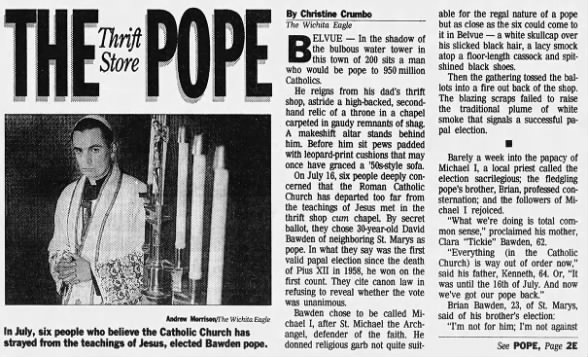 David Bawden z Kansas twierdzi, że jest „Papieżem Michałem”. 29 lipca 1990, niedziela The Wichita Eagle (Wichita, Kansas) Newspapers.com David Bawden z Kansas twierdzi, że jest „Papieżem Michałem”. 29 lipca 1990, niedziela The Wichita Eagle (Wichita, Kansas) Newspapers.com
Więcej informacji na temat zjawiska konklawe typu „zrób to sam” można znaleźć w tym artykule blogera sedewakanistycznego:
Innym przykładem wymuszonego pseudo-rozwiązania jest to, co robią półtradycjonaliści. Ich absurdalne stanowisko rozpoznania i sprzeciwu sprowadza Kościół Katolicki do ludzkiej instytucji, która jest nie tylko omylna i całkowicie zawodna jako bosko mianowany nauczyciel objawionej prawdy, ale która w rzeczywistości zawiodła w swojej zasadniczej misji i nieustannie wprowadza dusze w błąd . Taka instytucja może być wieloma rzeczami, być może nawet Nierządnicą Babilonu, „z którą królowie ziemi uprawiali nierząd” (Ap 17:2); ale z pewnością nie jest „filarem i podporą prawdy” (1 Tm 3:15), Niepokalaną Oblubienicą Chrystusa, tym „chwalebnym Kościołem, który nie ma zmazy lub zmarszczki, lub czegoś podobnego, ale aby był święty i niepokalany” (Ef 5:27).
Widzieliśmy już, że papież Leon XIII odrzucił pojęcie Kościoła jako „ludzkiej instytucji, która domaga się pewnego posłuszeństwa w dyscyplinie i zewnętrznych obowiązkach, ale która jest pozbawiona nieustannego przekazywania darów łaski Bożej i pozbawiona tego wszystkiego, co za pomocą stałych i niewątpliwych znaków świadczy o istnieniu życia zaczerpniętego od Boga” ( Encyklika Satis Cognitum , nr 3), a jednak wydaje się, że to dość dokładnie opisuje Kościół, w który wierzą półtradycjonaliści.
W rzeczywistości apostazja Kościoła Novus Ordo — to znaczy odejście od wiary katolickiej papieża Piusa XII i jego poprzedników — jest w taki czy inny sposób praktycznie przyznawana przez wszystkich, z wyjątkiem garstki zagorzałych zwolenników Novus Ordo z Catholic Answers lub Where Peter Is stripe, którzy będą próbowali kwadratury koła, jeśli to będzie konieczne, aby modernistyczny Watykan wyglądał na katolicki. Oto kilka przykładów:
Świeccy i liberalni przedstawiciele Novus Ordo nie mają problemu z przyznaniem, że dzisiejszy „Kościół katolicki” jest wadliwą ludzką instytucją, ponieważ tak naprawdę nie wierzą w katolicką doktrynę dotyczącą Kościoła ani w nic innego, poza sytuacjami, w których osobiście się z nią zgadzają.
Uznanie przez półtradycjonalistów potrzeby ratowania sukcesji apostolskiej jest godne pochwały, ale ich podejście jest całkowicie odwrotne: Chrystus ustanowił hierarchię dla dobra wiary katolickiej, nie ustanowił wiary katolickiej dla dobra hierarchii (por. Mk 2,27). Niewierząca hierarchia katolicka (tutaj w sensie prawdziwej formalnej sukcesji apostolskiej, którą półtradycjonaliści uważają za posiadaną przez modernistycznych pseudopasterzy) byłaby tak samo sprzeczna w terminach jak kwadratowe koło i byłaby tak samo bezużyteczna jak sól, która straciła swój smak (por. Mt 5,13). Co więcej, byłaby dość niebezpieczna, jak ślepy prowadzący ślepego (por. Mt 15,14), lub co gorsza, jak ten „mały zaczyn, który psuje całe ciasto” (1 Kor 5,6). Nie, w rzeczywistości byliby oni „fałszywymi apostołami”, których św. Paweł piętnuje jako „zwodniczych pracowników, podających się za apostołów Chrystusa” (2 Kor 11:13) i nie lepszymi od „kłamliwych nauczycieli”, przed którymi ostrzegał papież św. Piotr, „którzy wprowadzą sekty zatracenia i zaprzeczą Panu, który ich odkupił, sprowadzając na siebie rychłą zgubę” (2 P 2:1) — i to nie tylko na siebie, ale na wszystkich, którzy za nimi podążają.
Jak niebezpieczne jest rozpoznawanie fałszywych pasterzy jako prawdziwych, jest ukazane przez nieustanną potrzebę stawiania oporu wobec nich na wszystkich poziomach przez samych półtradycjonalistów, aby nie zostali skażeni i zepsuci przez fałszywe doktryny, złe dyscypliny i świętokradcze liturgie swoich pastorów. Szalony stopień, do jakiego ten opór-przy-uznawaniu wzrósł na przestrzeni dekad, jest uwidoczniony w niedawnym artykule Jasona Morgana potępiającym „Nowy Kościół” .
Co ciekawe, ich postawa nieustannego oporu pokazuje, że uznają oni „rzeczywistą opozycję lub konflikt między niewidzialną misją Ducha Świętego a jurydyczną misją Władcy i Nauczyciela otrzymaną od Chrystusa”, czyli dokładnie to, co Pius XII uznał za niemożliwe ( Encyklika Mystici Corporis , nr 65), w przeciwnym razie nie byłoby potrzeby oporu. (Ważne jest, aby pamiętać, że stawiają oni opór oficjalnym aktom swoich autorytetów magisterialnych i prawnych, w tym obrzędom liturgicznym i kanonizacjom świętych — nie tylko grzesznym poleceniom niemoralnego duchowieństwa).
Niezależnie od tego, jakie będzie właściwe rozwiązanie kwestii apostolskości, wiemy już, że przyjęcie hierarchii Novus Ordo (znowu w sensie formalnym ) zdecydowanie nie jest właściwą odpowiedzią, ponieważ wiemy, że religia tej hierarchii nie jest ożywiana przez Ducha Świętego; a porzucenie wiary apostolskiej na rzecz uporządkowanej i łatwej do zidentyfikowania hierarchii ludzi, którzy nie wyznają wiary katolickiej, byłoby wyjątkowo głupim interesem.
Wielką zaletą i atrakcyjnością Teologii Trójcy Świętej jest to, że oferuje — lub przynajmniej twierdzi, że oferuje — jasne i czyste rozwiązanie, oparte na tradycyjnej teologii i filozofii katolickiej, które rozwiązuje zagadkę ciągłości sukcesji apostolskiej w naszych czasach powszechnej apostazji, a jednocześnie odrzuca odstępców i heretyków jako fałszywych pasterzy .
Jaką poważną próbę teologicznego rozwiązania oferuje strona nie-MFT („totalistyczna”)? Wydaje się, że żadnej. [KOREKTA: dwutomowe dzieło Griffa Ruby’ego Sede Vacante! (2017) próbuje znaleźć rozwiązanie.] Choć można zasadnie powiedzieć, że Bóg jakoś rozwiąże tę sytuację, nie jest to właściwa odpowiedź teologiczna . Jak ujął to bp. Sanborn:
O ile wiem, nigdy nie widziałem, aby jakiś totalista w obecnym kryzysie zajął się problemem apostolskości. Zazwyczaj odpowiadają: „Bóg się tym zajmie”. Tak, zajmie się tym, ale Bóg się tym zajmie nie jest Świętą Teologią. Kościół nie odpowiedział na zarzuty wobec Trójcy, mówiąc: „W jakiś sposób jest On trzema Osobami w jednym Bogu”, ale ostrożnie, dzięki pracy świętych Doktorów i ostatecznie w deklaracjach magisterialnych zdefiniował pewne prawdy o Trójcy, dzięki którym jedność boskiej istoty i trójca Osób są respektowane.
(Sanborn, „Wyjaśnienie tezy” , s. 10)
Udzielenie prawdziwie teologicznej odpowiedzi na pytanie o apostolskość uczyni sedewakantystyczną pozycję o wiele bardziej atrakcyjną dla potencjalnych konwertytów. W rzeczywistości, bp. Sanborn oficjalnie oświadczył, że zna konwertytów, którzy nie zostaliby sedewakanistami, gdyby nie MFT. Być może możemy zaliczyć do nich o. Ronalda Ringrose'a .
Powtórzę, celem tego wpisu nie jest promowanie MFT jako prawidłowej odpowiedzi na pytanie o ciągłość hierarchii, lecz zachęcenie ludzi do zrozumienia, że problem, który porusza ta teoria, jest autentyczny i wymaga rozwiązania.
Apel do obu stron w tej debacie
Aby ułatwić wymianę poglądów, która będzie przyjemna i produktywna, chcielibyśmy zaapelować do obu obozów w debacie MFT o ustąpienie choć odrobinę w następujący sposób:
- Do tych, którzy są zwolennikami MFT: Proszę, zrozumcie, że katolik może uznać MFT za nieprzekonującą, nawet jeśli nie ma lepszej alternatywy do zaproponowania.
- Do tych, którzy odrzucają MFT: Proszę uznać, że zagadka teologiczna, na którą próbuje odpowiedzieć MFT, jest prawdziwą trudnością wymagającą rozwiązania
Jeśli każda ze stron zgodzi się na choć tyle, owocna pod względem teologicznym dyskusja będzie o wiele łatwiejsza.
Uwagi końcowe
Panie i panowie, doświadczamy tego, co św. Paweł nazwał „tajemnicą nieprawości” (2 Tes 2,7). Musimy pozostawić miejsce na miłosierne nieporozumienia dotyczące tych kwestii, których Kościół nie rozstrzygnął lub nie dał nam jasnych wskazówek; i jest pewne, że dokładna sytuacja, w której żyjemy od 60 lat, jest czymś, czego żaden teolog nie przewidział, ani prawdopodobnie nawet nie uważał za możliwą. Już z tego powodu zamieszanie i nieporozumienia w tej sprawie nie powinny nas zniechęcać — jeśli już, to powinny być oczekiwane.
Poniższy artykuł będzie wielką pociechą dla wszystkich, którzy potrzebują trochę otuchy w naszej przygnębiającej sytuacji kościelnej. Wyjaśnia, dlaczego przypadkowy brak jedności wśród sedewakanistów w pewnych kwestiach nie jest czymś, co spędza sen z powiek, a tym bardziej Wiara:
W zmaganiach, które toczymy, próbując zrozumieć, co stało się z tym wspaniałym Kościołem Katolickim, którym kiedyś kierował papież Pius XII, musimy pamiętać o znaczeniu i naturze cnoty wiary. Musimy mocno wierzyć, że Kościół nie może zginąć, tak jak nie może wprowadzać dusz w błąd . Dlatego musimy odrzucić wszelkie pojęcie, zgodnie z którym Kościół przestał istnieć lub zbłądził. Potępiając tak zwanych starokatolików, którzy odrzucili definicję nieomylności papieskiej Soboru Watykańskiego I, papież Pius IX napisał w 1873 r.: „Dlatego zaprzeczają również niezniszczalności Kościoła i bluźnierczo oświadczają, że zginął on na całym świecie i że jego widzialna Głowa i biskupi zbłądzili” ( Encyklika Etsi multa , nr 22).
Dokładne wyjaśnienie teologiczne, które może pogodzić wszystkie fakty empiryczne z całą nauką katolicką, byłoby niewątpliwie bardzo trudnym zadaniem nawet dla największych teologów Kościoła przed Soborem Watykańskim II, nie zapominajmy. Jednakże ta uwaga oczywiście nie pozwala nam odejść od Wiary. Piękno daru Wiary polega na tym, że wyrażamy zgodę na prawdę dogmatyczną, nawet jeśli nie rozumiemy jej w pełni lub nie możemy w pełni pogodzić jej z pewnymi rzeczami, które wydają się być prawdą.
Rzymski Katechizm wydany po Soborze Trydenckim naucza: „Wiara zatem powinna wykluczyć nie tylko wszelką wątpliwość, ale i wszelką chęć udowodnienia” ( Artykuł I ). Cnota wiary, bez której nigdy nie ujrzymy Boga (patrz Hbr 11,6), przysposabia nas z pomocą łaski Bożej do przyjęcia tego, co Bóg objawił, ponieważ objawił to Ten, który nie może kłamać i nie może się mylić , i z żadnego innego powodu. Mamy boską gwarancję, że to, co Bóg objawił, nigdy nie może być w konflikcie z rozumem, chociaż może go nieskończenie przewyższać . Ponieważ autor wiary jest również autorem rozumu, stąd jakakolwiek sprzeczność między nimi jest całkowicie niemożliwa.
Prawdziwa wiara przynosi niewypowiedziane błogosławieństwa. Jak powiedział nam Chrystus Pan: „…błogosławieni, którzy nie widzieli, a uwierzyli” (J 20,29; por. Mt 24,24). Bóg ma ścisłe prawo wymagać od nas szczerej wiary, a nie pseudo-wiary, którą podtrzymujemy tylko tak długo, jak długo potrafimy racjonalnie zrozumieć wszystko: „Bo chodzimy wiarą, a nie widzeniem” (2 Kor 5,7). Bóg nie oczekuje, że będziemy wiedzieć wszystko, ale oczekuje, że uwierzymy w to, co objawił. I tak nasz Pan mówi nam dzisiaj, tak jak kiedyś powiedział Jairowi, przełożonemu synagogi: „Nie bój się, tylko wierz” (Mk 5,36; por. J 20,27).
Zanim udasz się do Combox…
Pole wyboru pod tym postem jest otwarte na dyskusję przez 30 dni od daty publikacji (13 marca 2022 r.). Prosimy wszystkich, którzy biorą udział w dyskusji, aby szanowali innych uczestników i nie spieszyli się z wyciąganiem nieuzasadnionych wniosków, zwłaszcza nie dotyczących motywów lub intencji innych. Niektórzy ludzie mają paskudny nawyk zakładania złej woli lub złej woli u tych, którzy się z nimi nie zgadzają.
W sporze tak wielkiej skali i powagi, jak obecny, musimy znosić się nawzajem wielkodusznie i cierpliwie, przywołując na myśl natchnione przez Boga słowa św. Pawła: „Zawsze bądźcie pokorni, zawsze łagodni; cierpliwi także w znoszeniu wad jedni drugich, jak nakazuje miłość” (Ef 4:2; tłumaczenie Knoxa). I jeszcze: „Przyobleczcie się więc jako wybrani Boży, święci i umiłowani, w serdeczne miłosierdzie, łagodność, pokorę, skromność, cierpliwość, znosząc jedni drugich i przebaczając sobie nawzajem, jeśli ktoś ma coś do zarzucenia drugiemu: jak Pan wam przebaczył, tak i wy” (Kol 3:12-13).
Pamiętajmy także o napomnieniach i napomnieniach udzielonych przez samego naszego Pana odnośnie tego, jak traktować naszych braci:
Ale Ja wam powiadam, że każdy, kto się gniewa na swego brata, będzie w niebezpieczeństwie sądu. A ktokolwiek powie swemu bratu: Raca, będzie w niebezpieczeństwie rady. A ktokolwiek powie: Głupcze, będzie w niebezpieczeństwie ognia piekielnego.
Nie sądźcie, abyście nie byli sądzeni. Jakim bowiem sądem sądzicie, takim będziecie sądzeni, i jaką miarą mierzycie, taką wam odmierzą.
(Mateusza 5:22; 7:1-2)
Te napomnienia nie wykluczają oczywiście wszelkiego osądu, ale pochopnego osądu, jak również pochopnego podejrzenia . Niesprawiedliwe jest przypisywanie współkatolikom, z którymi się nie zgadzamy, złych motywów, heretyckiej deprawacji, niewierności, braku zaufania do Boga itp. bez przekonujących dowodów, których nie można rozsądnie wyjaśnić w żaden inny sposób. Mamy błądzić po stronie usprawiedliwiania błędów, które widzimy u innych, a nie po stronie znajdowania błędów. Niech prosta reguła praktyczna poprowadzi dyskusję na comboxie: Zanim potępisz współkatolika jako teologicznego wyrzutka, załóż, że po prostu szczerze się myli . I rozważ ponadto, że być może tym, kto szczerze się myli, jesteś ty (tak, ty! ). Jeśli obie strony będą przestrzegać tej rozsądnej reguły, może się zdarzyć, że nawet namiętna wymiana argumentów przyniesie dobre owoce.
Pamiętajmy również, że samo posiadanie racji nie przyniesie nam żadnego pożytku, jeśli nie będziemy mieli miłości: „A choćbym miał dar prorokowania i znał wszystkie tajemnice, i posiadał wszelką wiedzę, i choćbym miał wszelka wiarę, tak iżbym góry przenosił, a miłości bym nie miał, byłbym niczym” (1 Kor 13:2).
Wszystko to można pięknie podsumować w słynnej maksymie przypisywanej św. Augustynowi: „W sprawach istotnych – jedność; w wątpliwych – wolność; we wszystkich rzeczach – miłość”.
Źródło obrazu: kompozycja z elementami z Wikimedia Commons i Shutterstock
Licencje: domena publiczna i płatna
|
|
Apostolic Succession after Pope Pius XII: Where is the Catholic Hierarchy?
Apostolic Succession after Pope Pius XII:
Where is the Catholic Hierarchy?
In recent weeks there has been a considerable amount of online controversy among sedevacantists about the so-called “Material/Formal Theory” regarding the status of the Novus Ordo hierarchy, especially its so-called “popes”. Some cling adamantly to this thesis because they believe it to be significantly helpful or even essential to a proper understanding of the situation in the Catholic Church today, whereas others repudiate it because they judge it to be misleading or even a danger to the Faith. There are also those “in the middle” who do or don’t subscribe to the thesis but simply consider it a possible theological option, one that it would not be prudent to spend much time fighting over.
The theory, which was first formulated by the Dominican theologian and eventual sedevacantist bishop Michel-Louis Guérard des Lauriers, O.P. (1898-1988), has received various other monikers over the years, among them “Cassiciacum Thesis” and “Sedeprivationism”. More recently it has come to be known as simply “the Thesis” for short. In this post, we will refer to it as the “Material/Formal Thesis”, abbreviated as “MFT”.
In essence, this rather complex theory holds that although the “Popes” after Pius XII are not true Popes, they nevertheless, having been elected in conclave, possess a legal designation to the Roman pontificate, and, for this reason, would automatically become Pope if they should renounce their heresies and convert to Catholicism. They are, in a sense, “pope-elect” — legally chosen and designated to be Pope, but unable to actually be Pope because of an obstacle they have voluntarily placed in the way, namely, the intention to change the Catholic Faith by promulgating false doctrines, harmful liturgical rites, and evil disciplinary laws.
This MFT, which is often misunderstood by people who are not familiar enough with the necessary philosophical and theological distinctions on which it relies and therefore quickly dismissed by them, actually rests on considerable theological and philosophical grounds. That is not to say that it is necessarily correct; but it is to say that it would be unjust to simply dismiss and denounce it without giving it a fair hearing.
The most well-known representative of the MFT in the United States, and possibly the world, is Bishop Donald J. Sanborn. He explains the theory for the laity in the following 10-page paper:
Other more or less well-known sedevacantist clerics who adhere to the MFT include Bp. Joseph Selway, Bp. Geert Jan Stuyver, Bp. Robert Neville, Fr. Francesco Ricossa, Fr. Arnold Trauner, and Fr. Nicolás Despósito.
On the flip side, more or less well-known sedevacantist clergy who do not adhere to the MFT include Bp. Mark Pivarunas, Bp. Daniel Dolan, Bp. Clarence Kelly, Fr. William Jenkins, Fr. Stephen McKenna, and Fathers Francisco and Dominic Radecki. A brief critique of the MFT was recently published by Fr. Vili Lehtoranta and can be found here:
As pointed out in the opening paragraph, the MFT tends to polarize: Some are so firmly wedded to it that they hold that it alone is the correct position, to the exclusion of all others. On the opposite extreme are those who insist that the MFT is so flawed that under no circumstance can it be admitted.
To be clear: Novus Ordo Watch is neutral on the issue, at least as of now. We do not condemn the MFT, nor do we endorse it. Rather, we would like to facilitate charitable discussion and exploration of the issue and/or viable alternative positions, in the spirit of St. Paul: “But prove all things; hold fast that which is good” (1 Thess 5:21).
The purpose of the present post is neither to convince people of the truth of the MFT nor of its falsity; it is, rather, to inform people that the theological problem the MFT seeks to resolve is a genuine difficulty that is in need of a theological answer. The MFT may or may not be the correct answer — that is what the disagreement is about — but it would be wrong to simply ignore the problem it seeks to address and pretend that it is of no consequence.
Here we do not mean, of course, that every Catholic is required to try to resolve this theological conundrum. No, for the average layman it will suffice to understand that in our day there are some theological difficulties still in need of resolution that we can, in the meantime, relegate to the category of “mystery”, as it were. However, genuine difficulties they remain, and as such, they call for a theological resolution. It is therefore not wrong, but rather quite laudable, for those learned in Sacred Theology, especially the clergy, to attempt to offer a solution.
What, then, is the conundrum the MFT claims to have the answer to?
The Theological Problem the “Thesis” tries to Answer: The Continuity of Apostolic Succession in our Times
The Catholic Church is indefectible not only in her doctrines, in her laws, and in her sacraments but also — in a certain sense — in her hierarchy of lawful shepherds, that is, in her Pope and in the bishops in communion with him.
Fr. Elwood Sylvester Berry’s ecclesiology handbook The Church of Christ gives a very good and succinct presentation of the fundamental concepts at play:
SUCCESSION. Apostolicity of origin and of doctrine are easily understood without further explanation, but some knowledge of succession is necessary for a proper conception of apostolicity of ministry. Succession, as used in this connection, is the following of one person after another in an official position, and may be either legitimate or illegitimate. Theologians call the one formal succession; the other, material. A material successor is one who assumes the official position of another contrary to the laws or constitution of the society in question. He may be called a successor in as much as he actually holds the position, but he has no authority, and his acts have no official value, even though he be ignorant of the illegal tenure of his office.
A formal, or legitimate, successor not only succeeds to the place of his predecessor, but also receives due authority to exercise the functions of his office with binding force in the society. It is evident that authority can be transmitted only by legitimate succession; therefore, the Church must have a legitimate, or formal, succession of pastors to transmit apostolic authority from age to age. One who intrudes himself into the ministry against the laws of the Church receives no authority and consequently can transmit none to his successors.
TWOFOLD POWER. Succession in the Church differs from that in other societies from the fact that there is a twofold power to transmit, — the power of Orders and the power of jurisdiction or government. The power of Orders is purely spiritual and concerned directly with the conferring of grace; it is obtained through the Sacrament of Orders validly received and cannot be revoked by any power of the Church. For this reason, the power of Orders may be obtained by fraud or conferred against the will of the Church by anyone having valid Orders himself, and therefore does not depend upon legitimate succession.
Jurisdiction is authority to govern and must be transmitted in the Church as in any other society; it can be conferred only by a lawful superior, according to the constitution and laws of the society, and may be revoked at any time. Consequently jurisdiction in the Church can neither be obtained nor held against the will of her supreme authority; its transmission depends entirely upon legitimate succession. It is not sufficient, therefore, that a church have valid Orders; it must also have a legitimate succession of ministers, reaching back in an unbroken line to the Apostles, upon whom our Lord conferred all authority to rule His Church.
UNION WITH ROME. No one can be a legitimate successor in any society unless he receive due authority therein; it follows, therefore, that there can be no legitimate successor in the Church of Christ who has not received jurisdiction either directly or indirectly from her supreme authority. But, as will be proved elsewhere, supreme authority in the Church of Christ was committed to St. Peter and his lawful successors, the bishops of Rome: consequently all legitimate succession, or Apostolicity of ministry in the Church, depends upon communion with the chair of Peter and is lost the moment that communion is severed. Hence no particular part of the Church is indefectibly Apostolic, save the see of Peter, which is universally known by way of eminence as the Apostolic See.
(Rev. E. Sylvester Berry, The Church of Christ: An Apologetic and Dogmatic Treatise [St. Louis, MO: B. Herder Book Co., 1927], pp. 139-141; italics given; underlining added.)
All of this makes perfect sense. Just as the Catholic Church is guaranteed by God always to retain the true Faith, so she is guaranteed always to have lawful shepherds, at least in a certain restricted sense (which will be explored later). The Church is not merely a passive receptacle of the divinely revealed truth. The mission Christ gave her is that of teaching, ruling, and sanctifying, which are tasks carried about by a hierarchy of shepherds united under one supreme shepherd, the Pope.
Hence the First Vatican Council taught:
“The eternal Pastor and Bishop of our souls” [1 Pet. 2:25], in order to render the saving work of redemption perennial, willed to build a holy Church, in which, as in the house of the living God, all the faithful might be contained by the bond of one faith and charity. Therefore, before His glory was made manifest, “He asked the Father, not only for the Apostles but also for those who would believe through their word in Him, that all might be one, just as the Son Himself and the Father are one” [John 17:20 f.]. Thus, then, as He sent the apostles, whom He had selected from the world for Himself, as He himself had been sent by the Father [John 20:21], so in His Church He wished the pastors and the doctors to be “even to the consummation of the world” [Matt. 28:20]. But, that the episcopacy itself might be one and undivided, and that the entire multitude of the faithful through priests closely connected with one another might be preserved in the unity of faith and communion, placing the blessed Peter over the other apostles He established in him the perpetual principle and visible foundation of both unities, upon whose strength the eternal temple might be erected, and the sublimity of the Church to be raised to heaven might rise in the firmness of this faith. And, since the gates of hell, to overthrow the Church, if this were possible, arise from all sides with ever greater hatred against its divinely established foundation, We judge it to be necessary for the protection, safety, and increase of the Catholic flock, with the approbation of the Council, to set forth the doctrine on the institution, perpetuity, and nature of the Sacred Apostolic Primacy, in which the strength and solidarity of the whole Church consist, to be believed and held by all the faithful, according to the ancient and continual faith of the universal Church, and to proscribe and condemn the contrary errors, so pernicious to the Lord’s flock.
(Vatican I, Dogmatic Constitution Pastor Aeternus, prologue; Denz. 1821; underlining added.)
Likewise, Pope Leo XIII:
And, since it was necessary that His divine mission should be perpetuated to the end of time, He took to Himself Disciples, trained by himself, and made them partakers of His own authority. And, when He had invoked upon them from Heaven the Spirit of Truth, He bade them go through the whole world and faithfully preach to all nations, what He had taught and what He had commanded, so that by the profession of His doctrine, and the observance of His laws, the human race might attain to holiness on earth and neverending happiness in Heaven. In this wise, and on this principle, the Church was begotten. If we consider the chief end of His Church and the proximate efficient causes of salvation, it is undoubtedly spiritual; but in regard to those who constitute it, and to the things which lead to these spiritual gifts, it is external and necessarily visible.
(Pope Leo XIII, Encyclical Satis Cognitum, n. 3; italics given.)
Pope Leo went on to emphasize the importance of both the visible and invisible elements as being constitutive of the Church as established by the Lord:
For this reason the Church is so often called in Holy Writ a body, and even the body of Christ – “Now you are the body of Christ” (I Cor. xii., 27) – and precisely because it is a body is the Church visible: and because it is the body of Christ is it living and energizing, because by the infusion of His power Christ guards and sustains it, just as the vine gives nourishment and renders fruitful the branches united to it. And as in animals the vital principle is unseen and invisible, and is evidenced and manifested by the movements and action of the members, so the principle of supernatural life in the Church is clearly shown in that which is done by it.
From this it follows that those who arbitrarily conjure up and picture to themselves a hidden and invisible Church are in grievous and pernicious error: as also are those who regard the Church as a human institution which claims a certain obedience in discipline and external duties, but which is without the perennial communication of the gifts of divine grace, and without all that which testifies by constant and undoubted signs to the existence of that life which is drawn from God. It is assuredly as impossible that the Church of Jesus Christ can be the one or the other, as that man should be a body alone or a soul alone. The connection and union of both elements is as absolutely necessary to the true Church as the intimate union of the soul and body is to human nature. The Church is not something dead: it is the body of Christ endowed with supernatural life. As Christ, the Head and Exemplar, is not wholly in His visible human nature, which Photinians and Nestorians assert, nor wholly in the invisible divine nature, as the Monophysites hold, but is one, from and in both natures, visible and invisible; so the mystical body of Christ is the true Church, only because its visible parts draw life and power from the supernatural gifts and other things whence spring their very nature and essence. But since the Church is such by divine will and constitution, such it must uniformly remain to the end of time. If it did not, then it would not have been founded as perpetual, and the end set before it would have been limited to some certain place and to some certain period of time; both of which are contrary to the truth. The union consequently of visible and invisible elements because it harmonizes with the natural order and by God’s will belongs to the very essence of the Church, must necessarily remain so long as the Church itself shall endure.
(Pope Leo XIII, Encyclical Satis Cognitum, n. 3; italics given; underlining added.)
Pope Pius XII, reinforcing the doctrine of Leo XIII, made clear:
There can, then, be no real opposition or conflict between the invisible mission of the Holy Spirit and the juridical commission of Ruler and Teacher received from Christ, since they mutually complement and perfect each other — as do the body and soul in man — and proceed from our one Redeemer who not only said as He breathed on the Apostles “Receive ye the Holy Spirit,” but also clearly commanded: “As the Father hath sent me, I also send you”; and again: “He that heareth you heareth me.”
(Pope Pius XII, Encyclical Mystici Corporis, n. 65)
Thus we see that the Church will continue to exist until the end of time, and, although her visibility may be greatly diminished at some point, as St. Augustine taught, she will forever remain unchanged in her essential constitution.
The perpetually hierarchical nature of the Church does not imply, however, that the Church must always have a Pope reigning or that her hierarchical offices must always be filled. In fact, the pre-Vatican II theologian Fr. Emil Dorsch addressed this question as follows:
The Church … is a society that is essentially monarchical. But this does not prevent the Church, for a short time after the death of a pope, or even for many years, from remaining deprived of her [visible] head. Her monarchical form also remains intact in this state….
…Thus the Church is then indeed a headless body, but it remains one monarchical body, because the power by which it is then governed, is the power that flowed from one Roman Pontiff and even then is subordinate to the power of the primacy, which must be restored to it, by a strict necessity, as soon as possible. Such an order is truly neither democratic nor aristocratic.
Her monarchical form of government remains, though then in a different way — that is, it remains incomplete and to be completed. The ordering of the whole to submission to her Primate is present, even though actual submission is not. For this reason, the See of Rome is rightly said to remain after the person sitting in it has died — for the See of Rome consists essentially in the rights of the Primacy. These rights are an essential and necessary element of the Church. With them, moreover, the Primacy then continues, at least morally. The perennial physical presence of the person of the head, however, is not so strictly necessary.
(Aemil Dorsch, Institutiones Theologiae Fundamentalis, vol. II: De Ecclesia Christi [Innsbruck: Felix Rauch, 1928], pp. 196-197; italics and underlining added. Most of this translation provided by Fr. Anthony Cekada.)
Although the Church, then, need not actually have a Pope at all times, she must always have one potentially, that is, she must always retain the power to elect one. Even if adverse circumstances should make this impossible for a time in the practical order, the ability to elect a Pope must always be retained by the Church in principle.
Also, the well-known dogmatic teaching of Vatican I regarding St. Peter having “perpetual successors” (Dogmatic Constitution Pastor Aeternus, Chapter 2; Denz. 1825) is often misunderstood in that regard. The council wasn’t teaching that there cannot be a long vacancy in the Apostolic See, it was teaching that all legitimate successors of St. Peter forever share in the same primacy that was first given by our Lord to the Prince of the Apostles:
In his phenomenal work on ecclesiology (Sacrae Theologiae Summa IB: On the Church of Christ), the Jesuit theologian Fr. Joachim Salaverri presents and discusses Church teaching on the perpetuity of the Church’s hierarchy in depth (see nn. 286-329).
Where, then, does all this leave us sedevacantists? Is it not our position that all ecclesiastical offices (those of the Pope and bishops) have been vacant for decades, and if that is so, has the apostolic succession not been severed and thus irretrievably lost? In other words, no more Popes, no more bishops with ordinary jurisdiction, forever?
This is precisely the conundrum the MFT tries to answer using very fine philosophical and theological distinctions. Before we look at this in detail, however, let us clarify two things up front.
First, sedevacantists do not believe in a “hidden and invisible church”. (If there are any individual sedevacantists out there who unwittingly do, they must immediately reject such a notion, as it is not compatible with Catholic teaching.) We, being Catholics, adhere fully and firmly to the teaching of the Church, which means we acknowledge and profess that the Catholic Church is a visible institution possessing the four marks of unity, holiness, catholicity, and apostolicity — even if we find ourselves unable to explain fully and consistently how they all jibe with the (apparent) empirical facts before us.
Second, we do not believe in a “sedevacantist church”. There is no “sedevacantist church”, there is only the Roman Catholic Church, the one once shepherded by Pope Pius XII (d. 1958). Sedevacantists simply consider themselves the remnant of that Church, the true Catholics who refused to change their religion when the Modernists, who were already sitting in the Church’s “very bosom” during the early 20th-century reign of Pope St. Pius X (Encyclical Pascendi, n. 2), succeeded in their plan of installing a series of false popes while the Apostolic See in actual fact remained empty. In this manner they were able to ensure that their “operation of error” (2 Th 2:10) could be unleashed without the interference of the divinely-appointed restrainer, “who now holdeth … until he be taken out of the way” (2 Th 2:7). Cardinal Henry Manning’s 1861 lecture series on the Pope and the Antichrist is very insightful on this:
Puzzled and bewildered perhaps, but nevertheless holding on to Faith, hope, and charity, we refuse to have any part with the Novus Ordo religion precisely because it is not the Catholic religion.
But now it is time to look in more detail at the manner in which the MFT seeks to provide a theologically sound answer to the problem of apostolic succession since the death of Pope Pius XII.
The Manner in which the “Thesis” professes to salvage a continuous Line of Apostolic Succession
We will not attempt here a complete exposition of the MFT, which has been done elsewhere by those who adhere to it. In this post we will simply provide an outline with sufficient detail so that people can grasp its essence without having too much trouble.
First, it will be helpful to call to mind again what Fr. Berry wrote regarding apostolic succession, as quoted earlier:
Succession … is the following of one person after another in an official position, and may be either legitimate or illegitimate. Theologians call the one formal succession; the other, material. A material successor is one who assumes the official position of another contrary to the laws or constitution of the society in question. He may be called a successor in as much as he actually holds the position, but he has no authority, and his acts have no official value, even though he be ignorant of the illegal tenure of his office.
A formal, or legitimate, successor not only succeeds to the place of his predecessor, but also receives due authority to exercise the functions of his office with binding force in the society. It is evident that authority can be transmitted only by legitimate succession; therefore, the Church must have a legitimate, or formal, succession of pastors to transmit apostolic authority from age to age. One who intrudes himself into the ministry against the laws of the Church receives no authority and consequently can transmit none to his successors.
(Berry, The Church of Christ, pp. 139-140; italics given; underlining added.)
With this in mind, we will be able to understand better the gist of the MFT, which consists of the following:
- To become Pope, it is not enough to be elected by the necessary majority of the lawful electors, one must also accept the election in a valid way
- In order for this acceptance to be valid, it must be made freely
- A valid acceptance of the election is impossible if the individual elected places an obstacle in the way of his acceptance that is incompatible with the papal office (for example, if a layman, elected Pope, were to be unwilling to be ordained a priest and consecrated a bishop)
- The so-called “Novus Ordo popes” — John XXIII (1958-63), Paul VI (1963-78), John Paul I (1978), John Paul II (1978-2005), Benedict XVI (2005-13), and Francis (since 2013) — were elected in conclave but were unable to accept their election validly because they placed an obstacle that is incompatible with the Papacy, namely, they were harboring the intention to change the Catholic Faith by promulgating false doctrines, harmful liturgical rites, and evil disciplinary laws to the entire Church (this is evident from their fruits)
- Therefore, they are merely material successors to Pius XII, not formal successors
- However — and this is a distinction not mentioned by Fr. Berry above — material succession can further be divided into material succession that is legal and material succession that is illegal
- The illegal material kind is the one mentioned by Fr. Berry, that is, someone who “assumes the official position of another contrary to the laws or constitution of the society in question [=the Catholic Church]. He may be called a successor in as much as he actually holds the position, but he has no authority, and his acts have no official value, even though he be ignorant of the illegal tenure of his office.” An example would be someone who intrudes into the Roman See who was not in fact elected by the conclave. He would be illegitimate in every sense because he does not even possess a valid designation to the office of the Papacy.
- The legal material kind is had by someone who assumes the official position in agreement with the laws or constitution of the Church but has placed an obstacle in the way of valid acceptance. An example would be a layman who is elected Pope by the conclave but refuses to receive ordination to the priesthood and consecration to the episcopacy. His succession to the See of Rome would be material only but in a legal sense because he possesses a valid designation to the Papacy (the Church’s law permits the election of a layman). His succession would not be formal, however, meaning he wouldn’t actually be Pope, because the obstacle he has placed is incompatible with the Papacy because the Pope is necessarily the bishop of Rome, and he who refuses to become a bishop cannot be the bishop of Rome.
- Given the above, the correct status of the “Novus Ordo popes” is that of possessing legal material succession (designation to receive papal authority), but not formal succession (actual reception of papal authority)
- A popular term to describe their status is that of “pope-elect” or “material pope”, but to people not familiar with the MFT, this can be confusing and misleading
- Since only a formal Pope is a true Pope, and a material pope is not, the “Novus Ordo popes” are not true Popes
This, in a nutshell, is the MFT.
It will probably be tempting for readers who have never seriously grappled with the actual arguments of the MFT adherents (and the evidence adduced) to quickly dismiss it out of hand and denounce it as nonsense. However, that would not be just. We have to remember that Sacred Theology is a complicated subject, and the mere complexity of a theological explanation cannot be used as evidence of its falsity:
The dogma of the Trinity, for example is simple: there are three Persons in one God. But the theological explanation of how there are three Persons in one God is extremely involved and difficult. For theology must respect two things which are apparently contradictory: the unity of divine essence and the trinity of Persons. If a lay person were to read an explanation of the Trinity in a seminary textbook, he would close the book after a few paragraphs.
(Most Rev. Donald Sanborn, “Explanation of the Thesis of Bishop Guérard des Lauriers”, p. 2)
In Sacred Theology, the most minute distinctions are not only legitimate, they can in fact be of the utmost consequence. One need but think of the controversy over a single iota (the letter “i” in the Greek alphabet) that made all the difference between orthodoxy (Catholicism) and heresy (Arianism) when it came to defining whether Jesus Christ is of the same substance as God the Father (homoousion), as the First Council of Nicea defined, or merely of similar substance (homoiousion), as the Arians claimed.
Faced with the complex philosophical and theological detail of the MFT, it is important not to lose sight of the reason why some sedevacantists hold it in the first place:
The thesis … is a theological explanation of the situation of authority after Vatican II. It wants to present a system which does two things: (1) to show why the Vatican II “popes” have no authority, and are therefore not true popes, and (2) to show how the uninterrupted line of popes from St. Peter continues [to the present day]. Both of these assertions, as we have said, are demanded by Catholic dogma.
(Sanborn, “Explanation of the Thesis”, p. 5)
How, then, does the MFT salvage the continuity of apostolic succession? It does so by locating the legal material element of apostolic succession in the “Novus Ordo popes”, currently Francis:
The thesis also holds that the Vatican II “popes” succeed as legal designees to the papacy, and therefore continue the line of St. Peter materially. This means that the Vatican II “popes” are legitimate designees to be true popes, but lack jurisdiction, because of the obstacle that they posit to the reception of the authority. This is so because the law has never severed the Novus Ordo religion from the Catholic Church. It ought to be severed, but it is not severed, just as [when] a murderer ought to be prosecuted and condemned, but is not. Therefore while the Novus Ordo members of the hierarchy are in fact public heretics and outside the Church, nonetheless, owing to absence of legal action, they retain their legal designations and their purely legal posts. They are not the authority, they are not true popes or true bishops, but are legally in the position to become true popes and bishops, if they should remove the obstacle to authority.
(Sanborn, “Explanation of the Thesis”, p. 5; italics given.)
Another essential element of the MFT, not mentioned in the outlive above, is the heavy emphasis it places on the fact that what we are accustomed to calling the “Novus Ordo Church” (“Vatican II Church”, etc.) has never been condemned by a legal declaration of the legitimate Catholic authority in the same way as the Eastern Orthodox or the Lutherans have been. This, at least according to the MFT, has important legal ramifications:
Thus the thesis sees the Novus Ordo [Church] in a different position than that of the Greek Schismatics and Lutherans. These have been legally severed by the Church, and are truly sects in the full sense of the term, since they are cut off from the Church both in fact, by their schism and heresy, and by legal severing. The Novus Ordo, on the other hand, is in fact not Catholic, is a sect inasmuch as it professes apostasy, but has not been legally severed from the Catholic Church. Indeed, this sad fact, that the Novus Ordo has not been severed, is the very heart of the problem which we face today. If it were clear, by legal declaration, that Vatican II was a defection from the faith, the problem in the Church would cease. It is only due to the fact that the heretics have the mask of legality that so many Catholics are being led astray….
(Sanborn, “Explanation of the Thesis”, pp. 5-6; bold print given.)
The MFT, then, saves the continuity of apostolic succession by locating its material element in the legal designation to the Papacy that is possessed by the false popes (and the legal designation to the office of bishop that is had by their “bishops”).
Further, the MFT locates the formal element of apostolic succession in the fact that the Church retains the ability to recover her visible head, the Pope, in one of three ways: (a) the false pope himself removes the obstacle that has vitiated his valid acceptance of the office for which he possesses a legal designation (in other words, the false pope publicly converts to Catholicism); (b) the electors who gave him the designation remove this designation from him and proceed to a new conclave; (c) after the death of the current false pope, the electors of the next conclave choose an actual Catholic, a man who does not place an obstacle in the way of valid acceptance of the Papacy.
Thus it may be said that the “Novus Ordo popes” and their “bishops” possess material succession actually and formal succession potentially. In this manner the MFT explains how the Catholic Church still retains apostolic succession.
The Temptation of False, Human Solutions
No matter what one thinks of the MFT, every sedevacantist understands that, given what has happened to the Catholic Church since the death of Pope Pius XII, we find ourselves before an incredible mystery. Ought we not to marvel at the awesome Providence of Almighty God, who may have seen fit to keep “hidden these things from the wise and prudent” (Lk 10:21)?
What we definitely ought not to do is try to “force” a solution to come about, similar to how Abram, doubting God’s promise for his barren wife, tried to raise up seed with Agar (see Gen 16:1-4,11,15; 17:16-21). This is not the way of God, and the son she bore him was not the son of promise: “For it is written that Abraham had two sons: the one [Ismael] by a bondwoman, and the other [Isaac] by a free woman. But he who was of the bondwoman, was born according to the flesh: but he of the free woman, was by promise” (Gal 4:22-23).
One example of such a contrived “solution” to our situation would be that known as “Conclavism”, in which invidivual sedevacantists think they have the authority to call a conclave whose result — the election of a supposedly true Pope — is then binding on the consciences of all Catholics. This absurdity has been attempted again and again by misguided souls, among them Mr. David Bawden (b. 1959) in 1990 as “Pope Michael”, and Fr. Lucian Pulvermacher (1918-2009), in 1998 as “Pope Pius XIII”. Did it actually accomplish anything (other than lead to more confusion and doubt, and make sedevacantists look foolish)? Of course not.
Here is a clipping from The Witchita Eagle of July 29, 1990, on David Bawden, whom they nicknamed “The Thrift Store Pope”:
David Bawden of Kansas claims to be “Pope Michael”. 29 Jul 1990, Sun The Wichita Eagle (Wichita, Kansas) Newspapers.com
More information on the phenomenon of do-it-yourself conclaves can be found in this article by a sedevacantist blogger:
Another example of a forced pseudo-solution is that of the semi-trads. Their absurd recognize-and-resist position reduces the Catholic Church to a human institution that is not only fallible and thoroughly unreliable as the divinely-appointed teacher of revealed truth, but that has in fact failed in its essential mission and continually leads souls astray. Such an institution may be a lot of things, perhaps even the Whore of Babylon, “with whom the kings of the earth have committed fornication” (Apoc 17:2); but it is certainly not the “pillar and ground of the truth” (1 Tim 3:15), the Immaculate Bride of Christ, that “glorious church, not having spot or wrinkle, or any such thing; but that it should be holy, and without blemish” (Eph 5:27).
We already saw that Pope Leo XIII rejected the notion of the Church as “a human institution which claims a certain obedience in discipline and external duties, but which is without the perennial communication of the gifts of divine grace, and without all that which testifies by constant and undoubted signs to the existence of that life which is drawn from God” (Encyclical Satis Cognitum, n. 3), and yet that would seem to describe the Church the semi-trads believe in pretty accurately.
In fact, the apostasy of the Novus Ordo Church — that is, the falling away from the Catholic Faith of Pope Pius XII and his predecessors — is, in some way or another, practically admitted by everyone except for a handful of die-hard Novus Ordos of the Catholic Answers or Where Peter Is stripe, who will try to square the circle, if that’s what it should take, to make the Modernist Vatican look Catholic. Here are some examples:
Secularists and liberal Novus Ordos, for their part, have no problem conceding that today’s “Catholic Church” is a defected human institution, since they don’t really believe Catholic doctrine on the Church or anything else anyway, except insofar as they personally happen to agree with it.
The semi-trads’ recognition of the need to salvage apostolic succession is laudable, but their approach is entirely backwards: Christ established a hierarchy for the sake of the Catholic Faith, He did not establish the Catholic Faith for the sake of a hierarchy (cf. Mk 2:27). A faithless Catholic hierarchy (here in the sense of true formal apostolic succession, which the semi-trads believe the Modernist pseudo-shepherds to have) would be as much of a contradiction in terms as a square circle, and it would be as useless as salt that has lost its flavor (cf. Mt 5:13). Even more so, it would be quite dangerous, like the blind leading the blind (cf. Mt 15:14), or worse still, like that “little leaven [that] corrupteth the whole lump” (1 Cor 5:6). No, in fact, they would be the “false apostles” St. Paul denounces as “deceitful workmen, transforming themselves into the apostles of Christ” (2 Cor 11:13), and no better than the “lying teachers” of whom Pope St. Peter warned, “who shall bring in sects of perdition, and deny the Lord who bought them: bringing upon themselves swift destruction” (2 Pet 2:1) — and not even upon themselves only but on all those who follow them.
How dangerous it is to recognize false shepherds as true ones is exemplified by the semi-trads’ own incessant need for resistance to them at all levels, lest they be tainted and corrupted by their pastors’ false doctrines, evil disciplines, and sacrilegious liturgies. The insane extent to which this resisting-while-recognizing has risen over the decades is exemplified in Jason Morgan’s recent article denouncing “Newchurch”.
Interestingly enough, their position of constant resistance shows that they acknowledge a “real opposition or conflict between the invisible mission of the Holy Spirit and the juridical commission of Ruler and Teacher received from Christ”, the very thing Pius XII declared to be impossible (Encyclical Mystici Corporis, n. 65), else there would be no need for resistance. (Here it is important to keep in mind that they resist official acts of their magisterial and legal authorities, including liturgical rites and canonizations of saints — not merely sinful commands by immoral clergy.)
No matter what the correct resolution may be to the question of apostolicity, therefore, we already know that embracing the Novus Ordo hierarchy (again, in the formal sense) is definitely not the right answer, for the religion of this hierarchy we know not to be animated by the the Holy Ghost; and to abandon the Apostolic Faith for the sake of having a neatly-arranged and easily-identifiable hierarchy of people who do not profess the Catholic Faith would be an extremely foolish bargain.
The great advantage and appeal of the MFT, then, is that it offers — or at least claims to offer — a clear and clean solution, based on traditional Catholic theology and philosophy, which answers the conundrum of the continuity of apostolic succession in our time of universal apostasy while at the same time rejecting the apostates and heretics as false shepherds.
What serious attempt at a theological solution does the non-MFT (“totalist”) side offer? None, it seems. [CORRECTION: Griff Ruby’s 2-volume work Sede Vacante! (2017) attempts a solution.] While it is legitimate to say that God will resolve this situation somehow, that is not a properly theological answer. As Bp. Sanborn put it:
To my knowledge, I have never seen any totalist even address the problem of apostolicity in the present crisis. They generally respond with, “God will take care of that.” Yes, He will, but God-will-take-care-of-that is not Sacred Theology. The Church did not respond to the objections to the Trinity by saying “Somehow or other He is three Persons in one God,” but carefully, by the work of the holy Doctors and ultimately in magisterial declarations defined certain truths about the Trinity whereby the unity of divine essence and the trinity of Persons are respected.
(Sanborn, “Explanation of the Thesis”, p. 10)
Offering a truly theological answer to the question of apostolicity will make the sedevacantist position a lot more attractive to potential converts. In fact, Bp. Sanborn has gone on record stating that he knows converts who would not have become sedevacantists had it not been for the MFT. Perhaps we can count Fr. Ronald Ringrose among them.
Again, the purpose of this post is not to promote the MFT as the correct answer to the question of the continuity of the hierarchy, but to encourage people to realize that the problem it addresses is a genuine one that requires resolution.
An Appeal to both Sides in this Debate
In order to facilitate an exchange of ideas that is pleasant and productive, we would like to appeal to both camps in the MFT debate to yield just a tiny bit, as follows:
- To those who adhere to the MFT: Please acknowledge that it is perfectly permissible for a Catholic to find the MFT unconvincing even if he does not have a better alternative to offer
- To those who reject the MFT: Please acknowledge that the theological conundrum the MFT tries to answer is a genuine difficulty in need of resolution
If each side can concede just this much, theologically fruitful discussion will be a lot easier.
Concluding Remarks
Ladies and gentlemen, we are experiencing what St. Paul called the “mystery of iniquity” (2 Thess 2:7). We must leave room for charitable disagreement concerning those matters which the Church has not settled or has not given us clear guidance on; and it is certain that the exact situation we have been living through for the last 60 years is something no theologian envisioned or probably even considered possible. For that reason alone, confusion and disagreement about this should not discourage us — if anything, it should be expected.
The following article will be a great consolation to all who need some encouragement in our distressing ecclesial situation. It explains why an accidental lack of unity among sedevacantists on certain issues is not something to lose sleep over, much less the Faith:
In the struggles we are undergoing in making sense of what has happened to that magnificent Catholic Church once shepherded by Pope Pius XII, we must keep in mind the importance and nature of the virtue of Faith. We must firmly believe that the Church cannot perish, any more than she can lead souls astray. Therefore, we must reject any notion according to which the Church has ceased to exist or has defected. Condemning the so-called Old Catholics who repudiated the First Vatican Council’s definition of papal infallibility, Pope Pius IX wrote in 1873: “Therefore they deny also the indefectibility of the Church and blasphemously declare that it has perished throughout the world and that its visible Head and the bishops have erred” (Encyclical Etsi Multa, n. 22).
The precise theological explanation that can reconcile all the empirical facts with all of Catholic teaching would no doubt have been a very challenging task even for the Church’s greatest theologians prior to Vatican II, let’s not forget. However, this consideration, of course, does not permit us to deviate from the Faith. The beauty of the gift of Faith is that we assent to dogmatic truth even if we do not fully understand it or cannot fully reconcile it with certain things that appear to be the case.
The Roman Catechism issued after the Council of Trent teaches: “Faith, therefore, must exclude not only all doubt, but all desire for demonstration” (Article I). The virtue of Faith, without which we will never see God (see Heb 11:6), disposes us by the help of divine grace to accept what God has revealed because He who cannot lie and cannot be mistaken has revealed it, and for no other reason. We have a divine guarantee that what God has revealed can never conflict with reason, although it may infinitely surpass it. For the author of the Faith is also the author of reason, hence any contradiction between the two is utterly impossible.
Genuine Faith results in untold blessings. As Christ the Lord told us: “…blessed are they that have not seen, and have believed” (Jn 20:29; cf. Mt 24:24). God has a strict right to demand from us a sincere Faith, not a pseudo-faith that we only uphold for as long as we can make rational sense of everything: “For we walk by faith, and not by sight” (2 Cor 5:7). God does not expect us to know all things, but He does expect us to believe what He has revealed. And so our Lord tells us today, as He once did to Jairus, the ruler of the synagogue: “Fear not, only believe” (Mk 5:36; cf. Jn 20:27).
Before you head to the Combox…
The combox below this post is open for discussion for 30 days from the date of publication (Mar. 13, 2022). We ask all who participate in discussing this to please be respectful of other participants and not to rush to unwarranted conclusions, especially not concerning others’ motives or intentions. Some people have the nasty habit of assuming bad faith or ill will in those who disagree with them.
In a controversy of such great magnitude and seriousness as the present one, we must bear with one another magnanimously and patiently, calling to mind the divinely-inspired words of St. Paul: “You must be always humble, always gentle; patient, too, in bearing with one another’s faults, as charity bids” (Eph 4:2; Knox translation). And again: “Put ye on therefore, as the elect of God, holy, and beloved, the bowels of mercy, benignity, humility, modesty, patience: bearing with one another, and forgiving one another, if any have a complaint against another: even as the Lord hath forgiven you, so do you also” (Col 3:12-13).
Let us further keep in mind the exhortations and admonitions given by Our Lord Himself with regard to how to treat our brothers:
But I say to you, that whosoever is angry with his brother, shall be in danger of the judgment. And whosoever shall say to his brother, Raca, shall be in danger of the council. And whosoever shall say, Thou Fool, shall be in danger of hell fire.
Judge not, that you may not be judged, for with what judgment you judge, you shall be judged: and with what measure you mete, it shall be measured to you again.
(Matthew 5:22; 7:1-2)
These admonitions do not preclude all judgment, of course, but rash judgment, as well as rash suspicion. It is unjust to attribute to fellow-Catholics we disagree with, evil motives, heretical depravity, faithlessness, lack of trust in God, etc., without compelling evidence that cannot reasonably be explained any other way. We are to err on the side of excusing the faults we see in others, not on the side of finding fault. Let a simple rule of thumb guide the combox discussion: Before denouncing a fellow-Catholic as a theological reprobate, assume that he is simply sincerely mistaken. And consider, moreover, that perhaps the one who is sincerely mistaken is you (yes, you!). If both sides observe that reasonable rule, it may just happen that even a passionate exchange of arguments will yield good fruits.
Let us also recall that merely being right will not do us any good if we do not have charity: “And if I should have prophecy and should know all mysteries, and all knowledge, and if I should have all faith, so that I could remove mountains, and have not charity, I am nothing” (1 Cor 13:2).
All this can be summed up nicely in the famous maxim attributed to St. Augustine: “In essential things, unity; in doubtful things, liberty; in all things, charity.”
Image source: composite with elements from Wikimedia Commons and Shutterstock
|


